
Mono Lake
An alkaline desert lake of exceptional ecological and scientific significance, Mono Lake supports a productive ecosystem and hosts microbial life adapted to extreme conditions.
At a glance
Mono Lake is an alkaline body of water in Mono County, California, distinguished by its unusual chemistry and remarkable biodiversity. The lake’s high alkalinity and mineral content create a habitat where few organisms thrive—yet those that do represent some of nature’s most resilient life forms. The surrounding landscape bears geological evidence of ancient volcanic activity spanning millions of years.
History
The geological history of the Mono Lake region extends deep into the Pleistocene. To the north, on the Bodie hills, andesitic lavas date between 8 and 28 million years ago, representing the final phase of subduction volcanism in the area. Between 4.5 and 2.6 million years ago, large basalt eruptions formed Cowtrack Mountain, located southeast of the lake. This volcanic field covered approximately 780 square kilometers, with a maximum elevation of 180 meters.
What you see
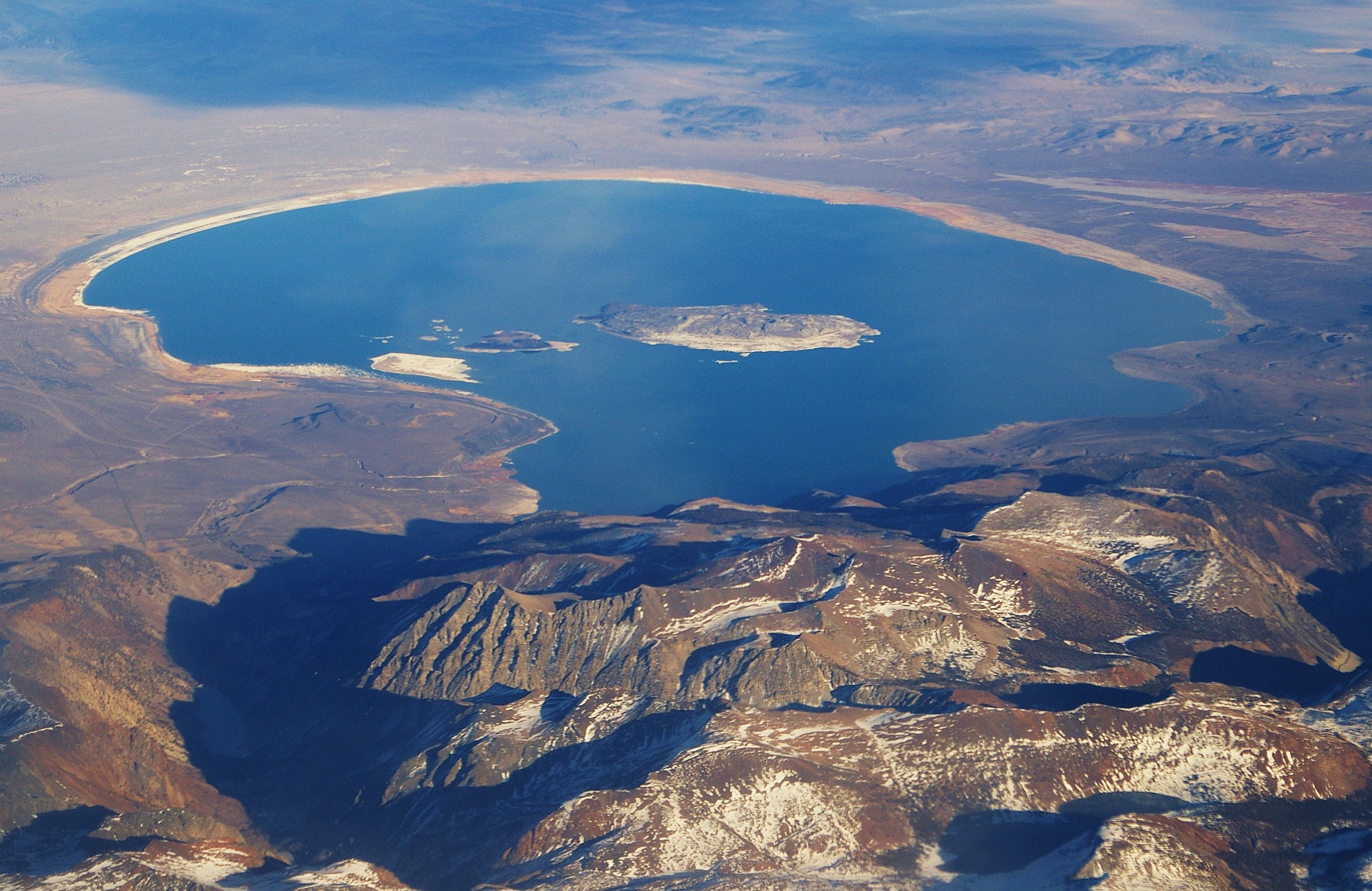
The lake itself presents a striking landscape of mineral-rich waters surrounded by volcanic terrain. Tufa towers—calcium carbonate spires—rise from the lake bed and shoreline, creating an otherworldly topography. The surrounding hills, particularly the Bodie range to the north, display layered volcanic formations that chronicle millions of years of geological upheaval.
Cultural significance
Mono Lake represents a critical case study in extremophile microbiology and ecosystem resilience. The lake is home to numerous bird species, making it an important waypoint for migratory waterfowl. The discovery of extremophilic bacteria, particularly GFAJ-1 of the Halomonadaceae family, initially captured international scientific attention. Early research suggested the bacterium could incorporate arsenic into its DNA as a substitute for phosphorus—a hypothesis later refined, revealing instead the organism’s remarkable capacity to distinguish between the two elements. The lake’s preservation has become a focal point for environmental advocacy and water-use policy in California.
Key facts
- Location: Mono County, California, USA (93541)
- Coordinates: 38.0128316, -118.9761519
- Geological age: Volcanic formations date to 28 million to 2.6 million years ago
- Ecological significance: Supports numerous bird species and extremophilic microbial life
- Official website: monolake.org
Practical information
The lake is accessible year-round, though winter conditions in the high desert can be severe. Visitor facilities and information are available through the official Mono Lake website. No admission fee is required to visit the lake shores and viewpoints.
Getting there
Mono Lake is located in the eastern Sierra Nevada region of California, approximately 300 miles northeast of San Francisco. You can reach the lake via Highway 395, which runs north–south through Mono County. The nearest significant town is Lee Vining, about 13 miles south of the lake’s southern shore.
Sources & resources
Find it on the map
See this place and what’s around it →📷 Diventa un fotografo di Cultural Heritage Online
Condividi le tue foto dei luoghi: restano pubblicate con la tua firma come autore. Più vengono viste, più ti fai conoscere — e presto un concorso premierà le foto più apprezzate.
Accedi o registrati gratis per aggiungere una foto