
Monastery of Santa Croce del Corvo
A Discalced Carmelite monastery in Bocca di Magra, founded in 1176 and now a spiritual retreat center, housing a rare Romanesque-Byzantine wooden crucifix from the 10th–12th century.
At a glance
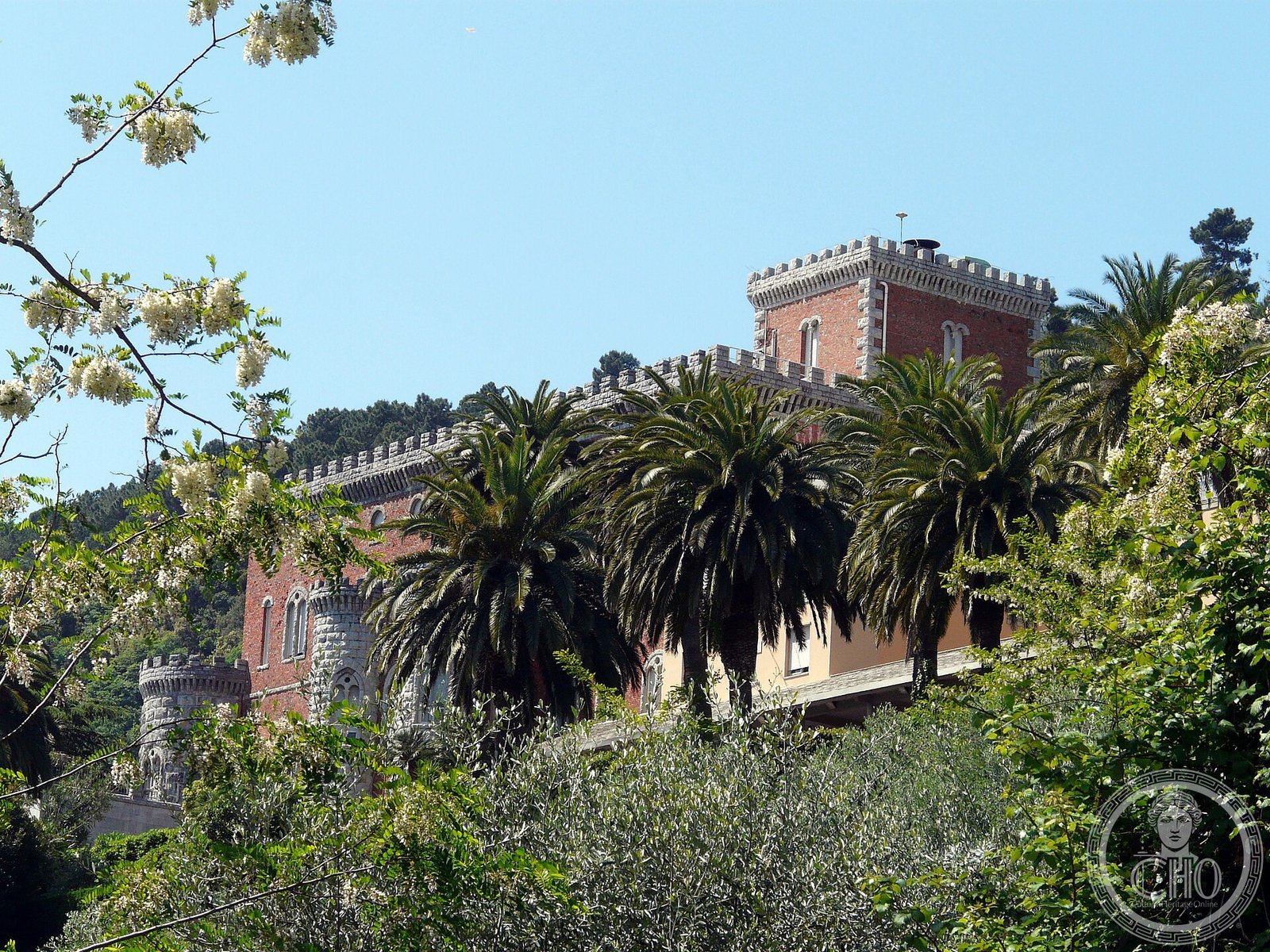
The Monastery of Santa Croce del Corvo sits on a promontory overlooking the Ligurian coast near La Spezia. Today it functions as both a working monastery and hospitality center for spiritual retreats, conferences, and group stays. The site contains a 17th-century chapel, monumental neoclassical gardens, and a neo-Gothic castle built by 19th-century marble industrialists.
History
Bishop Pipino Arrighi of Luni donated land to establish the monastery on June 2, 1176, though a primitive chapel stood here before 1000, preserved in a wooden crucifix of exceptional age. The Benedictine monks of San Michele di Pisa took charge of construction in 1186, building rapidly.
By the 14th century the complex lay abandoned. A 17th-century restoration reopened the church, repairing the apse roof. In the late 1800s the marble-wealthy Fabbricotti family purchased the property and added a monumental park and neo-Gothic castle.
Following their bankruptcy in the mid-20th century, the Discalced Carmelite friars of the Ligurian Province acquired the entire estate through Cardinal Anastasio Alberto Ballestrero’s initiative, transforming it into a spiritual retreat and hospitality center.
What you see
The 17th-century chapel remains the spiritual heart of the monastery, its austere Romanesque lines framing the wooden crucifix at its center. The crucifix itself—carved in pure Romanesque-Byzantine style and dating to the 10th–12th century—shows the refined craftsmanship of its era.
The surrounding 19th-century additions include formal gardens and a neo-Gothic castle reflecting the Fabbricotti family’s wealth and taste. The entire complex occupies a dramatic promontory setting, with natural landscape and architectural interventions forming a unified composition.
Cultural significance
The monastery appears in literary history through Dante and Boccaccio. Boccaccio’s biography of Dante records an unlikely but evocative story: the poet allegedly entrusted the manuscript of Hell’s canticle to a monk named Ilario here, asking him to deliver it to Uguccione della Faggiola. The monastery now hosts the Lunigianese Center of Dante Studies.
The wooden crucifix connects to the veneration of the Precious Blood, a relic preserved in the co-cathedral of Sarzana. The artifact’s survival across more than nine centuries reflects the site’s enduring spiritual significance in the Lunigiana region.
Key facts
- Address: Via Santa Croce 30, 19031 Bocca di Magra, Ameglia, La Spezia
- Coordinates: 44.04°N, 9.98°E
- Founded: 1176 (primitive chapel pre-dates 1000)
- Official website: monasterosantacroce.it
- Phone: +39 0187 60911
Practical information
The monastery operates as a hospitality and retreat center year-round, welcoming individuals, families, and groups for spiritual stays. Conference facilities and self-managed spaces are available. Visit the official website or call for current opening hours, rates, and booking details.
Getting there
The monastery is located in Bocca di Magra, a hamlet of Ameglia in the province of La Spezia, in eastern Liguria. Public transport and private vehicle access are available; detailed directions are best obtained from the official website or by phone.
Sources & resources
Find it on the map
See this place and what’s around it →📷 Diventa un fotografo di Cultural Heritage Online
Condividi le tue foto dei luoghi: restano pubblicate con la tua firma come autore. Più vengono viste, più ti fai conoscere — e presto un concorso premierà le foto più apprezzate.
Accedi o registrati gratis per aggiungere una foto