
Monastero di Torba
Il Monastero di Torba (UNESCO 2011, rif. 1318 Longobardi in Italia; FAI dal 1977) è il sito longobardo più piccolo e più integro dei 7 del patrimonio UNESCO — una torre di guardia del VI sec. CE trasformata in monastero benedettino nell’VIII sec., con gli unici affreschi sopravvissuti raffiguranti i ritratti delle suore longobarde con i loro nomi.
At a glance
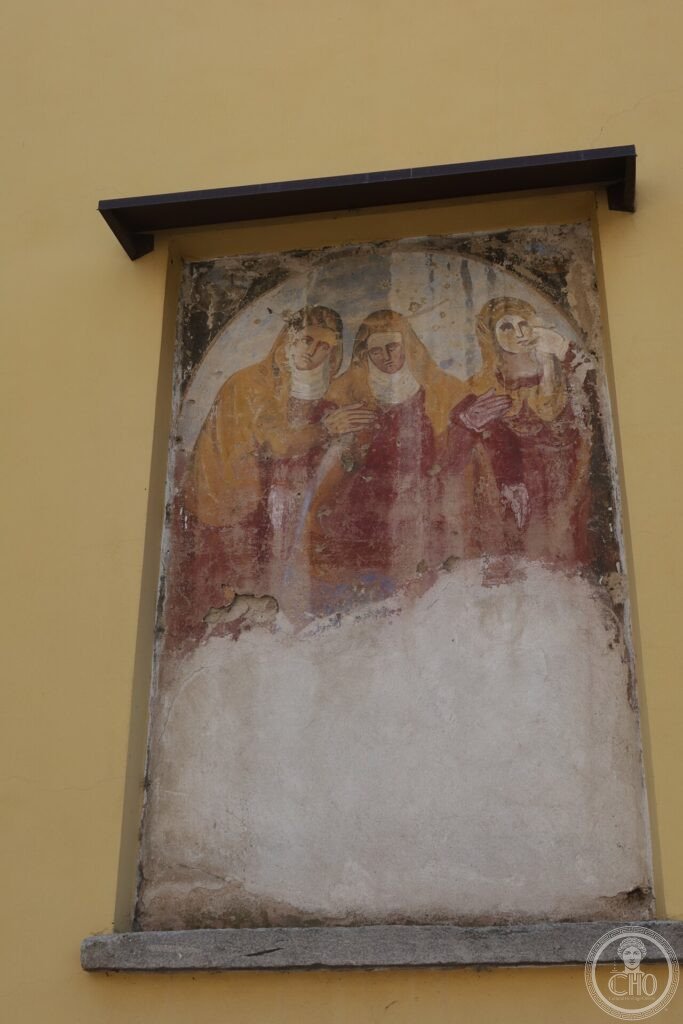
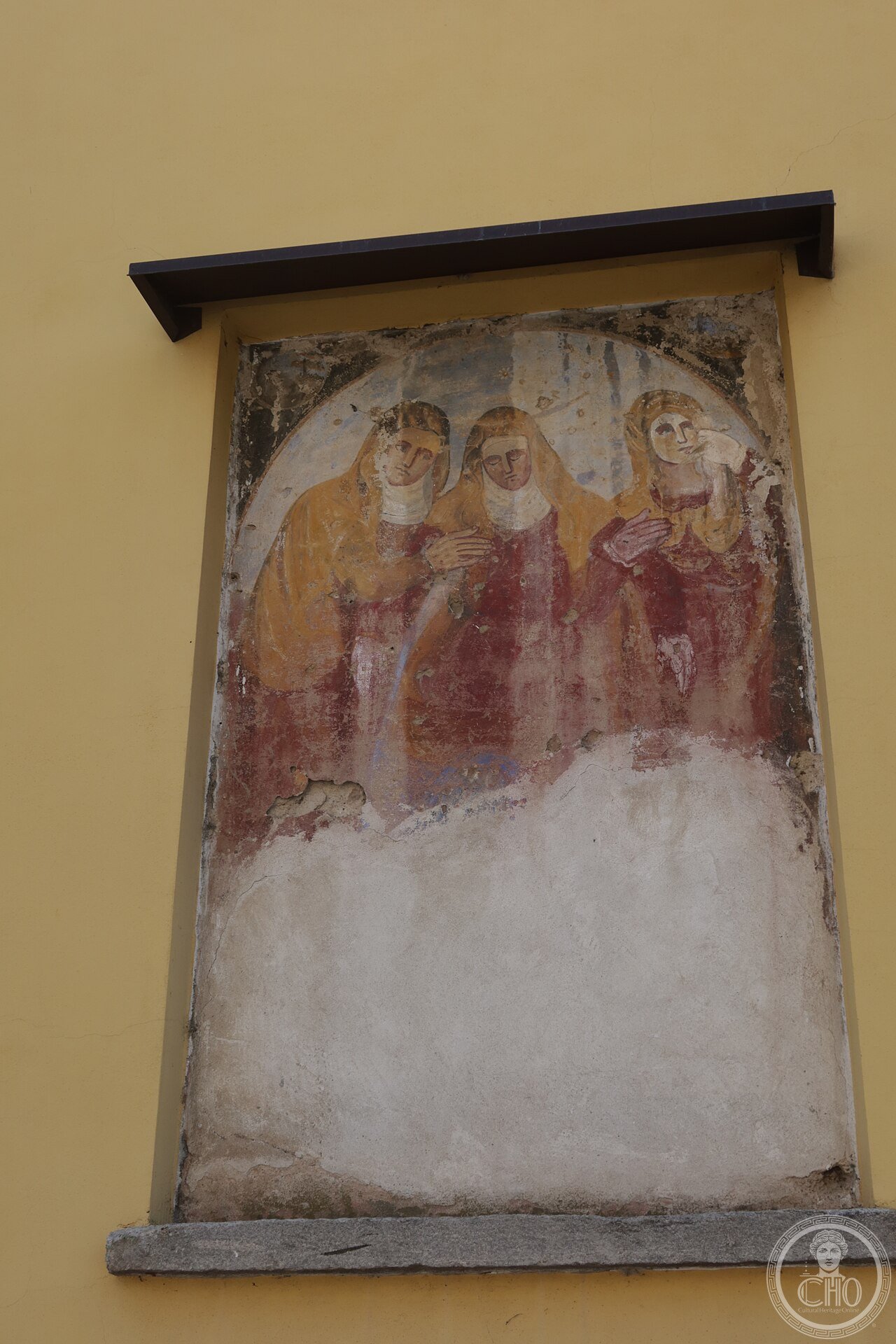
Monastero di Torba Varese Longobards (the most precisely Monastero di Torba zone Torba Varese Lombardia Italy 45.7483 N 8.7294 E UNESCO WHS 2011 reference 1318 Longobards + FAI Fondo Ambiente Italiano since 1977: the site (the Monastero di Torba (the small monastery of Sant’Agata): the only site among the 7 UNESCO Longobards in Italy that is simultaneously a Lombard military structure + a Lombard monastic complex + managed by the FAI; the tower (the Torre di Torba: the original Lombard watchtower (VI sec. CE; built c.550-568 CE as part of the “limes” defense system protecting the approaches to Milan (Mediolanum) from the north (the Ticino river valley and the road to the Alpine passes (Simplon and Maloja))); the monastic foundation (the monastery of Sant’Agata: founded c.680 CE by Lombard noblewomen (“donne di stirpe longobarda” in the 8th century CE Lombard law codes — the Edictus Rothari (643 CE) and the Liutprand code (713-735 CE) both permit Lombard noblewomen to found monasteries with royal permission); the unique frescoes (the frescoes of Torba: the most important element of the site (the tower interior, 3rd floor: the oratory of the nuns (c.720-750 CE): the nave frescoes show the names and faces of the individual nuns of the community in Lombard minuscule inscriptions above each head (the inscriptions are legible: Vivia, Teodolinda, Agitruda, Gaiperga, Adalperta — all Lombard Germanic women’s names; the faces: highly individual (not stereotyped Byzantine icons) with distinct hair colors (2 with light-colored hair, 3 with dark hair), cheekbones, and nose shapes).
Key facts
- Gli affreschi di Torba e perché sono gli unici ritratti individuali di donne longobarde sopravvissuti in Italia: the Torba frescoes and portraiture (the uniqueness of the Torba frescoes (the specific claim: “the only surviving individual portraits of Lombard women in Italy”): the comparative evidence (the 7 UNESCO Lombard sites all have Lombard art, but: (1) the Tempietto di Cividale (720-750 CE): 6 female figures in stucco, not portraits (the figures are idealized and unnamed); (2) the Basilica of Sant’Ambrogio at Milan (UNESCO non-included): the golden altar (the Paliotto d’Oro, 835 CE): 9 female saints, not Lombard, not individual portraits; (3) the Lombard gold grave goods (fibulae, collane, bracciali) from cemeteries at Nocera Umbra, Castel Trosino, Cividale: show the material culture, not individual faces; the Torba frescoes (c.720-750 CE; the 3rd floor of the tower): the 5 named nuns with individual facial features are the ONLY surviving evidence of individual Lombard female portraiture in Italy); the inscriptions (the Lombard minuscule inscriptions above each face: the script type (the Lombard minuscule: the script used in the Lombard chancery from c.640 CE; derived from the Merovingian chancery cursive; distinctive letterforms: the “a” without bowl (open-top “a”), the elongated “l” with a rightward flag) is identical to the script of the Edictus Rothari manuscripts in the Biblioteca Ambrosiana, Milan; this confirms the frescoes as Lombard rather than Carolingian))
- GPS (Monastero di Torba, ingresso FAI): 45.7483° N, 8.7294° E
History
Dalla torre di guardia VI sec. CE al UNESCO 2011 (the most precisely Monastero di Torba zone history: the military phase (the Torre di Torba c.550-680 CE: the tower was part of the Lombard “castrum” system defending the Ticino valley approach to Milan; the specific Lombard strategic context: the limes of the Ticino (the Lombard defensive line along the Ticino river protecting the Padana plain from Frankish and Byzantine incursions from the west and south); the tower dimensions (the tower: 16 m height × 5.5 m internal side × 1.2 m wall thickness; 5 floors; the construction technique: alternating rows of spoliated Roman tiles and rough stone — a typically Lombard hybrid technique also visible at Cividale and Brescia); the monastic phase (the monastery of Sant’Agata c.680-1100 CE: the Lombard noblewoman Ansperga (daughter of King Liutprand, 712-744 CE; the evidence: a donazione document at the Archivio di Stato di Varese, 744 CE, mentions “monasterium Sancte Agathe de Torva”) donated lands to the monastery in 744 CE; the monastery was active until the Norman conquest of Lombardy (12th century CE)); the FAI acquisition (1977 CE: the FAI purchased the monastery complex from the Comune di Torba for a symbolic price; the 1977-1990 CE restoration by the FAI is documented in the FAI archive (Milan): the tower frescoes were cleaned and conserved by the Istituto Centrale del Restauro (Rome) in 1982 CE)).
What you see
La torre, l’oratorio, gli affreschi nominati, il chiostro, e il bosco (the most precisely Monastero di Torba zone visit (1–1.5 hours; the site is small but densely layered): the entrance (the FAI entrance: via Castelseprio (the road from Varese); parking available; GPS: 45.7483, 8.7294; the ticket: €7 FAI members free); the tower (the first stop: the 16 m tower (exterior circuit: 10 min); the interior (3 flights of narrow stairs (width: 70 cm; the Lombard stairs: rough stone with no banister; not accessible for wheelchairs or mobility-impaired visitors)): floor 1: the military guardroom (the original hearth in the SW corner: blackened limestone + ash residue from 8th century CE wood fires still visible); floor 2: the grain storage (the wooden floor: reconstruction 1985 CE; the original floor beam sockets visible in the 4 walls: 22 sockets, each 15 cm × 15 cm × 30 cm deep); floor 3: the oratory (the frescoes: the 5 named nuns; the figure of Christ Pantocrator above the altar niche (the painted niche in the east wall: the Pantocrator (Christ in a golden mandorla) measuring 80 cm × 60 cm; the paint technique: buon fresco (pigments applied to wet plaster); the surviving colors: the azurite blue of the mandorla, the red ochre of the robes)); the oratory (the oratory of Sant’Agata (ground level, south of the tower): the Romanesque apse (11th century CE; the apse decorated with the remains of Carolingian-era frescoes (c.850 CE: the palm-branch pattern border + the 3 figures visible (partially legible: a bishop with pallium)); the cloister (the small courtyard between the tower and the oratory: 12 m × 8 m; the stone well (13th century CE; the round curb: Verde di Prato marble)).
Practical information
- Come raggiungere Torba da Varese e abbinare la visita con il sito UNESCO di Castelseprio (a 2 km): il trasporto (Varese → Torba: Autolinee Varesine linea C31 (direzione Castiglione Olona; 25 min; fermata “Torba”; €1.90); auto: SS342 da Varese poi SP1 (20 km; 25 min)); il biglietto FAI (€7 intero; i soci FAI gratis; mar-dom 10:00-18:00 (apr-ott); 10:00-16:00 (nov-mar); il sito chiude lunedì); la visita abbinata (Torba + Castelseprio UNESCO: i due siti distano 2 km — un sentiero nella foresta di querce li collega (il percorso: il “Sentiero dei Longobardi”: 2 km, segnavia bianco-rosso, 30 min a piedi tra le querce del Parco del Medio Olona); Castelseprio: il castrum romano-longobardo (V-XIII sec. CE) con la piccola chiesa di Santa Maria Foris Portas (c.700 CE): gli affreschi di Santa Maria Foris Portas (10 scene dell’Infanzia di Cristo; la discussione circa la loro datazione: c.700 CE (longobardo) vs c.900 CE (carolingio-ottoniano))))
Getting there
Bus C31 da Varese (25 min, €1.90). Auto: SS342 da Varese (20 km). GPS: 45.7483, 8.7294. Biglietto FAI €7. Mar-dom 10 AM–6 PM.
Nearby
- Castelseprio (UNESCO 2011 rif. 1318 Longobards — Santa Maria Foris Portas) — 2 km a piedi (il castrum romano-longobardo con le mura del V-XIII sec. CE + la piccola chiesa VII sec. CE con affreschi dell’Infanzia di Cristo; ingresso libero)
- Sacro Monte di Varese (UNESCO 2003 rif. 1068) — 8 km (il sacro monte con le 14 cappelle del Via Crucis 1604-1680 CE; la funicolare storica 1909 CE; GPS 45.8497/8.8094)
Gallery
Sources
- Wikipedia, Monastero di Torba; Castelseprio Torba, accessed June 2026
- UNESCO, Longobards in Italy: Places of the Power (568-774 AD), WHS reference 1318, inscribed 2011
- FAI Fondo Ambiente Italiano, Monastero di Torba, fondoambiente.it, accessed June 2026
Find it on the map
See this place and what’s around it →📷 Diventa un fotografo di Cultural Heritage Online
Condividi le tue foto dei luoghi: restano pubblicate con la tua firma come autore. Più vengono viste, più ti fai conoscere — e presto un concorso premierà le foto più apprezzate.
Accedi o registrati gratis per aggiungere una foto