
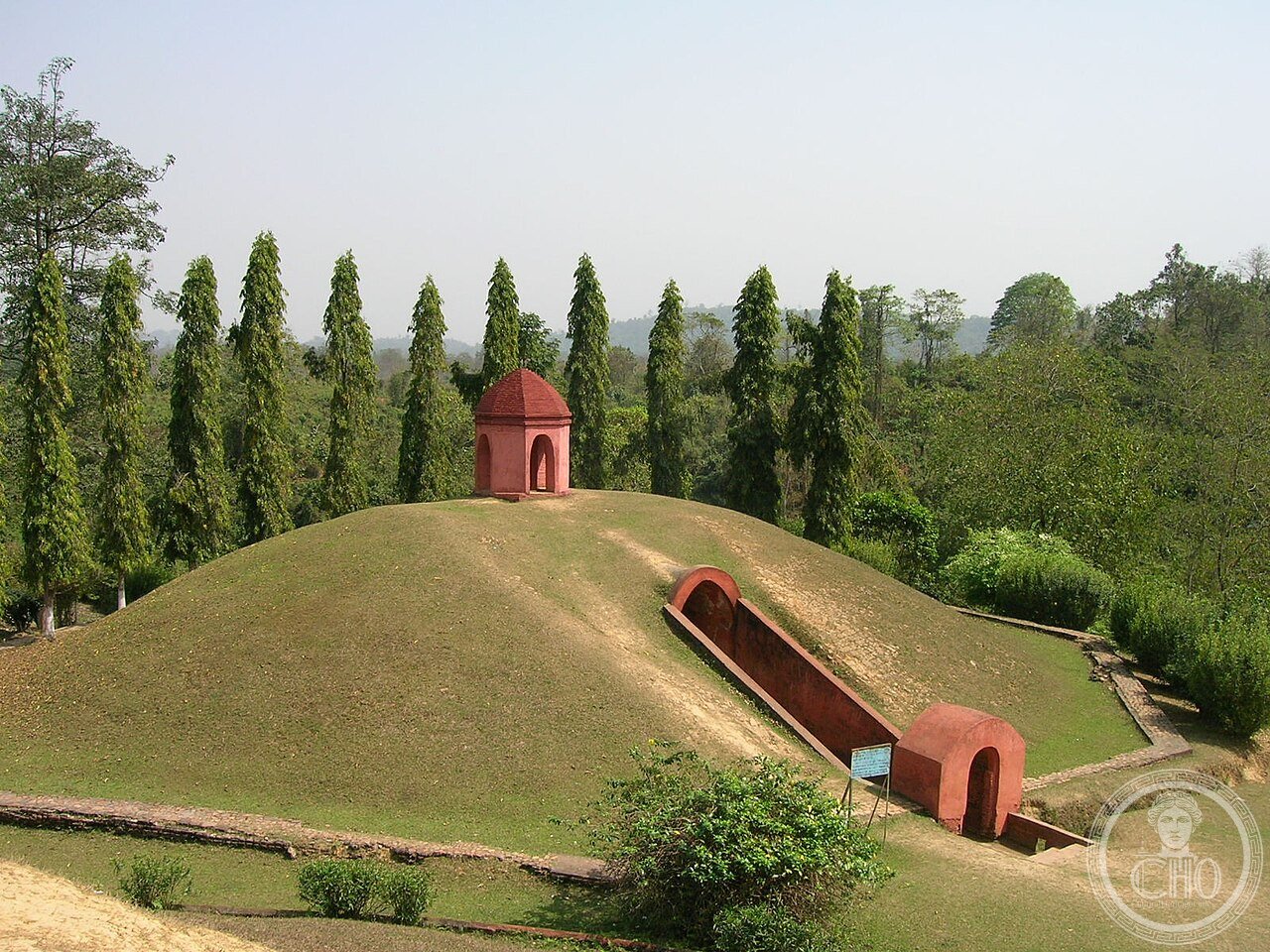
The pyramids of Assam – burial mounds of the kings who stopped the Mughals, UNESCO-listed 2024 as India’s newest cultural site.
At a glance
- Type
- Royal necropolis (UNESCO 2024)
- Period
- 13th-19th century
- Style
- Ahom mound burial (Tai tradition)
- Location
- Charaideo, Assam, India
- Coordinates
- 27.0258, 94.9817
- Dynasty
- Ahom, 1228-1826
Overview
At Charaideo, first capital of the Ahoms, ninety grassed hemispheres rise from the Patkai foothills – the moidams, vaulted burial mounds of the dynasty that ruled Assam six centuries and turned back the Mughal empire seventeen times, Saraighat’s river victory the proudest. UNESCO inscribed the necropolis in 2024, India’s entry of the year.
History
Sukaphaa led Tai migrants over the passes in 1228; his line’s kings were laid in timber-vaulted chambers under earthen domes with regalia and retainers’ offerings – Tai ancestor practice rooted in Assam’s soil. British annexation in 1826 ended the kingdom; treasure-diggers and time breached mounds the Archaeological Survey now conserves with the Tai-Ahom revival’s prayers returned.
Architecture and Design
Brick-and-stone vaults (later mounds) under clay domes once bore pavilions; the chau-chali ritual platforms crown several. Excavated chambers show the king’s bed, vessels, and the layout court chronicles – the buranjis – describe; the landscape reads as Assam’s valley-of-the-kings.
Cultural significance
The moidams certify Northeast India’s distinct historical stream – Tai statecraft, Mughal resistance, buranji literacy – within the national story; Me-Dam-Me-Phi ancestor rites keep the mounds in living devotion.
Visiting today
The Charaideo park opens daily; pair with Sivasagar’s Ahom temples and tanks 30 km west. November’s rites and tea-garden seasons favour visits.
Getting there
Jorhat’s airport lies two hours west; Sivasagar’s rail and NH roads serve Charaideo’s foothill site.
Sources and resources
Find it on the map
See this place and what’s around it →Record researched and written by Luigi De Marchi for Cultural Heritage Online, 2026.
📷 Become a Cultural Heritage Online photographer
Share your photos of places: they stay published under your name as the author. The more they're seen, the more you get noticed — and soon a contest will reward the most appreciated photos.
Log in or sign up free to add a photoIs this page about you?
This page is read by travellers and heritage enthusiasts who find it on Google. Tell us how you are connected to this place and we will take it from there.