
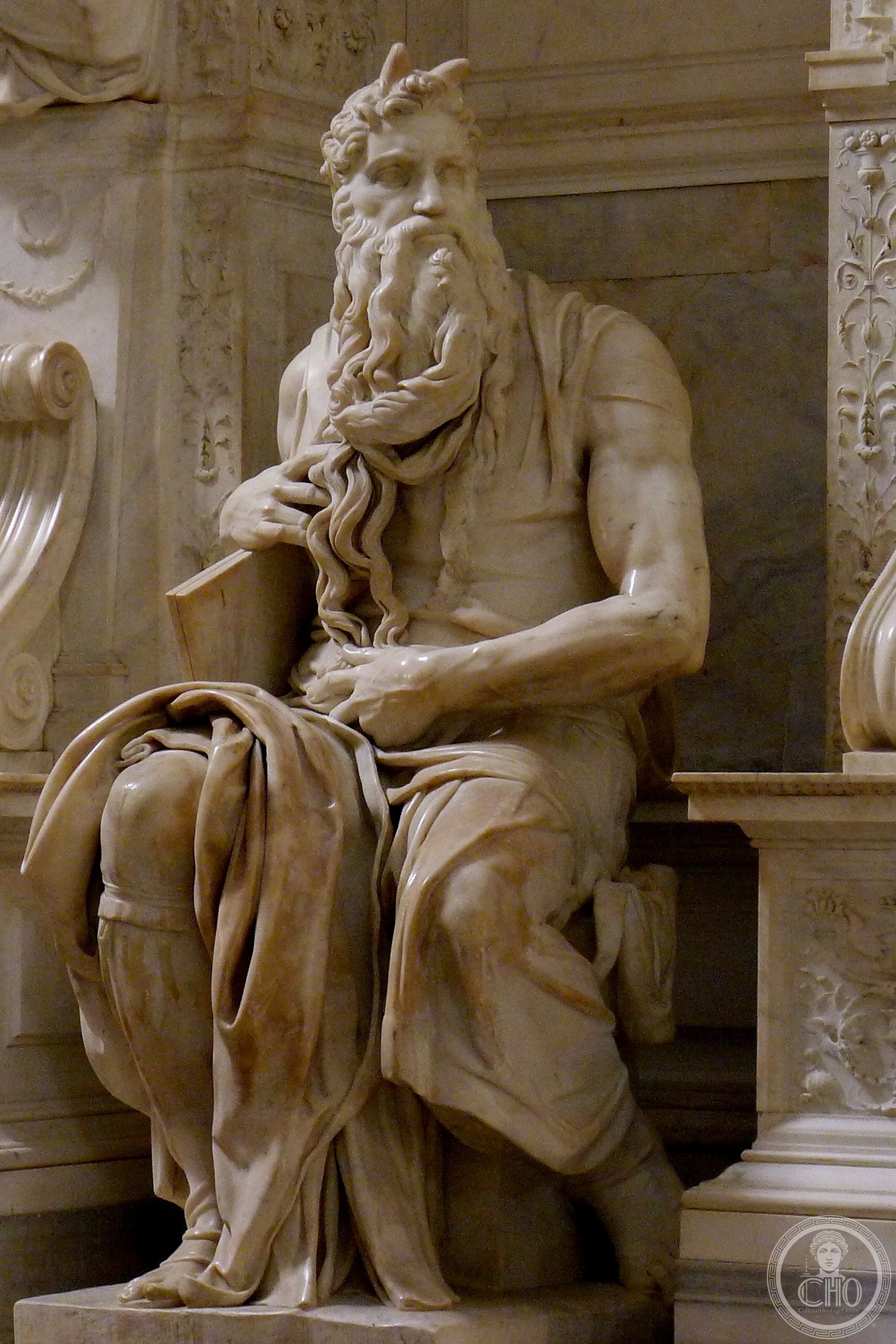
Michelangelo’s Moses — Basilica of San Pietro in Vincoli
Moses is a marble sculpture by Michelangelo completed around 1513–1516, housed in the Basilica of San Pietro in Vincoli in Rome’s Monti district. Conceived as the central figure of the unfinished funerary monument to Pope Julius II, the seated Moses displays the horns of light described in Jerome’s Vulgate translation of Exodus, flowing beard, and an intensity of muscular and psychological tension that established it as one of the defining masterpieces of Western sculpture. Sigmund Freud famously wrote a psychoanalytic essay on the figure in 1914.
At a glance
- Type
- Monumental marble sculpture
- Period
- 1513–1516 (first phase); tomb completed c. 1545
- Style
- High Renaissance
- Location
- Basilica of San Pietro in Vincoli, Piazza di San Pietro in Vincoli 4/a, 00184 Rome
- Coordinates
- 41.8938° N, 12.4906° E
- Artist
- Michelangelo Buonarroti (1475–1564)
- Material
- Carrara marble
- Dimensions
- Approximately 235 cm high
Overview
The Moses occupies the lower central niche of the Julius II tomb, flanked by the allegorical figures of Rachel and Leah (representing the contemplative and active lives). The work was originally designed for a much larger free-standing tomb that Michelangelo spent forty years revising at Julius II’s commission; the final reduced version, installed in San Pietro in Vincoli in 1545, represents only a fragment of the original conception. Michelangelo himself reportedly said of the Moses that it alone was sufficient to honour the memory of Julius II.
History
Pope Julius II commissioned the tomb in 1505, envisioning a monumental free-standing structure with more than forty figures for St Peter’s Basilica. Michelangelo worked on the project intermittently over four decades as successive popes redirected his energies — most famously to the Sistine Chapel ceiling (1508–1512). The contract was repeatedly renegotiated, and the final tomb, much reduced in scale, was installed in Julius II’s former titular church, San Pietro in Vincoli, four years after Michelangelo completed the Moses figure. The flanking statues of Rachel and Leah date from the same final phase.
What you see
The Moses sits in a powerful contrapposto, his right arm resting on the tablets of the Law while his left hand gathers his beard. Two horn-like protrusions rise from his forehead — a long-debated iconographic feature derived from Jerome’s Latin translation of the Hebrew word karan (rays of light) as cornuta (horned). The figure’s musculature, drapery, and concentrated gaze create an almost alarming sense of suppressed energy. The surrounding tomb incorporates architectural elements and additional sculptural figures in a compressed Renaissance framework.
Cultural significance
The Moses has exercised an outsized influence on the history of art and culture: Giorgio Vasari described it as surpassing any ancient sculpture; Sigmund Freud’s 1914 essay interpreted it as a figure restraining his own anger; and it remains among the most reproduced images of Renaissance sculpture worldwide. The basilica of San Pietro in Vincoli also preserves the chains (vincoli) said to have bound Saint Peter, kept in a golden reliquary beneath the altar.
Practical information
- Address
- Piazza di San Pietro in Vincoli 4/a, 00184 Rome
- Hours
- Monday–Saturday 08:00–12:30 and 15:00–18:00; Sunday 08:00–12:30 — verify on official website before visiting
- Admission
- Free entry to the basilica
Getting there
San Pietro in Vincoli is a short walk from the Colosseo metro station (Line B). Alternatively, take Bus 75 or 85 to Via Cavour and walk up the steep steps of Via Eudossiana. The church is approximately 400 metres from the Colosseum.
Sources & resources
- Wikipedia — Moses (Michelangelo)
- Wikipedia — San Pietro in Vincoli
- Cultural Heritage Online — More Italian heritage destinations
Find it on the map
See this place and what’s around it →📷 Diventa un fotografo di Cultural Heritage Online
Condividi le tue foto dei luoghi: restano pubblicate con la tua firma come autore. Più vengono viste, più ti fai conoscere — e presto un concorso premierà le foto più apprezzate.
Accedi o registrati gratis per aggiungere una foto