
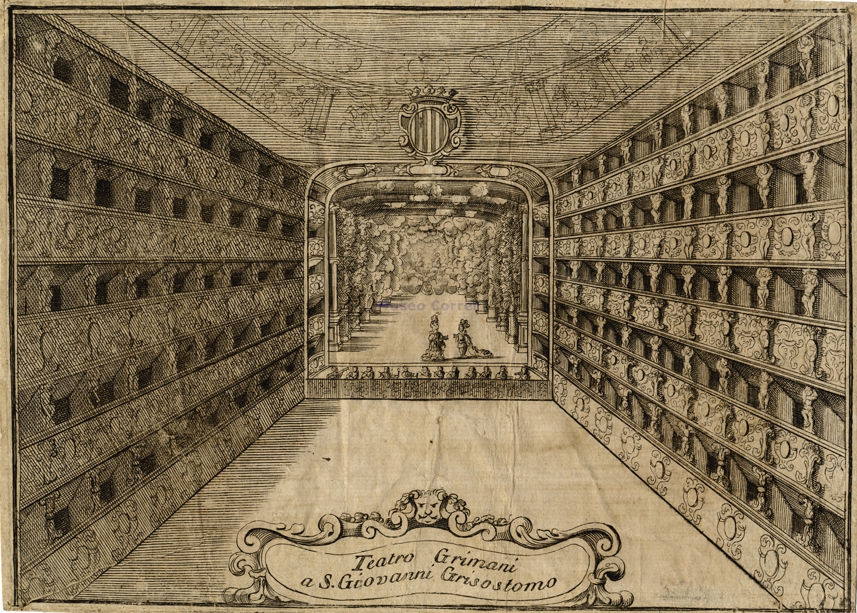
Teatro Malibran
The Teatro Malibran is one of the oldest and most historically significant opera houses in Venice, inaugurated in 1678 as the Teatro San Giovanni Grisostomo. Named after the celebrated mezzo-soprano Maria Malibran in the 19th century, it was built by the Grimani family near the Rialto and within five years of opening was acclaimed as the finest theatre in the city. Its productions over the 17th and 18th centuries included world premieres by Handel, Vivaldi and other leading composers of the Baroque era, making it one of the most important stages in the history of European opera.
At a glance
- Type
- Opera house and theatre
- Period
- Inaugurated 1678; renamed Teatro Malibran 1835
- Style
- 17th-century Venetian; later modified
- Location
- Calle del Milion, Cannaregio, Venice, Veneto, Italy
- Coordinates
- 45.4389° N, 12.3381° E
- Original name
- Teatro San Giovanni Grisostomo
- Named after
- Maria Malibran (1808–1836), mezzo-soprano
Overview
The Teatro Malibran, known over its lifetime by a variety of names beginning with the Teatro San Giovanni Grisostomo after the nearby church, is an opera house in Venice which was inaugurated in 1678 with a production of Carlo Pallavicino’s opera Vespasiano. By 1683 it had quickly become known as “the biggest, most beautiful and richest theatre in the city,” and its operatic importance throughout the 17th and 18th centuries earned it even grander descriptions by 1730 as “a true kingdom of marvels.” Today it operates as a mid-sized venue within the circuit of the Teatro La Fenice, hosting chamber opera, recitals and contemporary productions.
History
The theatre was built by the patrician Grimani family, who were also responsible for several other Venetian theatres, and opened in 1678 with a programme designed to compete with the older opera houses of Venice. In its first decades it attracted the leading composers and performers of the day; George Frideric Handel’s opera Agrippina received its world premiere here in 1709 and ran for 27 consecutive performances — a remarkable run for the period. The theatre was renamed after Maria Malibran, the Spanish-Belgian mezzo-soprano who died in Manchester in 1836, in recognition of her performances on the Venetian stage. By the 19th century the house had declined in prestige relative to La Fenice; extensive restoration in the late 20th century brought it back into regular use.
What you see
The Malibran occupies a relatively modest building on the Calle del Milion, close to the Rialto in the sestiere of Cannaregio, not far from the courtyard traditionally associated with Marco Polo’s family home. The auditorium is smaller in scale than La Fenice, with an intimate horseshoe of boxes and a gallery that suits chamber and early-music productions particularly well. The fabric of the theatre preserves elements of its 17th-century origins, reworked over successive centuries; the atmosphere is one of aged theatricality rather than 19th-century grandeur.
Cultural significance
As the venue for world premieres by Handel, Vivaldi and other Baroque masters, the Teatro Malibran holds an extraordinary place in the history of European opera that its current modest scale belies. It stands as physical evidence of the extraordinary density of operatic culture in 17th and 18th-century Venice, a city that at its peak supported more active opera houses simultaneously than anywhere else in Europe. Its continued use as a performance venue maintains an unbroken thread between the origins of the operatic form and its living practice today.
Practical information
- Address
- Calle del Milion, 5873, 30121 Venezia VE, Italy
- Box office / hours
- Check the official Teatro La Fenice website for Malibran programme and tickets
- Admission
- Ticketed performances; prices vary by production
Getting there
Venice is accessible by train to Venezia Santa Lucia station. From the station, take the vaporetto Line 1 to Rialto, then walk approximately 5 minutes east through the Cannaregio sestiere to Calle del Milion. The historic centre is pedestrian-only. Water taxis are available from the station and Marco Polo Airport. From the airport, take the Alilaguna water bus Line Arancio or the ACTV bus to Piazzale Roma, then walk or take a vaporetto to the Rialto area.
Sources & resources
Find it on the map
See this place and what’s around it →Historical events at this place (2)
- 2021 Natale di Luce 2021
- 2021 VeneziaInDanza2021
📷 Diventa un fotografo di Cultural Heritage Online
Condividi le tue foto dei luoghi: restano pubblicate con la tua firma come autore. Più vengono viste, più ti fai conoscere — e presto un concorso premierà le foto più apprezzate.
Accedi o registrati gratis per aggiungere una foto