
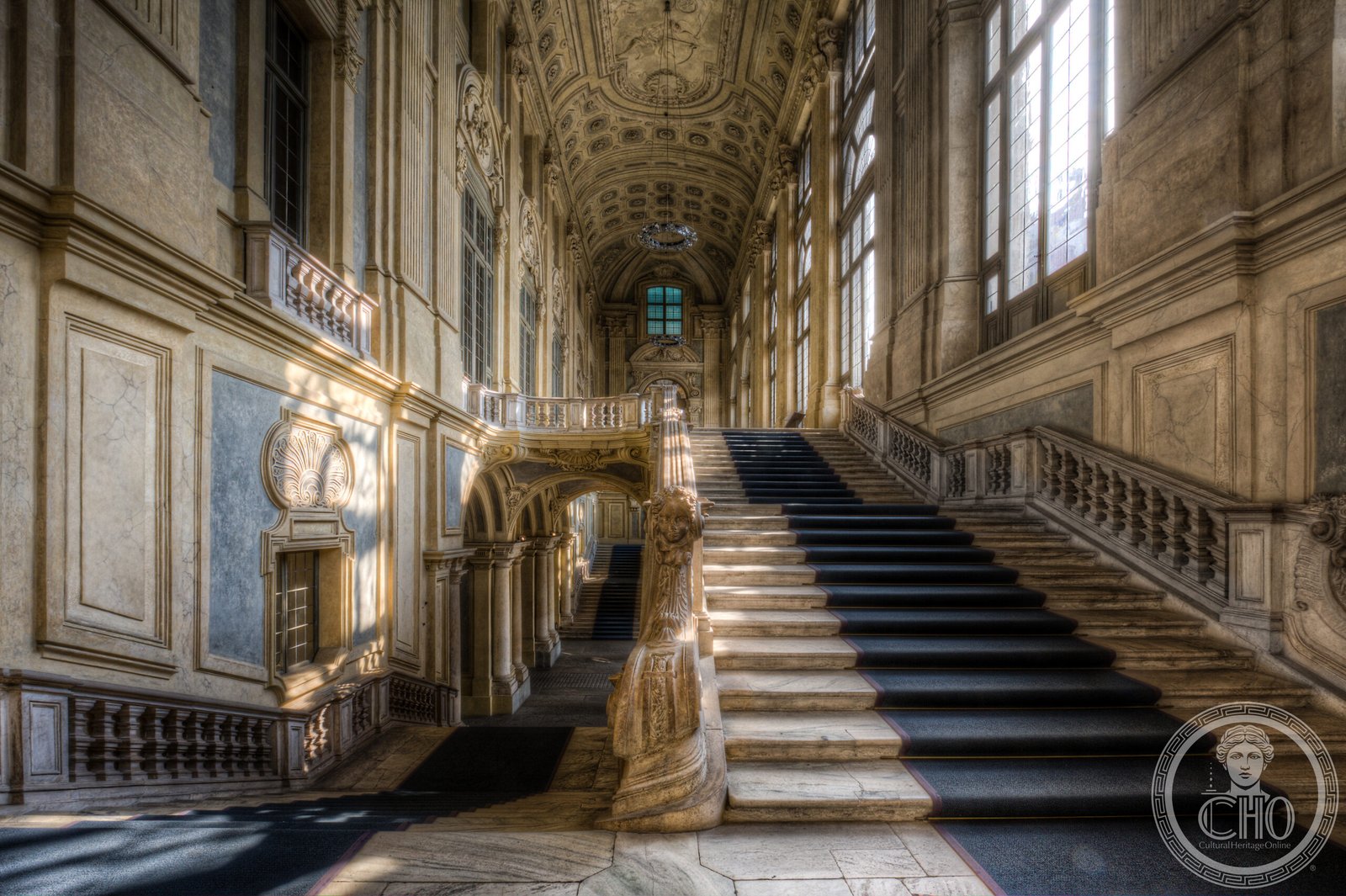
Palazzo Madama — Civic Museum of Ancient Art, Turin
Palazzo Madama is a monumental palace in the heart of Turin standing on a site continuously occupied since a Roman gate of the 1st century BC. It served as the first Senate of the Kingdom of Italy, takes its name from two queens (madame) of the House of Savoy who used it as a personal residence, and since 1934 has housed the Civic Museum of Ancient Art. Filippo Juvarra’s Baroque façade of 1716 — only partially completed — is one of the finest expressions of Piedmontese court architecture and is part of the UNESCO World Heritage “Residences of the Royal House of Savoy.”
At a glance
- Type
- Royal palace and civic museum
- Period
- Roman origins (1st century BC); medieval castle; Baroque façade 1716–1721
- Style
- Medieval, Baroque (Juvarra façade)
- Location
- Piazza Castello, Turin, Piedmont, Italy
- Architects
- Filippo Juvarra (Baroque façade, 1716); Domenico Guidobono (interior decorations)
- Current use
- Civic Museum of Ancient Art (since 1934)
- Coordinates
- 45.0710° N, 7.6856° E
- UNESCO
- World Heritage Site, 1997 — Residences of the Royal House of Savoy
Overview
Palazzo Madama rises over Piazza Castello at the symbolic centre of Turin, embodying more than two thousand years of layered history on a single site. It was the first Senate of the Kingdom of Italy, bearing witness to the constitutional debates of the Risorgimento era. Today its rooms display paintings, sculptures, church ornaments, porcelain, and decorative arts spanning the late Middle Ages through the 18th century.
History
The site began as a Roman gate (Porta Praetoria) in the 1st century BC, then became a fortified stronghold after Rome’s fall. The Savoia-Acaja branch expanded it into a proper castle in the early 14th century — the “Casaforte degli Acaja” component of the full title. In 1637 Christine of France, regent for Duke Charles Emmanuel II, chose the castle as her personal residence and transformed it into a palatial home, lending the building the name “Madama” shared by her successor Maria Giovanna Battista of Savoy-Nemours. Filippo Juvarra was commissioned to add a grand Baroque façade in 1716, but construction halted in 1721 after only the front section was completed, leaving the medieval towers visible at the rear to this day.
What you see
Juvarra’s celebrated façade features a piano nobile with arch-headed windows, a colossal row of composite pilasters, and a grand ceremonial staircase inside — widely considered a masterpiece of European Baroque court architecture. The Guidobono halls include the Madama Reale’s Chamber, a Chinese Cabinet, and the Southern Veranda, all decorated with frescoes and elaborate stucco. Behind the Baroque front, the medieval towers and walls of the 14th-century castle survive, creating a dramatic contrast of eras across the building’s two faces.
Cultural significance
Palazzo Madama was inscribed as a UNESCO World Heritage Site in 1997 alongside thirteen other Savoy residences, recognised for outstanding universal value in architecture and in representing the political and dynastic history of the House of Savoy. As the seat of the first Italian Senate and a residence of two regents who shaped Turin’s urban fabric, it is one of the most historically layered buildings in northern Italy.
Practical information
- Address
- Piazza Castello, 10122 Torino TO, Italy
- Museum hours
- Check the official Palazzo Madama website for current opening times and admission prices
- Admission
- Paid entry; free first Tuesday of the month
Getting there
The palace sits at Piazza Castello in central Turin, a short walk from Turin Porta Nuova railway station (approx. 10 minutes on foot) and from Turin Porta Susa station. The city’s tram network stops nearby. Buses serving the historic centre stop at or close to Piazza Castello. The GTT metro (line 1) runs to nearby stations including Porta Nuova.
Sources & resources
Find it on the map
See this place and what’s around it →📷 Diventa un fotografo di Cultural Heritage Online
Condividi le tue foto dei luoghi: restano pubblicate con la tua firma come autore. Più vengono viste, più ti fai conoscere — e presto un concorso premierà le foto più apprezzate.
Accedi o registrati gratis per aggiungere una foto