
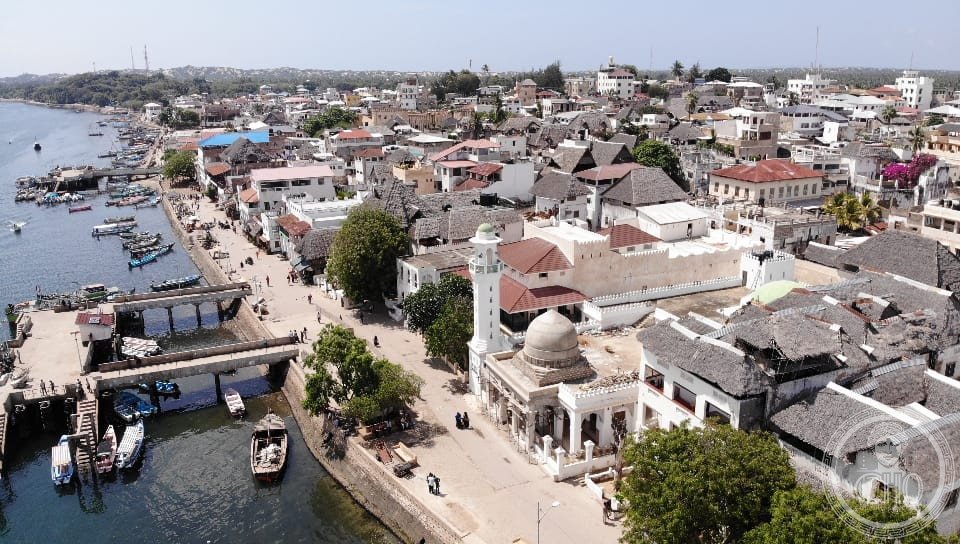
The most completely preserved Swahili old town in East Africa and one of the finest examples anywhere in the world of a living historic urban environment sustained without automobiles. Lamu Old Town, on a low coral-sand island off the northern Kenya coast, preserves in almost untouched form the 14th–19th century architecture of the East African Indian Ocean trade network, where Arab, Persian, South Asian, and African cultures merged into a unique Swahili civilisation of extraordinary sophistication.
At a glance
Lamu Old Town (UNESCO WHS 2001; the inscription covers the historic core of Lamu town on the western shore of Lamu Island, Kenya; the island is approximately 14 km long and 8 km wide; the town itself is a compact historic urban grid approximately 1 km × 0.6 km with a population of approximately 23,000) is the oldest continuously inhabited Swahili settlement in sub-Saharan Africa, with uninterrupted occupation from at least the 14th century. The physical character of the town has remained substantially unchanged for 200–500 years, preserved from the pressures of modernisation by the simple fact that the island is hard to reach: there is no road to Lamu, and you arrive by boat from Mokowe on the mainland or through the small local airport. The lanes are stone-paved and too narrow for vehicles — the widest, Usita wa Mui, is approximately 2 m across, the narrowest less than 1 m — and the labyrinth is laid out both for wind circulation and for defensive confusion. The buildings are of coral rag limestone, fossilised coral quarried from the reef, soft enough to carve when freshly cut and hardening to near-concrete strength on exposure to air and salt. Into that stone are set the carved timber doors and window screens that are the defining decorative element of Swahili architecture: the best Lamu doors are among the finest woodcarving in Africa, and the Swahili House Museum holds the most important collection. Above, the rooftop terraces serve for sleeping in summer, for drying fish and grain, and for sitting together; seen from the walls of Lamu Fort they make a landscape of low terraces, satellite dishes and laundry, punctuated by the white-domed minarets of 23 mosques.
Key facts
- Swahili culture and the Indian Ocean trade network: the synthesis that created one of Africa’s great urban civilisations. Swahili culture (Kiswahili language; the lingua franca of East Africa; a Bantu language with extensive Arabic, Persian, South Asian, and Portuguese loanwords reflecting the cultural synthesis of the coast; the word “Swahili” comes from the Arabic “sāhil” (coast)). Lamu was one of the most important nodes of the Indian Ocean dhow trade, the monsoon routes that tied East Africa to Arabia, Persia, India and Southeast Asia for over 2,000 years. The north-east monsoon, the kaskazi, blows from Arabia to East Africa between November and March; the south-west monsoon, the kusi, blows the other way from April to October. The dhow, a sailing vessel with a triangular lateen sail, was the essential technology of that trade — and the Lamu dhow-building tradition is one of the last surviving in East Africa — and it could make the outward voyage to Arabia in one season and come home in the next. Lamu imported cotton textiles, metalwork, ceramics and dates from Arabia and India, and exported ivory, slaves, mangrove poles and amber. That prosperity was the economic basis of the sophisticated urban culture of the Swahili coast.
- The carved doors of Lamu: the finest woodcarving tradition in East Africa. The Lamu door is the defining artistic tradition of the Swahili coast and the most visible sign of a household’s wealth: the more elaborate the carving, the more important the family behind it. The finest are commissioned from specialist craftsmen, the fundi, and take months to finish. The commonest motifs are fish scales for prosperity, the lotus flower for purity, geometric Arabesque patterns and, now and then, Quranic inscriptions, all set in frames of carved mangrove wood. The brass studs on the older doors came from Indian models and were adopted into the Swahili tradition: in Indian palaces they defended the gate against elephants, in East Africa they are ornament. More than 100 historic carved doors remain in the houses of the old town, and the most important collections are in the Swahili House Museum and in the National Museum of Kenya, Nairobi.
- The Maulidi Festival: the largest Islamic festival in East Africa. The Maulidi ya Mtume (Lamu Maulidi; the celebration of the birthday of the Prophet Muhammad; held in the Islamic month of Rabi’ al-Awwal; the date moves annually in the Gregorian calendar; typically February–March). The Lamu Maulidi is the largest such celebration in sub-Saharan Africa. Between 50,000 and 80,000 pilgrims and visitors arrive on an island whose normal population is approximately 23,000, and for the week of the festival the place is completely transformed, with dhows sailing in from along the East African coast, from Mombasa, Zanzibar and the Comoros. Prayers are said in several mosques at once, the largest in the 19th-century Riyadha Mosque, the most important in Lamu, founded by Habib Swaleh al-Jamal, a Hadrami — Yemeni — scholar and teacher who came here in 1888 and established the madrasa that became the centre of the town’s religious life. There is Sufi devotional singing, taarab music, which combines Swahili poetry, shairi, with Arab musical forms and African rhythms and is the characteristic music of the coast: the most refined tradition belongs to Zanzibar, but Lamu has its own schools. And there is donkey racing, part of the Maulidi for at least 150 years.
- Heritage: UNESCO World Heritage Site, Lamu Old Town, inscribed 2001.
- GPS: 2.2694° S, 40.9008° E.
History
The earliest Swahili settlements on Lamu Island date to the 9th–10th centuries (Shanga and Manda sites on the north end of the island; archaeological evidence of Indian Ocean trade pottery from this period). Lamu town itself was established by the 14th century. The golden age of Lamu (18th–19th century; the city-state of Lamu was one of the wealthiest ports on the East African coast; the Battle of Shela (1812; Lamu, allied with Oman, defeated the rival city-state of Pate and its Mazrui allies; the decisive battle that established Lamu as the dominant power on the Kenya coast)). Omani hegemony (19th century; the Sultanate of Oman established hegemony over the East African coast; Lamu became the northern outpost of the Zanzibar Sultanate). British colonial rule (1895–1963; the East Africa Protectorate; Mombasa became the colonial capital; Lamu’s political importance declined but its cultural distinctiveness was preserved). Kenyan independence 1963. UNESCO WHS 2001. The Mpeketoni attacks (2014; a militant attack on the mainland near Lamu by Al-Shabaab; the island of Lamu was not attacked but tourist numbers dropped sharply; they have since recovered).
What you see
The Lamu waterfront (the most important daily gathering point in the town; the dhow harbour; the fish market (mornings; the catches of red snapper, barracuda, and kingfish from the offshore reefs; the trading activity at the fish auction; the most authentic working harbour scene in East Africa); the Lamu Museum (the former colonial district commissioner’s office; an important collection of Swahili material culture including the “Siwa of Pate” — an 18th-century ceremonial ivory side-blown horn of extraordinary craftsmanship, the most important single object in the Lamu collection)). The Lamu Fort (a rectangular coral-rag stone fortress built by the Sultan of Oman on the waterfront between 1813 and 1821; used as a prison from 1910 to 1984; now a library and exhibition space; the roof terrace gives the best panoramic view of the old town roofscape). The Swahili House Museum (in a restored 19th-century Lamu townhouse; the most important example of historic Swahili domestic interior design in Kenya; the carved doors, plasterwork niches (for displaying Chinese porcelain), and coloured glass ventilation windows). The Riyadha Mosque (the most important mosque in Lamu and the main site of the Maulidi festival; guided visit possible outside prayer times).
Practical information
- Getting there: Lamu Airport (LAU) is on Manda Island, 5 min by motorised boat from the Lamu waterfront; the boatmen wait at the ferry landing immediately outside the terminal and the fare is approximately KES 200–300, EUR 1.50–2. Flights come from Nairobi Wilson Airport in approximately 2h, daily with Safarilink, AirKenya and Fly Sax, for approximately USD 80–180 return — book ahead in peak season. The alternative from Mombasa is bus and boat: 10h+ to Mokowe on the mainland, then 30 min by ferry to the Lamu waterfront, which is how most Kenyans travel and not what to attempt on a first visit. The island has no road connection to the mainland and no cars, except one belonging to the District Commissioner and one ambulance: everywhere in the old town is reached on foot or by donkey.
- Respectful visiting: Lamu is an observant Muslim community. Dress and behaviour accordingly. The old town is a living community of approximately 23,000 people. Not a museum. The majority are Muslim and Lamu has remained a particularly traditional community. Recommendations: dress modestly (for both men and women; arms and legs covered is appropriate in the old town; swimwear only on the beaches, not in the town). Do not drink alcohol visibly in the streets (restaurants and hotels serve alcohol; do this privately). Greet people with Assalamu alaykum (Peace be upon you) if you feel comfortable doing so. The Lamu Maulidi festival (February–March) is an extraordinary event to attend but requires advance planning (accommodation fills many months ahead; hotels should be booked 6+ months ahead for the festival week).
- Beaches and nearby islands: Lamu’s beaches are among the finest in East Africa but require a short dhow journey. Shela Beach is a 45-min walk along the waterfront from Lamu town, or a 10-min dhow crossing: approximately 12 km of perfect white sand, backed by the Shela dune field, the most dramatic dune landscape in Kenya. Pappi’s Bar at the Peponi Hotel is the most famous beach bar in the country and the social hub of Shela — cold Tusker beer and grilled fish. At the north end of the island lie the ruins of Shanga, the most important archaeological site in Kenya: an excavated Swahili town of the 9th–14th century, with its Islamic cemetery, its mosque and the beehive huts of the period. Across the harbour, on Manda Island, stand the Takwa ruins, a completely deserted 16th-century Swahili town whose houses are still standing, in coral-rag stone identical to Lamu’s, perfectly preserved because the place was abandoned in the late 17th century after a fresh water crisis.
Getting there
Lamu Airport (flight from Nairobi Wilson, 2h). No cars on island. Walk or donkey. Ferry from Manda Island airport 5 min. GPS: -2.2694, 40.9008.
Nearby
- Shanga and Takwa Ruins. Accessible by dhow from Lamu (Shanga: 1h north on Lamu Island; Takwa: 30 min across the harbour on Manda Island). The most important archaeological sites of the Swahili coast in Kenya. Shanga (excavated by Mark Horton (Cambridge) in the 1980s; occupation from the 8th to the 14th century; the most scientifically excavated Swahili site in Africa; the site revealed continuous occupation with early wooden mosque (8th c.), stone mosque (9th c.), and the first coin minting in East Africa (9th century; small brass Islamic coins struck for local trade)). Takwa (a perfectly preserved deserted Swahili town on Manda Island; occupied from the 15th to the late 17th century; abandoned (reasons uncertain; most likely a freshwater shortage); the mosque, the main street, the tombs, and the houses standing to waist height; the Friday Mosque (a complete pillar tomb — the tall decorated column marking the graves of important sheikhs; the defining funerary monument of the Swahili coast; the most intact at Takwa)).
- Mombasa Old Town. 320 km south of Lamu (1h by aircraft; 10h+ by bus-and-ferry; the main entry point for Lamu by air). The largest historic Swahili city and the principal port of Kenya. Mombasa (the Old Town; the most important Swahili urban heritage site in Kenya after Lamu; Fort Jesus (1593–1596; built by the Portuguese as the strategic anchor of their East African trade empire; the most important Portuguese building in sub-Saharan Africa; UNESCO WHS 2011; the museum inside the fort has an extraordinary collection of Portuguese, Arab, Swahili, and Chinese artefacts recovered from excavations of the fort and the harbour); the Old Town lanes (the Swahili architecture is similar to Lamu but on a larger scale; the carved doors less pristine (many have been replaced); the old dhow harbour (the Dhow Harbour; still used by traditional sailing dhows from Arabia, Pakistan, and India in the east monsoon season))).
- Zanzibar Stone Town. Accessible by ferry from Dar es Salaam (Tanzania; 5h) or by air from Nairobi (2h) or Mombasa (45 min). The most internationally famous Swahili town and a UNESCO WHS. Zanzibar Stone Town, UNESCO WHS 2000, has the finest Swahili architecture on the Indian Ocean and the most ornate carved doors in the entire Swahili world. The Omani Arabs built its Old Fort in 1699 over the ruins of a Portuguese chapel. The House of Wonders, Beit al-Ajaib, the Sultan’s ceremonial palace of 1883, was the first building in East Africa to have electricity and a lift. On part of the original Slave Market site now stands the Anglican Cathedral, and the underground holding cells survive: it is the most important slavery heritage site in East Africa. Freddie Mercury’s birthplace is here: the singer was born Farrokh Bulsara in Stone Town in 1946, and his childhood home still stands on Kenyatta Road, marked by a plaque.
Sources
- Wikipedia, Lamu Old Town. Swahili culture. Lamu, accessed June 2026.
- UNESCO, Lamu Old Town, WHS reference 1055, inscribed 2001.
- Mark Horton and John Middleton, The Swahili: The Social Landscape of a Mercantile Society, Blackwell, 2000.
Find it on the map
See this place and what’s around it →📷 Become a Cultural Heritage Online photographer
Share your photos of places: they stay published under your name as the author. The more they're seen, the more you get noticed — and soon a contest will reward the most appreciated photos.
Log in or sign up free to add a photo