
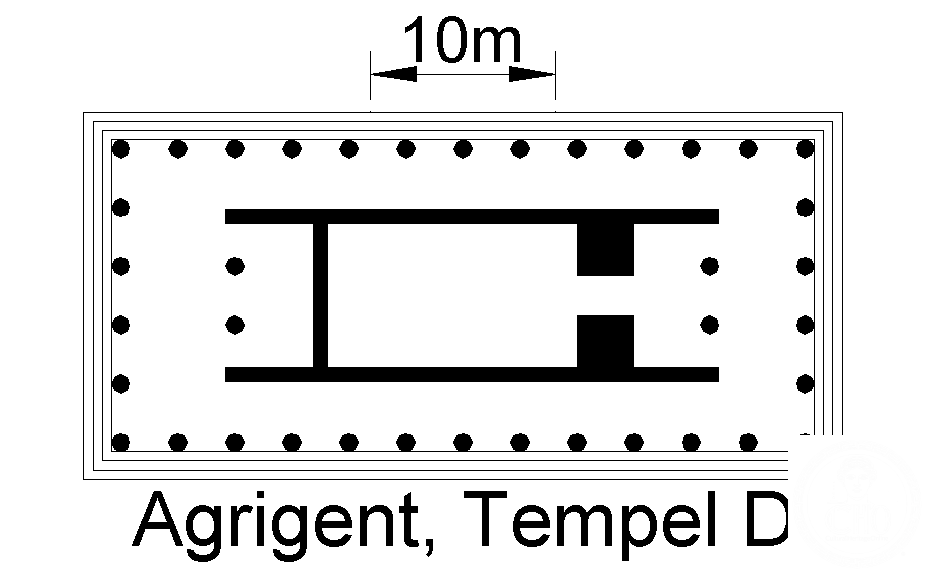
Temple of Juno (Hera Lacinia) — Agrigento
The Temple of Juno, also known as the Temple of Hera Lacinia, is a well-preserved ancient Greek Doric temple standing on the eastern ridge of the Valley of the Temples in Agrigento, Sicily. Built around 450–440 BC by the Greek colony of Akragas, it stands on a solid artificial platform constructed to level the uneven terrain, and retains 30 of its original 34 columns. The site is part of the UNESCO World Heritage Valle dei Templi, recognised as one of the finest examples of ancient Greek architecture outside Greece.
At a glance
- Type
- Ancient Greek Doric temple
- Period
- c. 450–440 BC
- Style
- Doric order, Magna Graecia
- Location
- Valley of the Temples (Valle dei Templi), Agrigento, Sicily
- Coordinates
- 37.2886° N, 13.6002° E
Overview
Positioned at the eastern end of the long sacred ridge that once formed the southern boundary of the ancient city of Akragas, the Temple of Juno commands sweeping views over the Mediterranean coast. Scholars named it “Temple of Juno” in the 18th century based on an erroneous interpretation of a passage by the geographer Strabo; modern archaeology has not definitively established its original dedicatee. It is part of the Valle dei Templi archaeological park, which also includes the better-preserved Temple of Concordia and the Temple of Heracles.
History
The temple was erected by the citizens of Akragas, one of the wealthiest Greek cities of the western Mediterranean, during a period of intense building activity in the mid-5th century BC. In 406 BC the Carthaginians sacked and burned Akragas; scorch marks still visible on the columns are believed to date from that attack. Under Roman rule the city declined, and the temple fell into disuse. Systematic archaeological study began in the 18th century, and restoration work in the 20th century re-erected several fallen columns to their current state.
What you see
The temple’s peristyle retains 30 standing columns of warm golden limestone on its north and south flanks, giving a strong sense of the original colonnade. The stylobate — the stepped platform on which the columns stand — is almost fully intact and reveals the precision of the ancient levelling work. Reddish fire-scarring from the 406 BC Carthaginian assault marks several column drums on the north side. An ancient cistern and traces of sacrificial altars survive east of the temple proper, and the surrounding terrain yields sherds and architectural fragments that help archaeologists reconstruct the sanctuary’s full extent.
Cultural significance
Together with the other temples of Akragas, the Temple of Juno represents the peak of Doric architecture in Magna Graecia and is protected as part of the Valle dei Templi UNESCO World Heritage Site (inscribed 1997). The site is considered one of the most important archaeological complexes in the Mediterranean and draws over one million visitors annually to Agrigento.
Practical information
- Address
- Valle dei Templi, 92100 Agrigento AG, Italy
- Hours
- Archaeological park open daily; hours vary seasonally — check the official Parco Valle dei Templi website
- Admission
- Combined ticket for the archaeological park; check official website for current prices
Getting there
From Agrigento city centre: the Valle dei Templi is approximately 3 km south; bus lines 1 and 2 from the central bus terminal stop at the park entrance. By car, follow signs from the SS115 or SS189. The nearest rail station is Agrigento Centrale (Trenitalia), from which buses or taxis reach the park in about 10 minutes.
Sources & resources
Find it on the map
See this place and what’s around it →📷 Diventa un fotografo di Cultural Heritage Online
Condividi le tue foto dei luoghi: restano pubblicate con la tua firma come autore. Più vengono viste, più ti fai conoscere — e presto un concorso premierà le foto più apprezzate.
Accedi o registrati gratis per aggiungere una foto