
Jewish Ghetto of Venice
The Venetian Ghetto is the historic Jewish quarter of Venice, established on 29 March 1516 by decree of Doge Leonardo Loredan — the first compulsory, walled Jewish enclosure in Europe and the origin of the word ghetto in all world languages. Located on an island in the Cannaregio sestiere, the quarter is still home to a living Jewish community, five historic synagogues, a museum, and kosher establishments, forming one of the most layered heritage sites in Italy.
At a glance
- Type
- Historic Jewish quarter
- Period
- Established 1516; Jewish community in Venice from 11th century
- Style
- Venetian Gothic and Renaissance; tall residential tenements (up to 7 storeys) due to spatial restrictions
- Location
- Cannaregio sestiere, Venice, Veneto, Italy
- Coordinates
- 45.4450 N, 12.3262 E
Overview
The Venetian Ghetto was instituted by the Venetian Senate, which confined Jews to a former foundry island (geto in Venetian dialect) locked each night by Christian guards. Despite strict restrictions on movement, trade, and dress, the community developed a remarkably rich intellectual and cultural life. In 1555 the population numbered around 923 within a city of over 160,000; by the 17th century the ghetto was densely populated, explaining the unusually tall tenements still visible today.
History
Jewish merchants and money-lenders had been present in Venice intermittently from the medieval period, performing financial services the Church forbade to Christians. The 1516 decree formalised their segregation, coining the term ghetto from the Venetian word for foundry. The quarter expanded across three adjacent islands — Ghetto Nuovo, Ghetto Vecchio, and Ghetto Nuovissimo — as the community grew over two centuries. Napoleon abolished the ghetto enclosure in 1797; the community darkest chapter came during the Second World War when over 200 Venetian Jews were deported and killed.
What you see
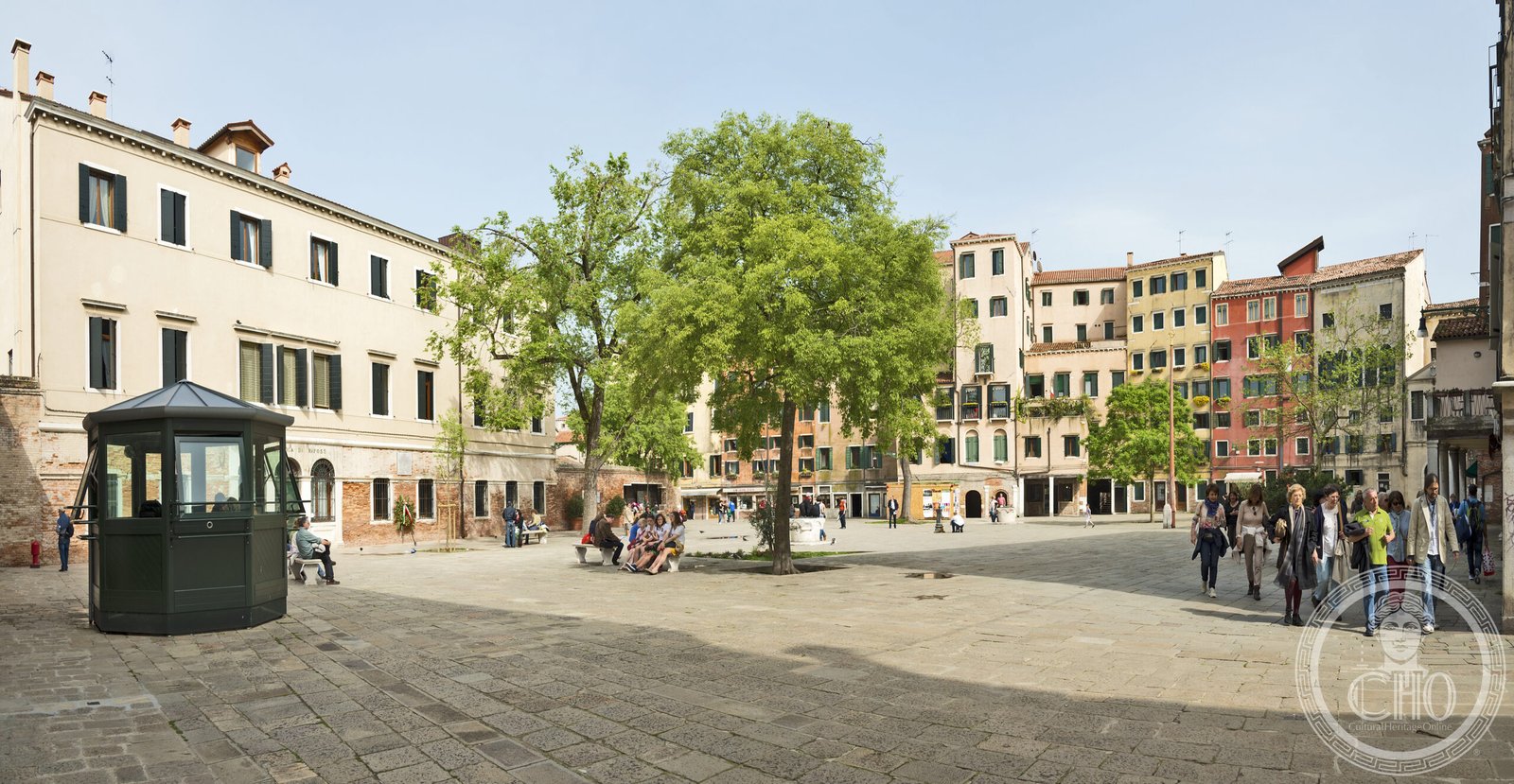
The Campo del Ghetto Nuovo is the quiet central square, ringed by the tall residential buildings whose extra storeys were added as the only permitted form of expansion. Five synagogues — the Scola Grande Tedesca, Scola Canton, Scola Italiana, Scola Levantina, and Scola Spagnola — are concealed within upper floors of ordinary-looking buildings, their ornate interiors a surprise within austere facades. The Museo Ebraico documents the community history through Torah scrolls, textiles, ceremonial silver, and archival material.
Cultural significance
The Venetian Ghetto is both a foundational document of European Jewish history and the origin of a word now used globally. It stands as a UNESCO-endorsed site of memory and is a place of pilgrimage for Jewish visitors worldwide. Its continued vitality as a living neighbourhood rather than a museum exhibit gives it an authenticity rare among comparable heritage sites.
Practical information
- Address
- Campo del Ghetto Nuovo, Cannaregio, 30121 Venezia VE
- Museo Ebraico hours
- Check official museum website; closed on Jewish holidays and Saturdays
- Synagogue tours
- Guided tours of the five synagogues available from the Museo Ebraico
Getting there
From Venice Santa Lucia railway station, cross the Scalzi bridge and walk north through Cannaregio (approximately 15 minutes on foot). The nearest vaporetto stops are Guglie (Line 4.1/4.2) or San Marcuola (Lines 1 and 2), both a short walk from the ghetto entrance.
Sources and resources
Find it on the map
See this place and what’s around it →📷 Diventa un fotografo di Cultural Heritage Online
Condividi le tue foto dei luoghi: restano pubblicate con la tua firma come autore. Più vengono viste, più ti fai conoscere — e presto un concorso premierà le foto più apprezzate.
Accedi o registrati gratis per aggiungere una foto