
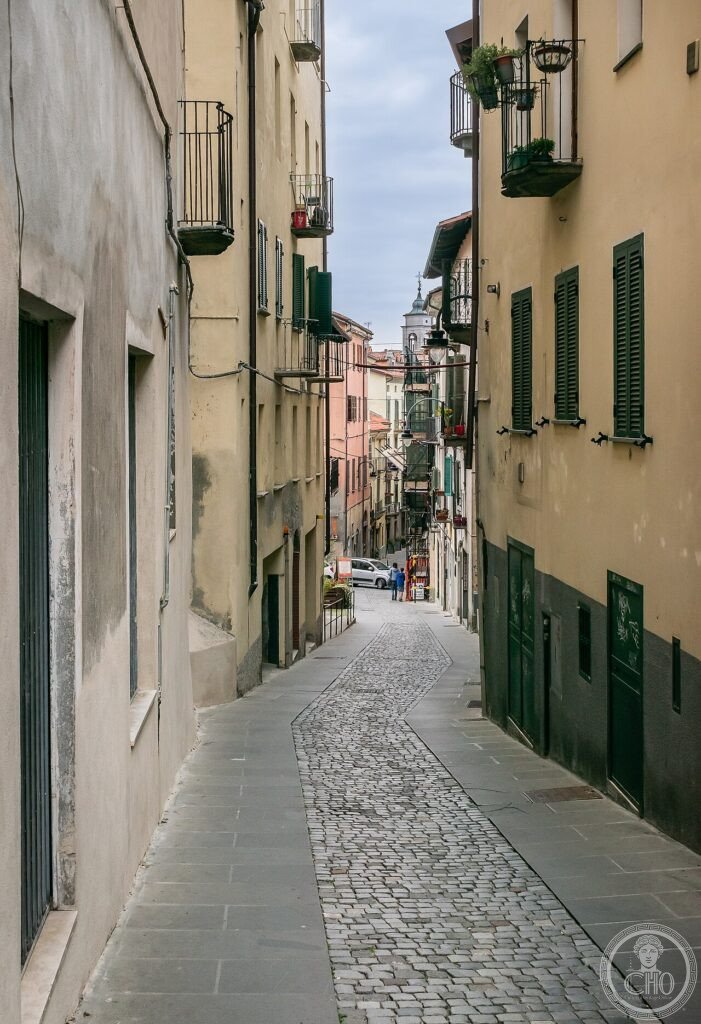
Ivrea: Città Industriale Olivetti
Ivrea (UNESCO 2018, rif. 1538) è l’unica utopia industriale del XX secolo diventata patrimonio UNESCO — la città dove Adriano Olivetti (1901-1960 CE) trasformò una fabbrica di macchine da scrivere in un modello planetario di capitalismo dal volto umano, con 27 tra i più grandi architetti italiani del Novecento (Figini, Pollini, Ridolfi, Zanuso) che costruirono la fabbrica ICO, i quartieri residenziali per gli operai, le scuole, le biblioteche, e la piscina, in un paesaggio urbano ancora leggibile come manifesto architettonico.
At a glance
Ivrea Olivetti UNESCO (the most precisely Ivrea zone Ivrea Piemonte Italy 45.4674 N 7.8736 E UNESCO WHS 2018 reference 1538: the site (the Ivrea industrial city UNESCO inscription covers 140 buildings in the “industrial city of the 20th century” built by Olivetti between 1934 and 1968: the 140 buildings include: (1) the production complex: the Officine ICO (the main factory, Luigi Figini and Gino Pollini, 1940 CE; extended 1955–61 CE by Eduardo Vittoria; 130 m long shed-roof workshop block); the Centro Sociale (the social services center: Luigi Figini and Gino Pollini, 1955–59 CE: the combined building with canteen + library + swimming pool + sports hall: the “social package” that Olivetti provided free to all workers and their families); the Uffici ICO (the factory office building: Annibale Fiocchi and Marcello Nizzoli, 1952–57 CE: the curvilinear glass tower (7 floors; the “S-curve” plan that wraps around the factory corner in a Corbusian-inspired gesture)); (2) the residential district: 13 housing estates built by Olivetti for the workers: the most famous: the “Borgo Olivetti” (Costantino Costantini, 1941–42 CE: 120 workers’ houses in a neo-medieval village layout on the hill south of the factory)); (3) the social infrastructure: the Asilo Nido (the nursery school: Eduardo Vittoria, 1955 CE: the first purpose-built nursery school in Ivrea; the design: a radial plan with 6 petal-shaped rooms around a central hall); the Scuola Olivetti (Luigi Figini and Gino Pollini, 1955 CE: the primary and secondary school for workers’ children)); the specific historical moment (the Olivetti company: founded 1908 CE by Camillo Olivetti (1868–1943 CE) in Ivrea as a typewriter factory; the Adriano Olivetti transformation (Adriano Olivetti (1901–1960 CE; son of Camillo): became managing director in 1938 CE and transformed the company into an integrated social enterprise: the “Olivetti model” (the idea that the factory should provide not just wages but a complete human environment for the worker: housing, education, culture, health, sport); the maximum (the Olivetti workforce at peak: 35,000 employees worldwide, 11,000 in Ivrea; the revenue: $100 million in 1960 CE).
Key facts
- Adriano Olivetti e il socialismo umanista: perché la sua morte nel 1960 CE fu la fine del sogno e cosa rimane oggi: the Olivetti vision (Adriano Olivetti (1901–1960 CE): the businessman-philosopher who combined manufacturing with social reform: the sources (Adriano Olivetti’s ideas are documented in 3 key texts: (1) “L’ordine politico delle comunità” (The Political Order of Communities, 1945 CE): his major political essay proposing a “community state” based on local autonomy and worker participation (the “Movimento Comunità” political party he founded in 1947 CE received 80,000 votes in the 1958 Italian general election; the Movimento Comunità was dissolved after Adriano’s death in 1960 CE)); (2) “Città dell’uomo” (City of Man, 1960 CE): his architectural theory essay (published 3 weeks before his death; the “città dell’uomo” is defined as a city designed for human development rather than for industrial production — the opposite of most 20th century industrial cities); (3) the factory library (the Olivetti factory library in Ivrea: 12,000 volumes available free to all workers (the titles: the library held standard technical references for typewriter mechanics + a selection of Italian and foreign literature chosen by Adriano personally + the “Comunità” magazine (1946–1985 CE): the house journal that published Italo Calvino, Umberto Eco, and Leonardo Ricci among others)); the death (Adriano Olivetti died on 27 February 1960 CE on the train from Milano to Geneva (he had a stroke on the train; the exact location of death: the tunnel near Aigle, Switzerland; he was 58 years old); the aftermath: the company was acquired by Fiat in 1978 CE; the Ivrea production was wound down by 2000 CE; the 140 UNESCO buildings were donated to the Municipality of Ivrea and to the Fondazione Adriano Olivetti in 1999 CE)
- GPS (Fabbrica ICO Olivetti, ingresso principale): 45.4674° N, 7.8736° E
History
Da Camillo Olivetti al 1908 ad Adriano all’utopia al UNESCO 2018 (the most precisely Ivrea zone history: the Camillo foundation (Camillo Olivetti (1868–1943 CE): the engineer who founded the Olivetti company on 29 October 1908 CE in Ivrea: the first Italian typewriter manufacturer; the first typewriter (the M1 Olivetti, 1908–11 CE): designed by Camillo himself; the first production run: 100 units; the plant (the first Olivetti factory: a converted silk mill in Ivrea (the textile industry had been the main industry of the Canavese area before 1908); the company grew rapidly (the workforce: 1910 CE: 12 employees; 1920 CE: 130; 1935 CE: 1,000; 1945 CE: 3,000)); the Adriano revolution (Adriano Olivetti (1901–1960 CE): Harvard Business School (1925–26 CE; the American formation that gave Adriano the technical management vocabulary but also exposed him to the Social Gospel movement (the American Protestant tradition of using business for social reform)); the Urban Plan (1937 CE: Adriano commissioned the first “Piano Regolatore” (urban plan) for Ivrea from the architect Figini and the engineer Maurer: the plan called for the expansion of the factory + the construction of 1,500 workers’ houses + 3 schools + a hospital + a sports complex; the plan was approved by the Italian government in 1937 CE (despite the Fascist government’s skepticism of Olivetti’s social agenda); the execution (1938–1968 CE): the plan was executed over 30 years by 27 different architects including Luigi Figini + Gino Pollini + Roberto Gabetti + Aimaro Isola + BBPR (Banfi, Belgiojoso, Peressuti, Rogers) + Marco Zanuso; the result: the “città industriale” of 140 buildings that was inscribed as UNESCO WHS 2018 (reference 1538).
What you see
La fabbrica ICO, il MAAM, il Ristorante delle Maestranze, e il Carnevale (the most precisely Ivrea zone visit (3–4 hours): the MAAM (the Museo a cielo aperto dell’architettura moderna (MAAM): the open-air museum of modern architecture; the 140 UNESCO buildings are mapped on the MAAM app (free download; iOS and Android: search “MAAM Ivrea”; the app provides the GPS location of each building, the architect, the date, and a 2-minute audio description in Italian and English); the itinerary (the MAAM standard 2-hour itinerary: (1) Officine ICO (the main factory: Via Jervis 9; the exterior only; the interior is used by the Polo Universitario della Regione Piemonte (from 2007 CE)); (2) Centro Sociale Olivetti (Via Jervis 11: the canteen + library + swimming pool; the exterior visible; the library is occasionally open for events; the swimming pool was restored in 2022 CE and is now open to the public from June to September: €5/session); (3) Asilo Nido Olivetti (Viale Jervis 77: the radial nursery school by Eduardo Vittoria (1955 CE); the exterior visible); (4) the residential Borgo Olivetti (Loc. Bellavista: the workers’ housing estate on the hill (15 minutes walk from the factory; GPS: 45.4711, 7.8695); the most photogenic moment (the Borgo Olivetti at sunset: the neo-medieval roofline of the workers’ houses against the Monte Rosa backdrop)); the Carnevale Storico (the Carnevale di Ivrea: the largest carnival in Italy after Venice (attendance: 500,000 over 3 days); the unique feature: the “Battaglia delle Arance” (the Battle of Oranges): 9 teams on foot (the “opposition”) vs 9 teams on horse-drawn carts (the “tyrant’s guards”): the orange battle commemorates the medieval revolt of Ivrea against the tyrant Ranieri di Biandrate (the legend: Violetta, the miller’s daughter, refused the tyrant’s “ius primae noctis” and incited the townspeople to revolt; the oranges represent the severed head of the tyrant); date: February (3 days before Martedì Grasso); attendance: 9,000 throwers (the throwers wear red caps (phrygian caps) as the symbol of the revolt)).
Practical information
- Il tour UNESCO di Ivrea: app MAAM, entrate, e come abbinare il Carnevale storico: la logistica (Trenitalia da Torino Porta Nuova a Ivrea: 45 min; €5.80; ogni 30–60 min; la stazione di Ivrea è a 700 m dalla Fabbrica ICO (pede; 10 min)); il biglietto MAAM (il tour MAAM auto-guidato non richiede biglietto (le strade e i giardini sono pubblici); le strutture interne richiedono prenotazione separata: il MAAM Guided Tour (sab e dom alle 10:30 e 14:30; durata 2h; €10; prenotazione a maamodernarchitecture.it)); il Carnevale (il Carnevale di Ivrea: le date 2026 sono 21–24 febbraio (il weekend del Carnevale dipende dal Martedì Grasso; verificare su carnevalediivrea.it); il pacchetto base (il “cappello frigio” rosso (obbligatorio per i pedoni che non vogliono essere colpiti da arance): €10; in vendita agli ingressi del centro storico dall’8 febbraio))
Getting there
Trenitalia da Torino Porta Nuova (45 min, €5.80, ogni 30-60 min). Auto: A5 Torino-Aosta, uscita Ivrea. GPS fabbrica ICO: 45.4674, 7.8736.
Nearby
- Torino: Palazzo Reale e Musei Reali (UNESCO 1997) — 45 min Trenitalia (il serial Residenze Sabaude; il Museo Egizio; la Mole Antonelliana; il Museo del Cinema)
- Aosta: Area Archeologica Romana (I sec. BCE – II sec. CE) — 60 km nord (Trenitalia Ivrea–Aosta 50 min €5.20; il Teatro Romano (I sec. CE; 4000 posti; gli spettacoli estivi); l’Arco di Augusto (25 BCE); il Forte romano di Augusta Praetoria (il centro di Aosta coincide con l’insula romana))
Gallery
Sources
- Wikipedia, Ivrea, industrial city of the 20th century; Adriano Olivetti; Olivetti company, accessed June 2026
- UNESCO, Ivrea, industrial city of the 20th century, WHS reference 1538, inscribed 2018
- Olivetti, Adriano. Città dell’uomo. Milano: Edizioni di Comunità, 1960 (the primary source for Olivetti’s architectural philosophy)
Find it on the map
See this place and what’s around it →📷 Diventa un fotografo di Cultural Heritage Online
Condividi le tue foto dei luoghi: restano pubblicate con la tua firma come autore. Più vengono viste, più ti fai conoscere — e presto un concorso premierà le foto più apprezzate.
Accedi o registrati gratis per aggiungere una foto