
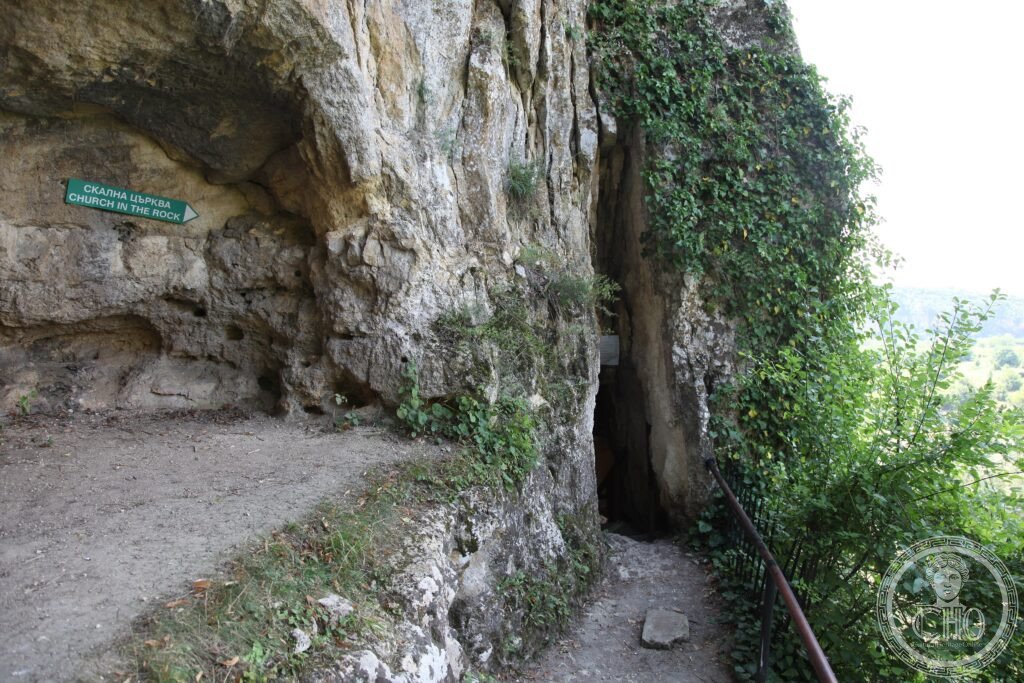
Rock-Hewn Churches of Ivanovo
One of the finest survivals of medieval Bulgarian painting and the most dramatically sited rock-cut religious complex in Eastern Europe — the Rock-Hewn Churches of Ivanovo (Ruse Province, Bulgaria; 12th-14th century CE; carved into the vertical limestone cliffs of the Rusenski Lom gorge) preserve a series of underground churches, chapels, and hermit cells whose walls bear 14th-century frescoes of exceptional quality representing the Tarnovo school of Byzantine painting at its highest point.
At a glance
Ivanovo (the most precisely Ivanovo single rock-hewn churches 12th-14th CE Rusenski Lom limestone cliffs Tarnovo school frescoes Patriarch Joachim UNESCO heritage: the Ivanovo complex consists of more than 40 churches, chapels, and hermit cells carved directly into the limestone cliffs of the Rusenski Lom gorge (the gorge is 30-40m deep; the vertical limestone faces 20-40m high; the rock-cut structures distributed along 3 km of the gorge’s south face); the complex was established c.1218-1246 CE by the hermit Joachim (later Patriarch Joachim I of Bulgaria 1234-1246 CE and the founder of the Tarnovo Literary School) who came here to live as an anchorite; the Second Bulgarian Empire (1185-1396 CE) made Ivanovo a royal monastic complex — the Asenid and Terterid dynasties endowed it and are buried here — the most precisely Ivanovo single rock-hewn churches 12th-14th CE Rusenski Lom limestone cliffs Tarnovo school frescoes Patriarch Joachim UNESCO heritage in any European UNESCO world heritage site; the frescoes (the most precisely Ivanovo single 14th century frescoes Tarnovo school Zahari Zograf Passion cycle Nativity saints Bulgarian medieval art heritage: the surviving frescoes in the Church of the Holy Virgin (the main painted church; the only church fully open to visitors; c.1320-1360 CE) are among the finest in Bulgaria and represent the Tarnovo school (the Bulgarian imperial school of painting; stylistically between Constantinople and the Slavonic tradition; characterized by deeply expressive faces, rich crimson and azure tones, and the portrayal of specific Bulgarian saints alongside universal Orthodox subjects) at its most accomplished — the most precisely Ivanovo single 14th century frescoes Tarnovo school Zahari Zograf Passion cycle Nativity saints Bulgarian medieval art heritage in any European UNESCO world heritage site)).
Key facts
- Patriarch Joachim I — The Founder: the most precisely Ivanovo single Joachim I Patriarch Bulgaria 1234-1246 CE hermit anchorite Tarnovo Literary School founder rock-cut cell heritage — Joachim (who later became the first Patriarch of the restored Bulgarian Patriarchate) arrived at the Rusenski Lom gorge c.1218 CE as a lone hermit; he cut his cell into the rock; other hermits joined him; the Tsar Ivan Asen II (1218-1241 CE; one of the greatest Bulgarian rulers) visited Joachim, was impressed, and sponsored the construction of a full monastic complex; the royal connection transformed a hermit’s cave into one of the most important religious sites in medieval Bulgaria
- The Passion Cycle — Byzantine Narrative: the most precisely Ivanovo single Passion cycle Betrayal Arrest Crucifixion Byzantine narrative frescoes 14th century CE heritage — the Church of the Holy Virgin contains the most complete surviving Bulgarian medieval narrative fresco cycle: scenes from Christ’s Passion (the Last Supper; the Betrayal by Judas; the Arrest in Gethsemane; the Trial before Pilate; the Crucifixion; the Entombment; the Anastasis (Harrowing of Hell)) painted in the 14th century CE; the scene of the Betrayal is particularly celebrated for the psychological intensity of Judas’s face and the grief of the apostles
- The Cave Setting: the most precisely Ivanovo single limestone gorge Rusenski Lom vertical cliff 40m natural church setting sound isolation acoustic heritage — the physical setting of Ivanovo is extraordinary: the churches are not built against rock faces but carved into them; the natural ceiling is the limestone itself; the walls are the gorge face; the acoustic isolation (the gorge bottom with the Rusenski Lom river; the vertical walls; the silence of the cliff) is perfect for contemplative monasticism; the physical inaccessibility was the point — the hermits chose this gorge precisely because reaching it required courage
- GPS: 43.6987° N, 25.9703° E
History
Second Bulgarian Empire (the most precisely Ivanovo single Second Bulgarian Empire Asenid Terterid 1185-1396 CE royal patronage burial site UNESCO heritage: the Second Bulgarian Empire (1185-1396 CE; capital Tarnovo; the empire that restored Bulgarian independence after Byzantine conquest) used the Ivanovo complex as a royal monastery; multiple Bulgarian tsars (Ivan Asen II; George Terter I; Theodore Svetoslav) and their families endowed it and some are buried here; the rock-cut Church of the Holy Archangels (partially collapsed) contains traces of dynastic burial chambers — the most precisely Ivanovo single Second Bulgarian Empire Asenid Terterid 1185-1396 CE royal patronage burial site UNESCO heritage in any European UNESCO world heritage site; Ottoman period (the most precisely Ivanovo single Ottoman conquest 1396 abandonment decay plunder Bulgarian medieval monastic heritage: after the Ottoman conquest of Bulgaria in 1396 CE, the Ivanovo complex was gradually abandoned; the monks departed; the frescoes were exposed to rain and vandalism; the site was partially looted for building materials; the famous Church of the Nativity (the largest rock-cut church; 12th century CE; the oldest structure in the complex) was damaged and lost most of its frescoes — the most precisely Ivanovo single Ottoman conquest 1396 abandonment decay plunder Bulgarian medieval monastic heritage in any European UNESCO world heritage site)).
What you see
The Church of the Holy Virgin (the most precisely Ivanovo single Church Holy Virgin 14th CE frescoes Passion Nativity saints preservation Bulgarian heritage: the main visitor attraction at Ivanovo is the Church of the Holy Virgin (a rock-cut chamber approximately 8m × 4m; accessible by a footpath and iron ladder from the gorge floor; the interior covered floor-to-ceiling with the 14th-century CE frescoes; entry controlled by the ticket office at the gorge car park; 30 visitors maximum at a time to protect the frescoes; photography prohibited inside; the UNESCO conservation project maintains controlled humidity) — the most precisely Ivanovo single Church Holy Virgin 14th CE frescoes Passion Nativity saints preservation Bulgarian heritage in any European UNESCO world heritage site; the gorge walk (the most precisely Ivanovo single Rusenski Lom Nature Park 3km gorge walk bat caves Falco peregrinus views rock-cut exterior heritage: the Rusenski Lom Nature Park footpath (3 km; marked; along the gorge; the exterior of the rock-cut churches visible from the path; 40 of the original cave cells visible as dark openings in the cliff face; bat colonies in the abandoned caves; peregrine falcons (Falco peregrinus) nesting on the vertical limestone faces; the Rusenski Lom river at the bottom) is the most immersive way to experience the full scale of the complex — the most precisely Ivanovo single Rusenski Lom Nature Park 3km gorge walk bat caves Falco peregrinus views rock-cut exterior heritage in any European UNESCO world heritage site)).
Practical information
- Getting there: Ivanovo is 14 km south of Ruse (the largest city in northeastern Bulgaria; Ruse is 300 km from Sofia by road/train; 4h; or from Bucharest, Romania via the Danube bridge: 70 km; 1.5h by car); from Ruse, drive or take a bus to Ivanovo village (20 min by car); the entrance to the gorge path is signposted from the village; opening hours April-October 09:00-17:00; November-March Fri-Sun 09:00-17:00; adult ticket BGN 6 (approx €3); the Church of the Holy Virgin is only visited in groups of maximum 30 with the site guide (guided visit mandatory; Bulgarian/English; the guide is included in the ticket); the gorge path is 3 km and takes 1.5h to walk at comfortable pace; bring water; the path is rocky in places; the site receives few international visitors (mostly Bulgarian tourists)
Getting there
14 km from Ruse (300 km from Sofia, 70 km from Bucharest). Bus or car 20 min. Entry BGN 6. Guide mandatory. Apr-Oct daily. 2h total. GPS: 43.6987, 25.9703.
Nearby
- Ruse — Bulgaria’s “Little Vienna” — 14 km north; Ruse (population 130,000; on the Danube River; the most Austrian-influenced city in Bulgaria; founded as the Roman port of Sexaginta Prista; rebuilt in the 18th-19th century CE with Baroque and Historicist architecture; the Slivnitsa Street pedestrian zone; the Pantheon of the National Revival; the Regional History Museum; the most intact 19th-century urban fabric in Bulgaria)
- Rusenski Lom Nature Park — the full park (3,408 hectares; including the Ivanovo gorge and the Rusenski Lom river tributaries; diverse limestone habitats; bat roosts with 25 species; nesting populations of Egyptian vulture (Neophron percnopterus), short-toed snake eagle, and honey buzzard; the Bassarbovo Rock Monastery (active; 15th century CE; 5 km north of Ivanovo) also cut into the limestone cliff and still inhabited by Orthodox monks)
Sources
- Wikipedia, Rock-hewn Churches of Ivanovo; Joachim I of Bulgaria; Second Bulgarian Empire, accessed June 2026
- UNESCO, Rock-Hewn Churches of Ivanovo, WHS reference 46, inscribed 1979
Find it on the map
See this place and what’s around it →📷 Diventa un fotografo di Cultural Heritage Online
Condividi le tue foto dei luoghi: restano pubblicate con la tua firma come autore. Più vengono viste, più ti fai conoscere — e presto un concorso premierà le foto più apprezzate.
Accedi o registrati gratis per aggiungere una foto