
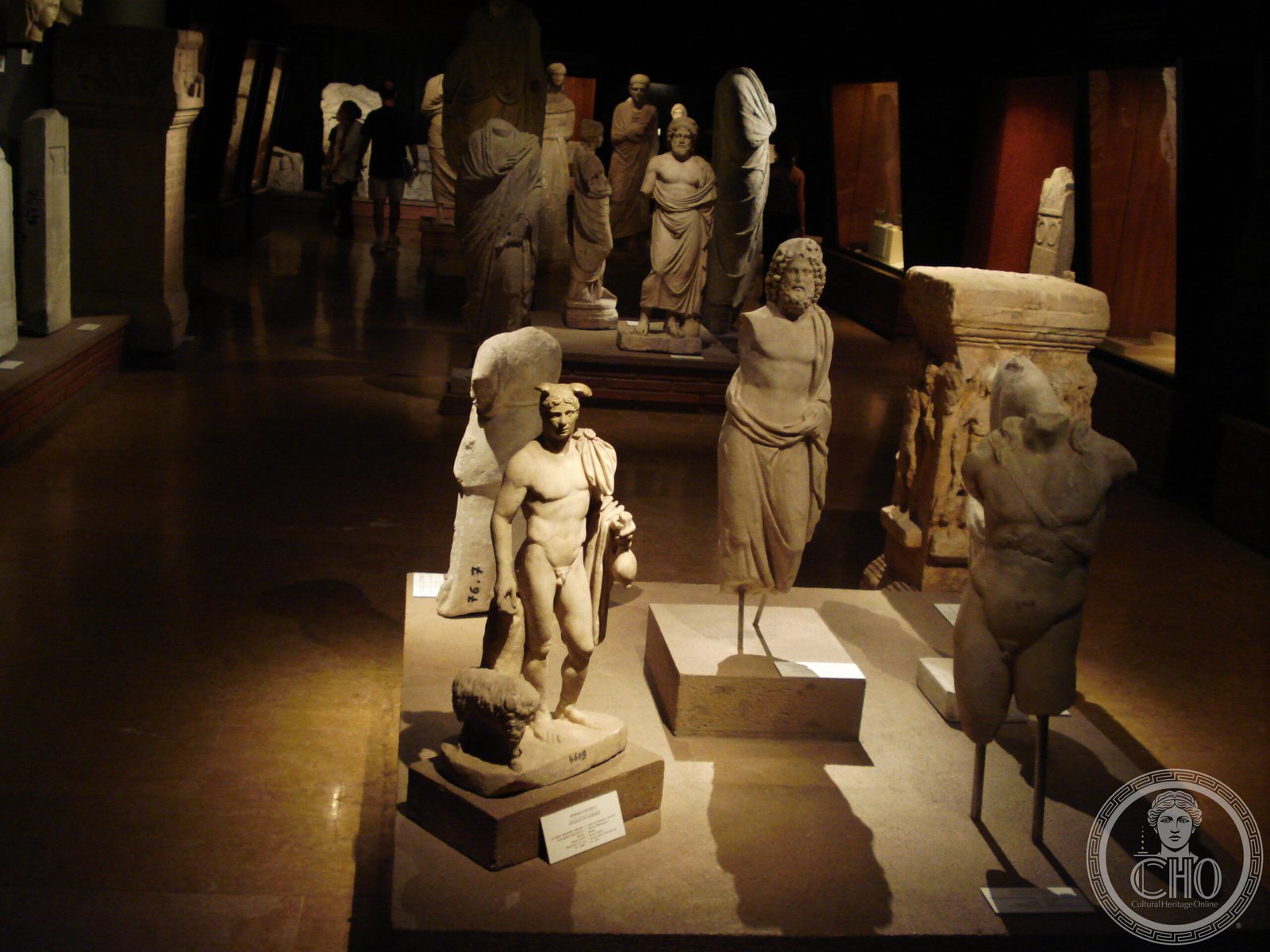
Istanbul Archaeological Museums
The Istanbul Archaeological Museums (İstanbul Arkeoloji Müzeleri) are a group of three interconnected museums near Gülhane Park and Topkapı Palace in the historic heart of Istanbul, collectively housing over one million objects from virtually every period and civilisation in world history. Founded in 1891 under the directorship of painter and archaeologist Osman Hamdi Bey, the complex includes the Archaeological Museum proper, the Museum of the Ancient Orient, and the Tiled Kiosk Museum (Çinili Köşk). The Alexander Sarcophagus, excavated at Sidon in 1887, is the most celebrated of the museums’ extraordinary holdings.
At a glance
- Type
- State archaeological museum complex (three buildings)
- Period
- Founded 1891; Tiled Kiosk built 1472 under Mehmed II
- Style
- Neoclassical (main museum building, 1891); Ottoman (Tiled Kiosk, 1472)
- Location
- Osman Hamdi Bey Yokuşu, Eminönü, Fatih, Istanbul, Turkey
- Coordinates
- 41.0117° N, 28.9791° E
- Administered by
- Republic of Turkey, Ministry of Culture and Tourism
Overview
The Istanbul Archaeological Museums form one of the world’s great encyclopaedic museum complexes, rivalling in scope the British Museum and the Louvre. Their collections span Palaeolithic tools to Ottoman-era objects, with particular strength in ancient Near Eastern, Egyptian, Greek, Roman, and Byzantine material. The museums are located within the outer grounds of Topkapı Palace, accessible through Gülhane Park, making them part of Istanbul’s densest concentration of world-heritage sites. Over a million objects are held in storage and on display, representing more than 5,000 years of human history.
History
The origins of the complex lie in the Imperial Museum (Müze-i Hümayun), established in the mid-19th century under Sultan Abdülmecid I, initially housed in the Tiled Kiosk. The decisive figure was Osman Hamdi Bey, a pioneering Ottoman archaeologist who directed the museum from 1881 and oversaw the excavation of the royal necropolis at Sidon, Lebanon, in 1887 — bringing back the magnificent series of sarcophagi that remain the collection’s centrepiece. Hamdi Bey also championed legislation prohibiting the export of antiquities from Ottoman territories, a landmark in the history of cultural heritage protection. The neoclassical main museum building opened in 1891, with later additions extending the complex through the 20th century.
What you see
The Archaeological Museum’s greatest treasures are the sarcophagi from the royal necropolis of Sidon: the Alexander Sarcophagus (late 4th century BC), with its extraordinarily preserved polychrome reliefs depicting Alexander the Great in battle and at the hunt, is considered one of the masterpieces of ancient sculpture. The Museum of the Ancient Orient displays Babylonian, Assyrian, Hittite, and Egyptian artefacts, including a fragment of the Treaty of Kadesh (c. 1259 BC), one of the world’s oldest known peace treaties. The Tiled Kiosk, the oldest surviving non-religious Ottoman building in Istanbul (1472), houses a collection of Anatolian Seljuk and Ottoman ceramics and tiles.
Cultural significance
The museums are a cornerstone of Turkey’s cultural heritage infrastructure and a critical repository for the archaeology of the ancient Near East and Eastern Mediterranean. Osman Hamdi Bey’s legal and institutional legacy — establishing state control over archaeological finds — influenced heritage legislation across the region and beyond. The Alexander Sarcophagus alone draws scholars and art lovers from every continent, making the complex an irreplaceable resource for the understanding of ancient Greek art in its eastern Mediterranean context.
Practical information
- Address
- Osman Hamdi Bey Yokuşu Sk., 34122 Fatih/İstanbul, Turkey
- Opening hours
- Tuesday–Sunday 09:00–19:00 (summer); 09:00–17:00 (winter). Closed Mondays. Check official website for current admission prices.
- Website
- muze.gov.tr
Getting there
The museums are reached through Gülhane Park, adjacent to Topkapı Palace. The nearest tram stop is Gülhane on the T1 line, which directly serves the park entrance. The Eminönü ferry terminal is approximately 10 minutes on foot. Sultanahmet tram stop (for the Blue Mosque and Hagia Sophia) is one stop further along the T1 line. The museum complex is within easy walking distance of all major Sultanahmet attractions.
Sources & resources
Find it on the map
See this place and what’s around it →📷 Diventa un fotografo di Cultural Heritage Online
Condividi le tue foto dei luoghi: restano pubblicate con la tua firma come autore. Più vengono viste, più ti fai conoscere — e presto un concorso premierà le foto più apprezzate.
Accedi o registrati gratis per aggiungere una foto