
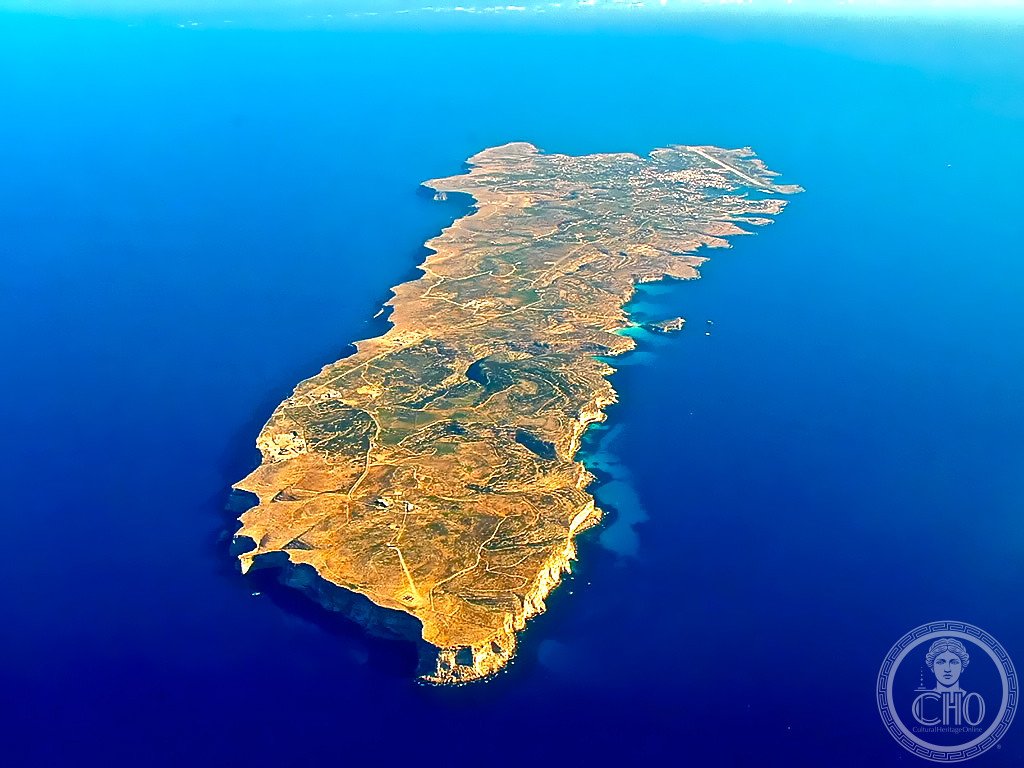
Island of Lampedusa
Lampedusa is the largest island of Italy’s Pelagian archipelago in the Mediterranean Sea, geographically closer to Tunisia than to Sicily and situated at one of the most southerly points of European territory. A rugged limestone plateau ringed by turquoise waters and protected marine reserves, the island is celebrated for its pristine beaches — above all the Spiaggia dei Conigli, consistently ranked among the world’s finest — and for its complex role as a crossroads of migration, ecological conservation, and Southern Italian maritime culture.
At a glance
- Type
- Island, comune, natural marine reserve
- Period
- Inhabited since antiquity; modern commune established 19th century
- Style
- Mediterranean limestone landscape; Arab-Norman cultural heritage
- Location
- Pelagian Islands, Province of Agrigento, Sicily, Italy
- Coordinates
- 35.5027° N, 12.6092° E
Overview
Lampedusa is the largest of Italy’s Pelagian Islands in the Mediterranean Sea, administratively part of the Province of Agrigento in Sicily. At roughly 20 square kilometres, the island sits approximately 205 km from the Sicilian coast and only 113 km from the Tunisian coast, placing it geographically in Africa rather than Europe by tectonic definition. Its permanent population numbers around 4,500 residents, swelling considerably in summer with tourism.
History
Lampedusa was inhabited in antiquity by Phoenician and Greek seafarers who used its natural harbour as a staging point across the central Mediterranean. Following centuries of Arab settlement, the island passed through Norman, Spanish, and later Bourbon Neapolitan control before being colonised by a group of settlers from Agrigento in 1843 under Bourbon sponsorship. During World War II the island was briefly occupied by German and Italian forces and served as a military outpost; it was one of the first Italian territories to surrender to Allied forces in June 1943. In recent decades the island has gained international attention as a primary entry point for migrants and asylum seekers crossing from North Africa.
What you see
The island presents a stark limestone plateau landscape, largely treeless, with dramatic coastal cliffs, sea caves, and clear shallow bays whose colours shift from pale turquoise to deep cobalt. The Spiaggia dei Conigli (Rabbit Beach) on the southwestern shore is a protected turtle-nesting site and consistently ranks at the top of world beach surveys. The town of Lampedusa, with its fishing harbour, colourful boats, and low whitewashed buildings, reflects the island’s enduring identity as a fishing community. A small museum and the Sanctuary of Our Lady of Porto Salvo document the island’s layered cultural history.
Cultural significance
Lampedusa occupies a singular place in contemporary European consciousness: it is simultaneously an unspoilt natural paradise and a humanitarian frontier, the island where thousands of migrants have arrived and, in tragic cases, perished attempting the crossing. Its name has become shorthand in international media and policy discourse for the human dimension of Mediterranean migration. At the same time, its natural marine reserve and the loggerhead sea turtle nesting at Rabbit Beach make it a critical conservation site in the central Mediterranean.
Practical information
- Address
- Lampedusa, 92010 Agrigento AG, Italy
- Getting around
- Small island navigable by scooter, bicycle, or local bus; boat tours available for sea caves and coastal access
- Marine reserve
- Riserva Naturale Orientata Isola di Lampedusa — access to Rabbit Beach regulated seasonally to protect turtle nests
Getting there
Lampedusa is served by Lampedusa Airport (LMP) with direct flights from Palermo, Rome, Milan, and other Italian cities, particularly in summer. Ferry and hydrofoil services operate from Porto Empedocle (near Agrigento) and from Malta, with crossing times of approximately eight hours by ferry and three hours by high-speed catamaran. Booking ahead is essential in July and August.
Sources & resources
Find it on the map
See this place and what’s around it →📷 Diventa un fotografo di Cultural Heritage Online
Condividi le tue foto dei luoghi: restano pubblicate con la tua firma come autore. Più vengono viste, più ti fai conoscere — e presto un concorso premierà le foto più apprezzate.
Accedi o registrati gratis per aggiungere una foto