
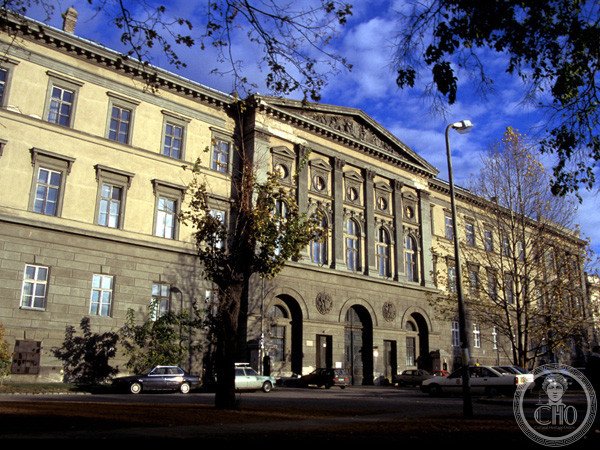
Hungarian Natural History Museum
The Hungarian Natural History Museum in Budapest is one of the oldest scientific institutions in Central Europe, founded in 1802 as a natural history department of the Hungarian National Museum. It holds the largest natural history collections in Hungary and the wider region, spanning mineralogy, palaeontology, botany, zoology and anthropology. Its permanent exhibitions bring together hundreds of thousands of specimens that document the natural world of the Carpathian Basin and beyond.
At a glance
- Type
- Natural history museum
- Period
- Founded 1802; current building late 20th century
- Style
- Modern museum complex
- Location
- Budapest, Hungary · 47.4823° N, 19.0835° E
Overview
The Hungarian Natural History Museum houses the largest natural history collections in Hungary, with holdings that span geology, mineralogy, palaeontology, botany, zoology and anthropology. Originally established in 1802 as part of the Hungarian National Museum, it became an independent institution in 1870. Today the museum serves as both a major public attraction and a leading centre for biological and earth science research in Central Europe.
History
The museum traces its origins to 1802, when a natural history collection was established within the Hungarian National Museum shortly after that institution was founded. Decades of systematic field collection and international exchanges steadily expanded the holdings throughout the 19th century. In 1870 the natural history collections were separated into an independent museum, and the institution continued to grow through donations, expeditions and acquisitions across the following century. The museum relocated to its present premises in the Könyves Kálmán körút area of Budapest in the 1990s, purpose-built to accommodate its vast and still-expanding collections.
What you see
The permanent galleries lead visitors through the full sweep of natural history: a mineralogy hall with striking crystals and meteorites, a palaeontology wing featuring dinosaur skeletons and fossil flora, and extensive zoology displays covering mammals, birds, reptiles and insects native to the Carpathian Basin. A dedicated botanical section presents pressed herbarium specimens alongside reconstructed ecosystems. The anthropology galleries examine the physical diversity and prehistoric presence of humans in the region, rounding out a comprehensive survey of the natural world.
Cultural significance
As Hungary’s principal repository of natural scientific heritage, the museum plays a vital role in environmental education and biodiversity research, housing type specimens and reference collections relied upon by scientists across Europe. Its founding in 1802 — the same year as the Hungarian National Museum itself — places it among the earliest modern scientific institutions in the region, reflecting the Enlightenment drive to catalogue and understand the natural world.
Practical information
- Address
- Ludovika tér 2–6, 1083 Budapest, Hungary
- Hours
- Check the official website for current opening hours and ticket prices
- Admission
- Check official website
Getting there
The museum is located in the 8th district of Budapest. The nearest metro stop is Klinikák on Metro Line 3 (blue line). Buses and trams serve the surrounding area, and the Keleti railway station is approximately 1 km away on foot. Street parking is available in the vicinity.
Sources & resources
Find it on the map
See this place and what’s around it →📷 Diventa un fotografo di Cultural Heritage Online
Condividi le tue foto dei luoghi: restano pubblicate con la tua firma come autore. Più vengono viste, più ti fai conoscere — e presto un concorso premierà le foto più apprezzate.
Accedi o registrati gratis per aggiungere una foto