
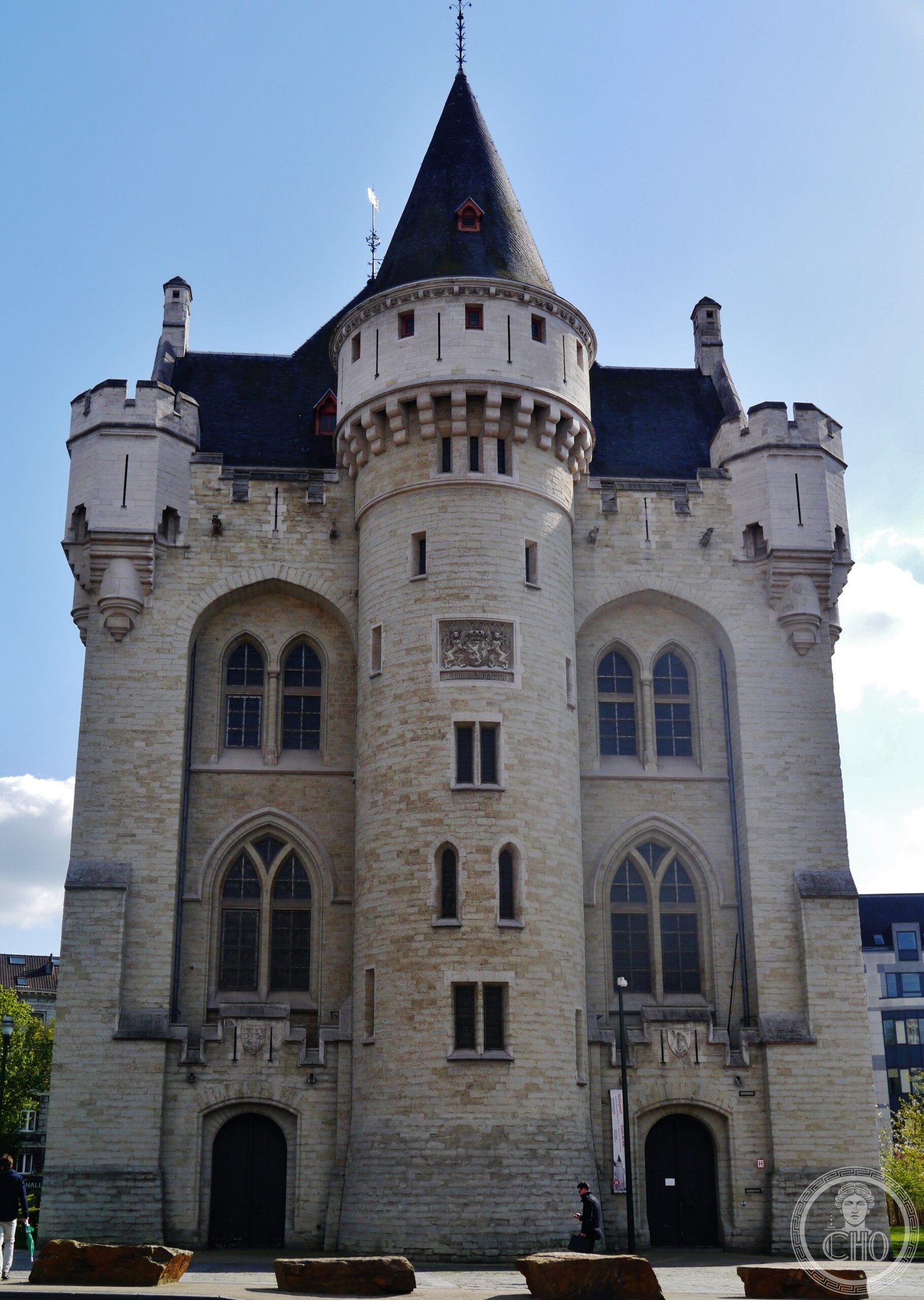
Halle Gate
The Halle Gate (Porte de Hal / Hallepoort) is the sole surviving medieval city gate of Brussels and the last remnant of the city’s second defensive walls, built in the fourteenth century. Heavily restored in neo-Gothic style by architect Henri Beyaert in the nineteenth century, it now serves as a museum dedicated to medieval Brussels and is part of the Royal Museums of Art and History.
At a glance
- Type
- Medieval city gate; history museum
- Period
- Built 14th century; neo-Gothic restoration 19th century
- Style
- Gothic; 19th-century neo-Gothic restoration by Henri Beyaert
- Location
- Boulevard du Midi / Zuidlaan, Brussels, Belgium
- Coordinates
- 50.8330° N, 4.3427° E
Overview
The Halle Gate is a former medieval city gate and the last vestige of the second walls of Brussels, Belgium. Built in the 14th century, it was heavily restored in the 19th century in its current neo-Gothic style by the architect Henri Beyaert. It is now a museum dedicated to the medieval City of Brussels, part of the Royal Museums of Art and History (RMAH).
History
The second walls of Brussels were constructed between 1356 and 1383 to enclose the expanding medieval city, and the Halle Gate was one of seven principal gates controlling access along the major road to Halle in the south. Over the centuries the gate served multiple purposes beyond defence, including use as a prison and an arsenal. While the rest of the second walls were demolished in the nineteenth century as Brussels modernised and expanded, the Halle Gate was spared after a public campaign led by Romantic-era intellectuals who valued it as a symbol of the city’s medieval past. Henri Beyaert’s neo-Gothic restoration of 1868–1870 added turrets and decorative elements that gave the structure much of its present appearance.
What you see
The gate is a massive cylindrical tower of dark stone rising six storeys, with round bartizans and a crenellated crown added during the Beyaert restoration. Inside, the museum displays armour, weapons, tapestries, and artefacts illustrating life in medieval Brussels, as well as exhibits on the history of the city walls themselves. The building’s thick walls preserve original medieval masonry in the lower levels, while upper floors offer panoramic views across the southern districts of Brussels. A restored drawbridge mechanism and portcullis are among the highlights visible to visitors.
Cultural significance
As Brussels’s only surviving medieval gate, the Halle Gate is an irreplaceable document of the city’s fourteenth-century urban fabric and military architecture. Its preservation against the wave of demolition that erased the rest of the second walls represents an early European victory of heritage conservation over modernisation, and the building remains one of the key symbols of Brussels’s historical identity. Its inclusion in the Royal Museums of Art and History ensures ongoing scholarly and public access to the collections it houses.
Practical information
- Address
- Boulevard du Midi 150, 1000 Brussels, Belgium
- Hours
- Tuesday–Friday 09:30–17:00; Saturday–Sunday 10:00–17:00; closed Monday
- Admission
- Paid entry; free for children under 12 and museum pass holders
- Website
- Check the Royal Museums of Art and History website for current information
Getting there
The Halle Gate is located on the Boulevard du Midi in central Brussels, directly above the Porte de Hal / Hallepoort metro station on lines 2 and 6, making it one of the most straightforward museums to reach in the city. Trams 3, 4, and 51 also stop nearby. From the Grand-Place it is approximately 15 minutes on foot southward along the Rue Haute.
Sources & resources
Find it on the map
See this place and what’s around it →📷 Diventa un fotografo di Cultural Heritage Online
Condividi le tue foto dei luoghi: restano pubblicate con la tua firma come autore. Più vengono viste, più ti fai conoscere — e presto un concorso premierà le foto più apprezzate.
Accedi o registrati gratis per aggiungere una foto