
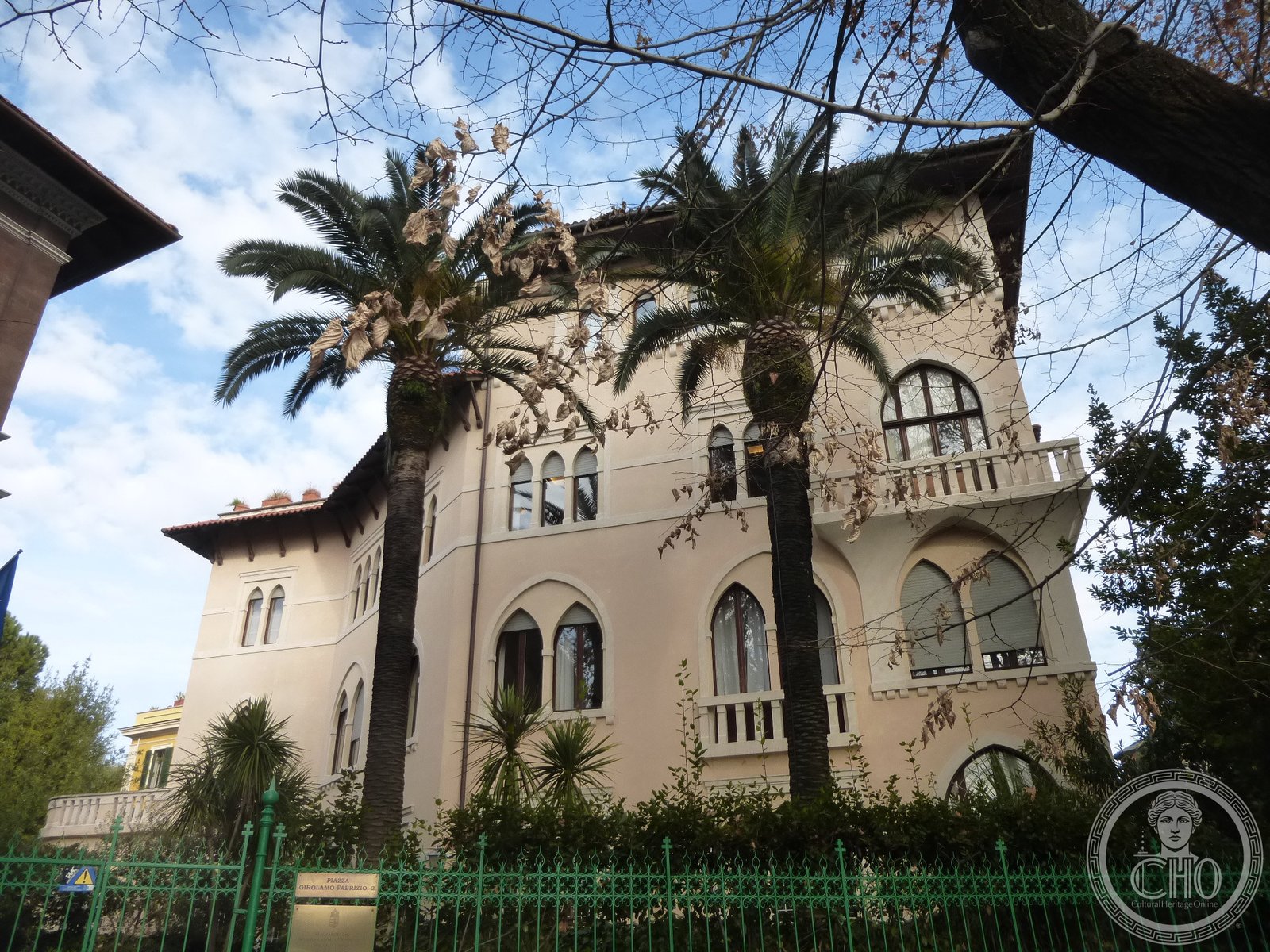
German Archaeological Institute, Rome
The German Archaeological Institute (Deutsches Archäologisches Institut, DAI) in Rome is one of the world’s most prestigious centres for archaeological research, founded in 1829 as the Instituto di Corrispondenza Archeologica and later incorporated as a federal agency under Germany’s Federal Foreign Office. Its Rome branch, known as the DAI-Rom, holds one of the most significant archaeological libraries and photo archives in Europe and has contributed foundational scholarship on ancient Roman, Greek, and Mediterranean cultures for nearly two centuries.
At a glance
- Type
- Archaeological research institute (federal agency of Germany)
- Period
- Founded 1829 as Instituto di Corrispondenza Archeologica; reorganised as DAI 1871
- Style
- Research institution; historic palazzo in central Rome
- Location
- Rome, Lazio, Italy (41.9090° N, 12.4927° E)
Overview
The German Archaeological Institute is a research institution in the field of archaeology operating as a federal agency under Germany’s Federal Foreign Office. Its global network of branches — with Rome as one of the oldest and most prominent — conducts excavations, publishes scholarly journals, and maintains reference libraries and photographic archives. The DAI Rome branch is headquartered in the Villa Sciarra area and collaborates with Italian universities, the Vatican, and international research bodies.
History
The institute was founded in 1829 in Rome by a group of European scholars including Eduard Gerhard and Theodor Panofka, under the name Instituto di Corrispondenza Archeologica, with the aim of coordinating classical archaeological discoveries across Europe. In 1871, following German unification, it was reorganised as the Kaiserlich Deutsches Archaeologisches Institut and placed under the German Foreign Office. Over the following century and a half it expanded into a global network of branches, with the Rome department remaining its intellectual heart for classical scholarship.
What you see
The DAI-Rom complex houses one of the largest specialist archaeological libraries in the world, with over 200,000 volumes devoted to classical antiquity. Its photo archive preserves hundreds of thousands of images documenting archaeological sites, monuments, and artefacts across the Mediterranean. The institute publishes the Römische Mitteilungen (Papers of the German Archaeological Institute), one of the oldest continuously published archaeological journals, and hosts international colloquia and lecture series open to the scholarly community.
Cultural significance
The DAI Rome embodies nearly 200 years of international collaboration in Mediterranean archaeology and stands as a testament to the long tradition of German classical scholarship in Italy. Its library and archives are irreplaceable reference resources for researchers worldwide studying ancient Rome, Etruria, Magna Graecia, and the broader Mediterranean world. The institute’s presence in Rome also reflects the historic German intellectual fascination with classical antiquity that shaped Winckelmann, Goethe, and subsequent generations of humanists.
Practical information
- Address
- Via Vicenza 8, 00185 Rome (check official website for current details)
- Hours
- Library accessible to researchers; check dainst.org for access procedures
- Admission
- Research library requires scholarly accreditation; some public lectures are open to all
- Website
- dainst.org/standort/rom
Getting there
The Rome branch is located in central Rome near the Termini railway station area, accessible by Metro Line A and B (Termini interchange), multiple bus lines, and on foot from the Esquilino neighbourhood. The Termini station is a major hub connecting all Roman public transport.
Sources & resources
Find it on the map
See this place and what’s around it →📷 Diventa un fotografo di Cultural Heritage Online
Condividi le tue foto dei luoghi: restano pubblicate con la tua firma come autore. Più vengono viste, più ti fai conoscere — e presto un concorso premierà le foto più apprezzate.
Accedi o registrati gratis per aggiungere una foto