
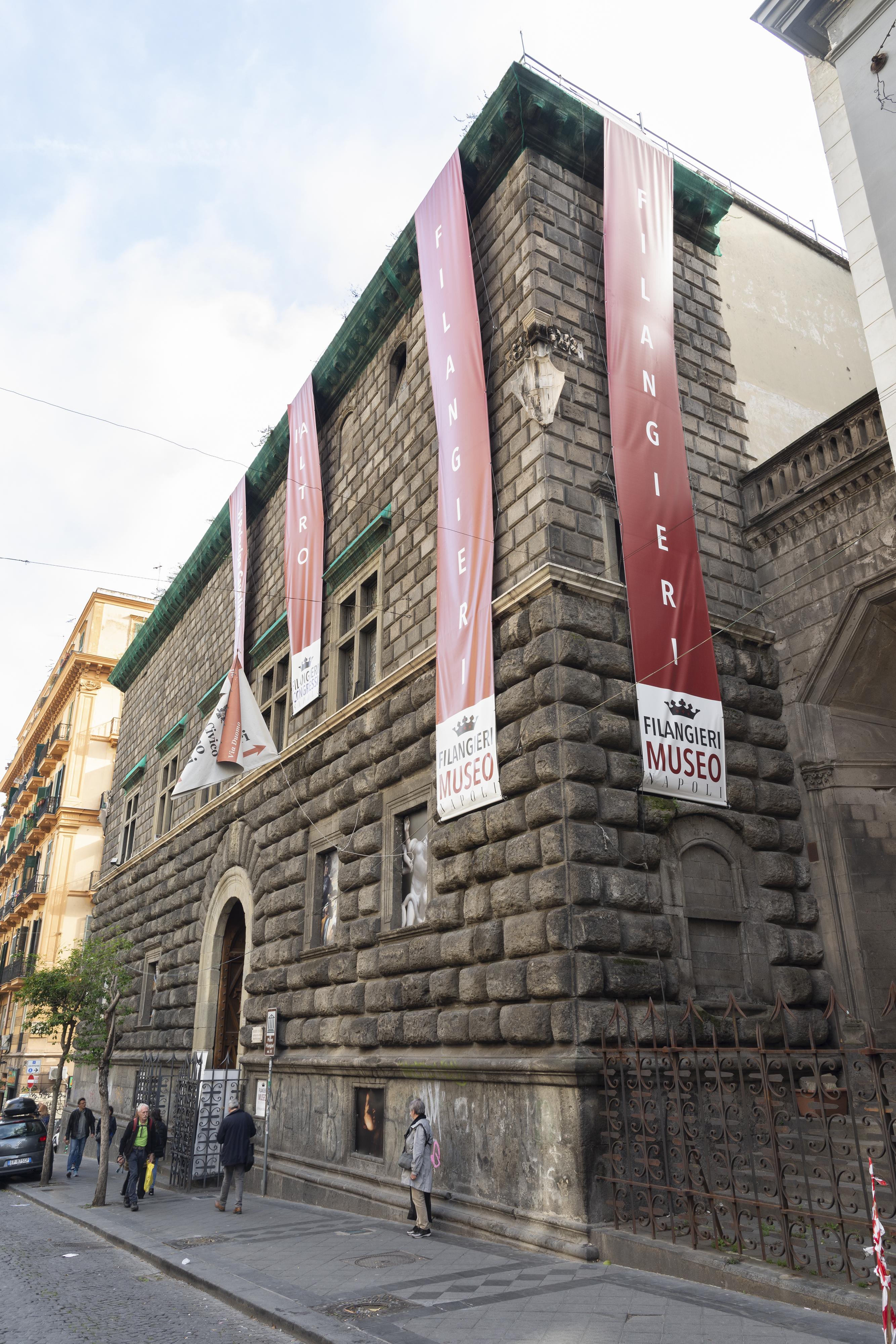
Gaetano Filangieri Civic Museum
The Gaetano Filangieri Civic Museum on Via Duomo in Naples is a remarkable 19th-century collector's museum founded by Prince Gaetano Filangieri and donated to the city in 1888. Housed in the Palazzo Como, a 15th-century Catalan-Gothic palace, it preserves an eclectic collection of arms and armour, Neapolitan ceramics, paintings, ivories, and decorative arts — a monument both to aristocratic connoisseurship and to Neapolitan civic philanthropy.
At a glance
- Type
- Civic decorative arts and collector's museum
- Period
- Founded 1888; collection 15th–19th century
- Style
- Eclectic collector's museum in a Catalan-Gothic palace
- Location
- Via Duomo 288, Naples, Campania, Italy
- Coordinates
- 40.8489° N, 14.2608° E
Overview
Prince Gaetano Filangieri di Satriano (1824–1892), jurist and senator, spent decades assembling a collection of art and historical artefacts across Europe, driven by a vision of creating a public museum for Naples modelled on the great civic collections of northern Italy. His museum, opened to the public in 1888 in the restored Palazzo Como, suffered severe damage during the Allied bombing of Naples in 1943, when fire destroyed much of the original collection. The post-war reconstruction gathered surviving works and new acquisitions to reconstitute the museum, which reopened and continues today as one of Naples's distinctive civic institutions.
History
The Palazzo Como that houses the museum was built in the late 15th century by the Aragonese merchant Giovanni Como, who brought Catalan Gothic architectural forms to Naples — a style unusually rare in the city. Prince Filangieri chose this building for his museum, restoring and adapting it to display his collection. The 1943 bombing destroyed the majority of paintings and documents, but the armour collection, ceramics, and a number of sculptural works survived. Reconstruction of the collection throughout the second half of the 20th century gradually restored the museum to its role as a showcase of Neapolitan cultural heritage.
What you see
The museum displays an exceptional collection of arms and armour spanning the 15th through 18th centuries, including pieces of Spanish, Italian, and Middle Eastern origin. Neapolitan and Capodimonte porcelain, majolica, ivories, bronzes, and a selection of paintings round out the permanent collection. The Palazzo Como itself is a significant architectural attraction, with its Catalan-Gothic stone facade representing a unique trace of Aragonese Naples in the historic centre.
Cultural significance
The Filangieri Museum represents a tradition of civic philanthropy that shaped the cultural infrastructure of 19th-century Naples, offering an alternative to the great royal museums of the Bourbon era. Its survival and reconstruction after wartime destruction make it a symbol of cultural resilience, and the Palazzo Como in which it is housed is one of the rare remaining examples of Catalan-Gothic civil architecture in southern Italy.
Practical information
- Address
- Via Duomo 288, 80138 Napoli NA
- Opening hours
- Check official website for current schedule; typically closed Monday
- Admission
- Check official website for current ticket prices
Getting there
The museum is located on Via Duomo in the historic centre of Naples, a short walk north of the cathedral. The nearest metro station is Duomo on Line 1. From Piazza Garibaldi (Napoli Centrale railway station), the museum is approximately 15 minutes on foot north along Via Duomo, or reachable by tram line 1. The Spaccanapoli historic district and numerous other cultural sites are within walking distance.
Sources & resources
Find it on the map
See this place and what’s around it →📷 Diventa un fotografo di Cultural Heritage Online
Condividi le tue foto dei luoghi: restano pubblicate con la tua firma come autore. Più vengono viste, più ti fai conoscere — e presto un concorso premierà le foto più apprezzate.
Accedi o registrati gratis per aggiungere una foto