
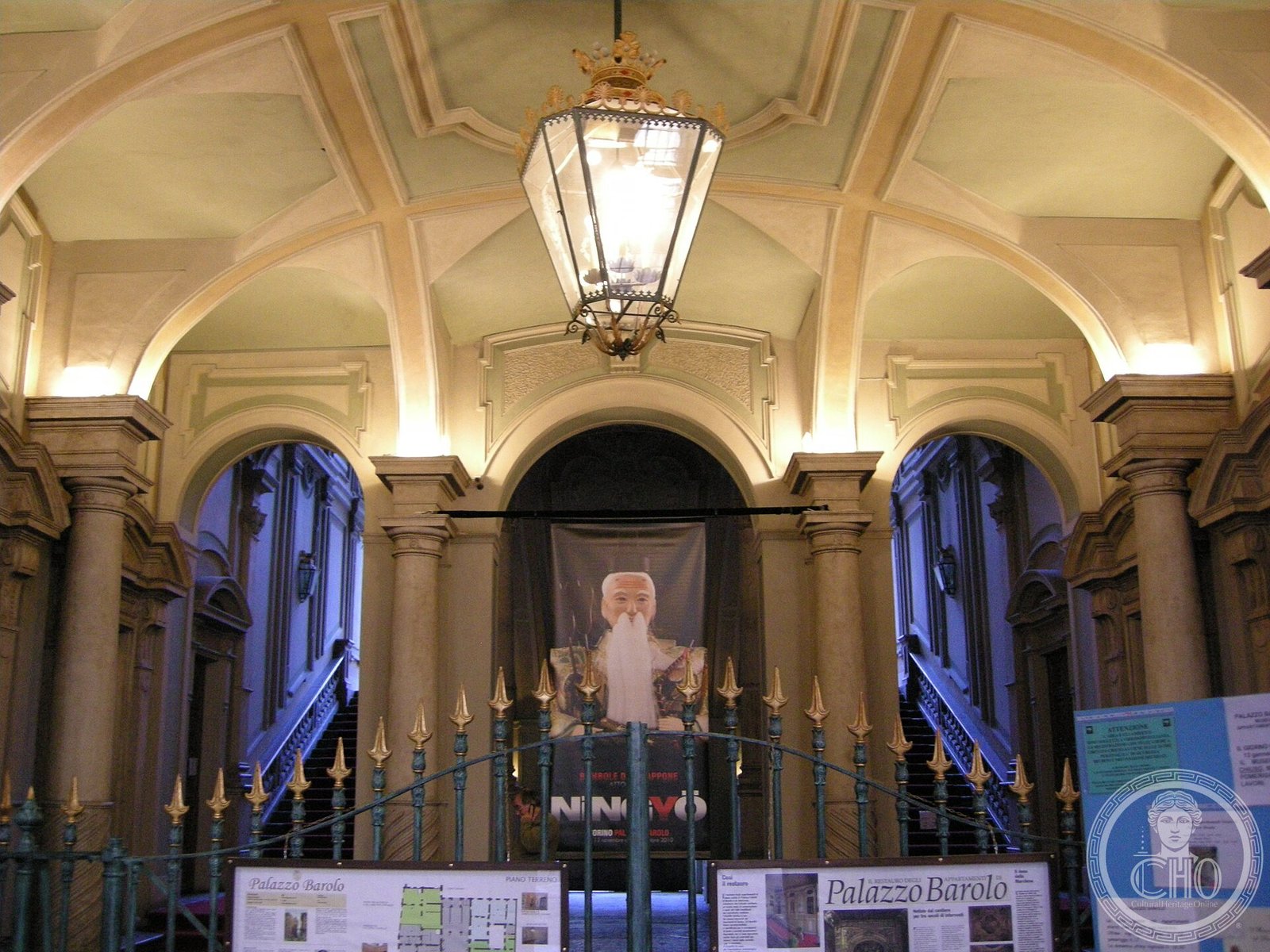
Falletti of Barolo Palace
The Falletti of Barolo Palace — Palazzo Falletti di Barolo — is a grand Baroque residence in the historic centre of Turin, built in the seventeenth century for the powerful Falletti marquis family, who held the title of Marquess of Barolo and gave their name to the celebrated Piedmontese wine. Expanded and redecorated in the eighteenth century, the palace became a celebrated centre of Turinese aristocratic and literary society; today it houses cultural institutions and is open to visitors as one of the most complete surviving examples of patrician residential architecture in Piedmont.
At a glance
- Type
- Aristocratic palace (palazzo nobiliare)
- Period
- 17th–18th century; enlarged and redecorated c. 1692–1720
- Style
- Piedmontese Baroque
- Location
- Via delle Orfane 7, Turin, Piedmont, Italy
Overview
The Falletti family were among the most prominent noble houses of Piedmont, holding extensive feudal territories including the wine-producing estates around Barolo in the Langhe. Their Turin residence reflects the ambition and wealth of a family that shaped regional politics, culture, and ecclesiastical patronage across three centuries. The palace stands in the historic grid of the Baroque city, a short walk from Piazza Castello and the Royal Palace, within the UNESCO World Heritage core of the House of Savoy's royal residences.
History
Construction of the palace began in the seventeenth century on a site in the Via delle Orfane quarter, north of the city's ceremonial axis. Major enlargement and interior redecoration took place in the late seventeenth and early eighteenth centuries, bringing the complex to its present form with a grand courtyard, piano nobile reception rooms, and a private chapel. The most celebrated resident of the later period was Giulia Colbert, Marchioness of Barolo, a French-born noblewoman who married Carlo Tancredi Falletti and became one of the most active philanthropists in nineteenth-century Turin, founding orphanages and educational institutions. After the Falletti line died out, the palace passed to religious and then civic institutions.
What you see
The palace presents a sober but imposing Baroque facade to Via delle Orfane, with a rusticated portal leading to a colonnaded courtyard. The piano nobile reception rooms retain much of their original decoration — frescoed ceilings, stucco cornices, parquet floors, and period furnishings — offering a remarkably intact picture of eighteenth-century patrician domestic life in Turin. The private chapel preserves decorative carving and altarpieces of the period. Cultural exhibitions and events are now held in the palace's principal rooms.
Cultural significance
The palace is a landmark of Piedmontese Baroque domestic architecture and a key site for understanding the philanthropic and literary culture of Risorgimento-era Turin. Giulia Colbert's charitable work from this address influenced social welfare models across the Kingdom of Sardinia. The building's location within the Baroque grid of central Turin — itself a UNESCO-listed ensemble — amplifies its heritage value.
Practical information
- Address
- Via delle Orfane 7, 10122 Torino TO, Italy
- Hours
- Check official website for current visiting hours and exhibition schedule
- Admission
- Check official website; cultural events may require booking
- Coordinates
- 45.0746° N, 7.6785° E
Getting there
The palace is in the historic centre of Turin, walkable from Porta Nuova station (approx. 15 minutes) or Porta Susa station (approx. 20 minutes). Tram lines 4 and 15 stop near Piazza Castello; from there Via delle Orfane is a five-minute walk north. Underground parking is available at nearby Piazza della Repubblica.
Sources & resources
Find it on the map
See this place and what’s around it →Historical events at this place (1)
📷 Diventa un fotografo di Cultural Heritage Online
Condividi le tue foto dei luoghi: restano pubblicate con la tua firma come autore. Più vengono viste, più ti fai conoscere — e presto un concorso premierà le foto più apprezzate.
Accedi o registrati gratis per aggiungere una foto