
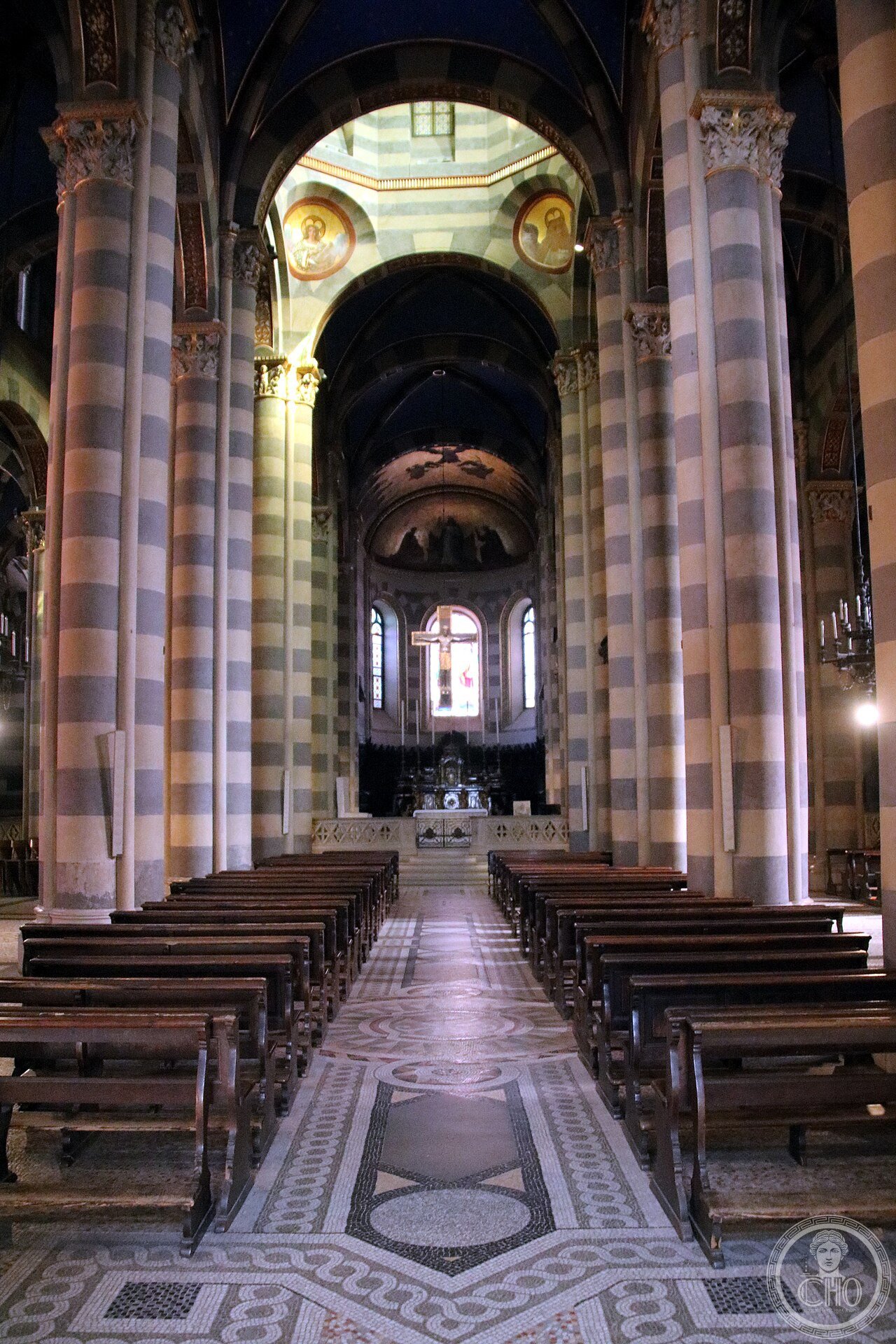
Duomo di Sant’Evasio — Casale Monferrato Cathedral
The Cathedral of Sant’Evasio is the Roman Catholic cathedral of Casale Monferrato, seat of the Diocese of Casale Monferrato, dedicated to Saint Evasius, the city’s first bishop and martyr. Founded in the early medieval period and substantially rebuilt in the Romanesque style during the 12th century, the cathedral’s most remarkable feature is its spectacular early-16th-century gilded ceiling — one of the most elaborate painted wooden ceilings in northern Italy — executed by Gerolamo Pittoni between 1503 and 1529.
At a glance
- Type
- Roman Catholic cathedral (episcopal seat)
- Period
- Origins early medieval; Romanesque rebuild 12th century; ceiling 1503–1529
- Style
- Romanesque with later Renaissance and Baroque additions
- Location
- Casale Monferrato, Province of Alessandria, Piedmont, Italy
- Coordinates
- 45.1373° N, 8.4503° E
Overview
Casale Monferrato Cathedral stands as the principal church of one of Piedmont’s historically significant episcopal sees, tracing its origins to the early Christianisation of the Monferrato territory. The building as seen today combines a Romanesque body with Renaissance decorative intervention, most prominently in its extraordinary coffered wooden ceiling, and reflects the patronage of the Paleologa marquisate that made Casale one of the most cultured courts in 15th- and 16th-century northern Italy. The cathedral is the episcopal seat of the Diocese of Casale Monferrato.
History
Saint Evasius, to whom the cathedral is dedicated, was the first bishop of Asti and is venerated as a martyr; his cult became associated with Casale, where he was said to have been killed in the late 4th or early 5th century. A church on the site is documented from the early medieval period, and the current Romanesque structure was substantially completed by the 12th century. Under the Paleologa marquisate of Monferrato, the cathedral was enriched with a celebrated painted and gilded wooden ceiling commissioned from Gerolamo Pittoni, completed in 1529, which transformed the interior into one of the most visually opulent in Piedmont. Subsequent centuries brought Baroque modifications to chapels and furnishings.
What you see
The cathedral’s interior is dominated by its magnificent 16th-century coffered ceiling, whose hundreds of painted compartments are gilded and adorned with devotional imagery, heraldic motifs, and decorative foliage in a programme that reflects both Renaissance taste and the ambitions of the Paleologa court. The Romanesque nave preserves its original proportions, with stone columns and arcades typical of the Lombard Romanesque school. Chapels along the nave contain altarpieces and sculptures spanning the 16th through 18th centuries, and the treasury holds important medieval and early modern liturgical objects. The crypt preserves relics associated with the cathedral’s founding tradition.
Cultural significance
The cathedral’s gilded ceiling is considered one of the outstanding examples of Renaissance decorative woodwork in northern Italy, comparable in ambition to celebrated ceilings in Emilia-Romagna and Lombardy. The building as a whole documents the artistic culture of the Monferrato marquisate at its height and the continuity of Christian worship on a site venerated for over fifteen centuries. It is protected as a national monument and attracts art historians and heritage travellers alongside the local faithful.
Practical information
- Address
- Piazza Mazzini, Casale Monferrato, Province of Alessandria, Piedmont, Italy
- Opening hours
- Check official website or contact the Diocese of Casale Monferrato for current visiting hours
- Admission
- Cathedral: free; treasury may require admission
Getting there
Casale Monferrato is served by a railway station on the Turin–Alessandria line, approximately 1 hour from Turin and 30 minutes from Alessandria. The cathedral is in the historic centre, walkable from the station. By car, take the A26 motorway to the Casale Monferrato Nord exit.
Sources & resources
Find it on the map
See this place and what’s around it →📷 Diventa un fotografo di Cultural Heritage Online
Condividi le tue foto dei luoghi: restano pubblicate con la tua firma come autore. Più vengono viste, più ti fai conoscere — e presto un concorso premierà le foto più apprezzate.
Accedi o registrati gratis per aggiungere una foto