
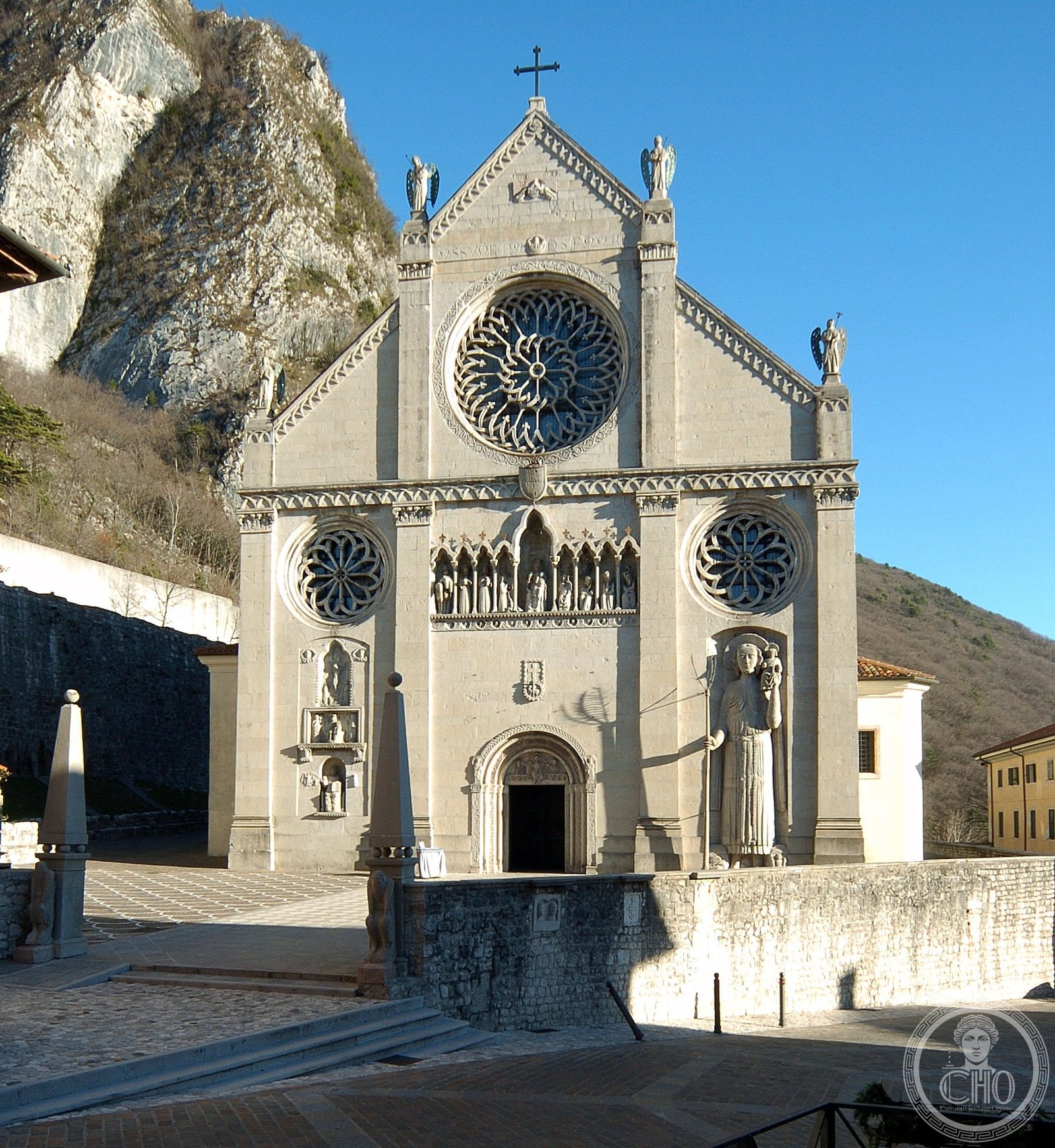
Duomo di Santa Maria Assunta in Gemona
The Duomo di Santa Maria Assunta is the cathedral church of Gemona del Friuli, a historic town in the Regional decentralization entity of Udine in Friuli-Venezia Giulia, situated approximately 25 kilometres northwest of Udine at the foot of the Carnian Alps. Built primarily in the 13th to 15th centuries as one of the finest examples of Gothic architecture in Friuli, the cathedral was severely damaged by the 1976 earthquake that devastated the region and was painstakingly restored over the following decade — a restoration regarded as a landmark achievement in Italian heritage conservation.
At a glance
- Type
- Roman Catholic cathedral church
- Dedication
- Santa Maria Assunta (Assumption of the Virgin Mary)
- Period
- 13th–15th century; restored after 1976 earthquake
- Style
- Friulian Gothic
- Location
- Gemona del Friuli, Regional entity of Udine, Friuli-Venezia Giulia
- Coordinates
- 46.2758° N, 13.1398° E
Overview
Gemona del Friuli is a medieval hill town that developed as a key staging point on the Via Iulia Augusta, the ancient Roman road connecting the Adriatic coast with the Alpine passes. The cathedral of Santa Maria Assunta stands at the heart of the historic upper town and is the defining monument of Gemona’s civic and religious identity. The 1976 Friuli earthquake (magnitude 6.4) destroyed much of the town and left the cathedral in ruins; its complete reconstruction — stone by stone, following anastylosis principles — became a symbol of the entire region’s recovery.
History
Construction of the present cathedral began in the 13th century, replacing an earlier church, and continued through the 14th and 15th centuries as Gemona’s prosperity on the Alpine trade route funded increasingly ambitious building campaigns. The façade — one of the most celebrated in Friulian Gothic architecture — was enriched over time with sculpture, reliefs, and the large 15th-century rose window. The 1976 earthquake collapsed much of the structure; restoration work carried out from 1976 to the late 1980s under the direction of the Soprintendenza and international experts became a model study in post-disaster heritage recovery.
What you see
The façade is the cathedral’s most distinctive feature, dominated by a monumental portal with carved figures, a large 15th-century rose window, and a colossal statue of Saint Christopher (over 6 metres tall) that has been a waymarker for travellers on the alpine road since the 15th century. The interior is a three-nave Gothic hall with Romanesque survival elements, containing altarpieces, votive objects, and carved capitals accumulated across five centuries. The adjacent baptistery and bell tower complete the cathedral complex on the hillside piazza.
Cultural significance
The Duomo di Gemona is doubly significant: as an outstanding example of Friulian Gothic architecture reflecting the cultural synthesis of Venetian, Central European, and local craft traditions, and as a monument to the post-earthquake reconstruction that preserved Gemona’s historic fabric against pressure to clear and rebuild. The restoration is studied internationally as a paradigm of cultural heritage recovery after natural disaster.
Practical information
- Address
- Piazza del Municipio, Gemona del Friuli, 33013 UD
- Hours
- Generally open daily; check local parish or tourism office for current hours
- Admission
- Free entry; donations welcome
Getting there
Gemona del Friuli is approximately 25 km northwest of Udine. By car, take the A23 motorway (Udine–Tarvisio) and exit at Gemona-Osoppo. The nearest railway station is Gemona-Osoppo (Trenitalia), on the Udine–Tarvisio line, approximately 2 km from the historic centre. Regional buses connect Gemona with Udine (approx. 40 min). The cathedral is in the upper historic town, reachable on foot from the lower piazza via stepped lanes.
Sources & resources
Find it on the map
See this place and what’s around it →📷 Diventa un fotografo di Cultural Heritage Online
Condividi le tue foto dei luoghi: restano pubblicate con la tua firma come autore. Più vengono viste, più ti fai conoscere — e presto un concorso premierà le foto più apprezzate.
Accedi o registrati gratis per aggiungere una foto