
CSI – Cité des Sciences et de l’Industrie
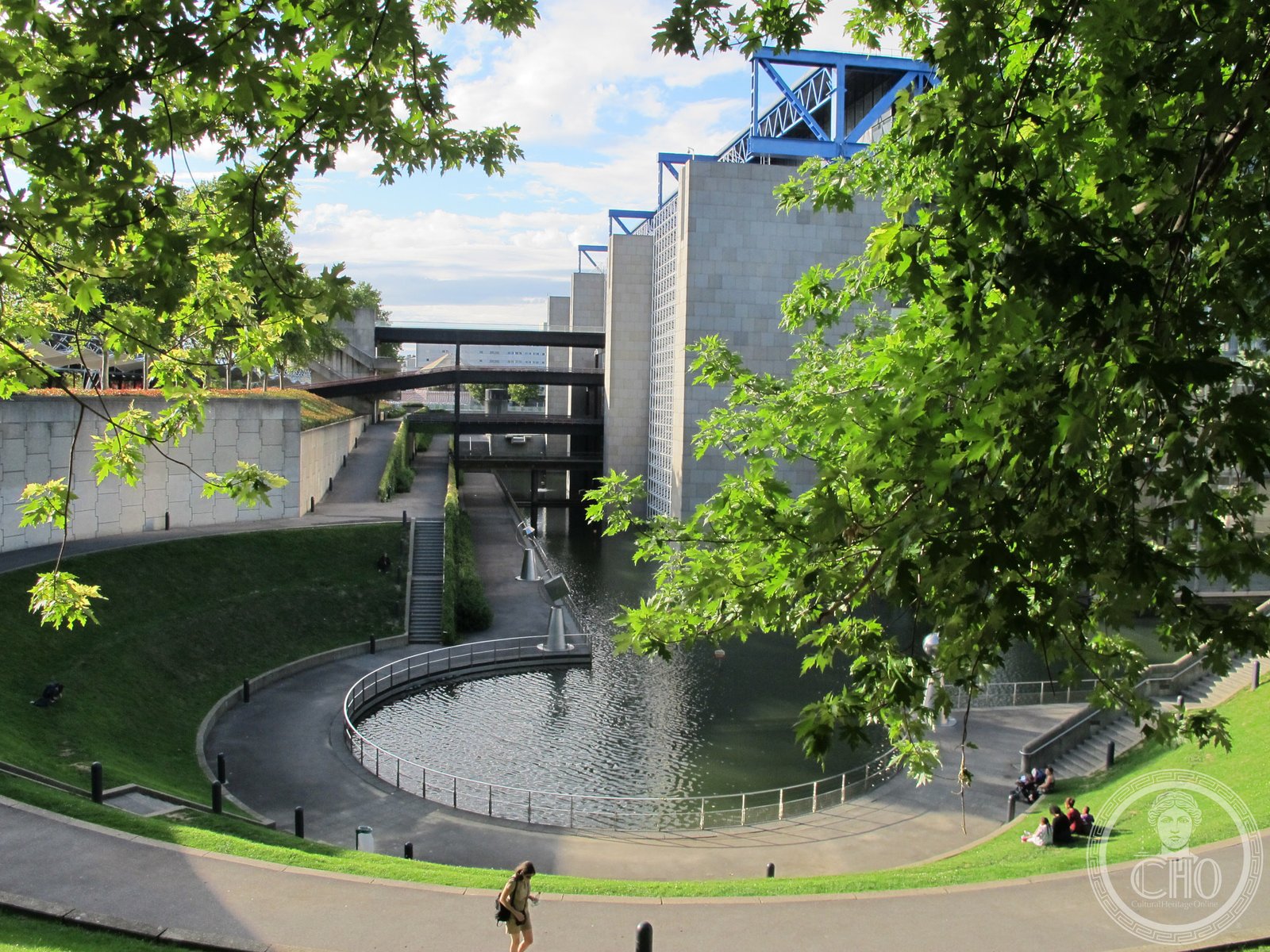
The Cité des Sciences et de l’Industrie (City of Science and Industry), known by its initials CSI, is one of the largest science museums in Europe. Located in the Parc de la Villette in the 19th arrondissement of Paris, it was inaugurated on 13 March 1986 under President François Mitterrand as part of his Grands Travaux programme of architectural landmarks. Designed by architect Adrien Fainsilber, the building is notable for its three enormous glass domes that flood the interior with natural light, and its permanent exhibition Explora covers science, mathematics, life sciences and the universe across 30,000 square metres.
At a glance
- Type
- Science and industry museum
- Period
- Inaugurated 13 March 1986; site previously the La Villette abattoirs
- Style
- High-tech architecture (Adrien Fainsilber, 1986)
- Location
- 30 Avenue Corentin Cariou, 75019 Paris, France
- Coordinates
- 48.8956° N, 2.3857° E
Overview
The Cité des Sciences et de l’Industrie is France’s premier science engagement centre and one of the three dozen French Centres de Culture Scientifique, Technique et Industrielle (CCSTI). With around 5 million visitors per year, it is among the most visited cultural institutions in France. The complex includes the main exhibition halls, a Géode (a mirrored geodesic sphere housing an IMAX cinema), a planetarium, a submarine (the Argonaute) moored alongside, and dedicated children’s areas called Cité des Enfants.
History
The Parc de la Villette site was previously occupied by Paris’s main municipal slaughterhouses and meat market, decommissioned in the early 1970s after becoming economically unviable. President Valéry Giscard d’Estaing initially planned a new market, but the project was abandoned. François Mitterrand relaunched the site as part of his Grands Travaux, selecting architect Adrien Fainsilber to design a science museum on an unprecedented scale. Construction ran from 1980 to 1986; the completed building, at 270 metres long and 110 metres wide, was at the time one of the largest public buildings in France. The Géode, designed by Chambon, opened alongside the museum.
What you see
The permanent exhibition Explora occupies two floors and is organised around four themes: the Universe, Life, Matter and Communication. Interactive installations outnumber passive displays — visitors can pilot flight simulators, explore scale models of the cosmos, manipulate robotics and conduct simple chemistry experiments. The Géode’s hemispherical screen (26 metres in diameter) shows immersive science documentaries. Beside the museum, the decommissioned submarine Argonaute (a 1950s French Navy vessel) is open for self-guided tours. Temporary exhibitions occupy additional gallery space and typically focus on timely scientific or technological topics.
Cultural significance
The Cité des Sciences et de l’Industrie was a landmark in the global movement to make science accessible and engaging for general audiences, and it influenced the design of science centres worldwide through its emphasis on interactivity over passive display. As a Mitterrand Grand Travaux project it also holds architectural heritage status, representing the ambition of late-20th-century French state patronage of culture. Fainsilber’s building has been recognised internationally for its integration of water, light and greenhouses into a coherent architectural vision.
Practical information
- Address
- 30 Avenue Corentin Cariou, 75019 Paris, France
- Opening hours
- Tuesday–Saturday 10:00–18:00; Sunday 10:00–19:00; closed Monday — check official website for current hours and temporary closures
- Admission
- Check official website (cite-sciences.fr) for current adult, child and family rates
Getting there
The museum is directly accessible from Porte de la Villette Métro station (Line 7), a 2-minute walk. It can also be reached via the Canal de l’Ourcq by boat or bicycle along the towpath from central Paris. Buses 75 and 139 serve the Parc de la Villette. There is limited underground parking on site. From central Paris (Châtelet–Les Halles) the journey by Métro takes approximately 15 minutes.
Sources & resources
Find it on the map
See this place and what’s around it →📷 Diventa un fotografo di Cultural Heritage Online
Condividi le tue foto dei luoghi: restano pubblicate con la tua firma come autore. Più vengono viste, più ti fai conoscere — e presto un concorso premierà le foto più apprezzate.
Accedi o registrati gratis per aggiungere una foto