
Cividale del Friuli — il Tempietto Longobardo (VIII sec. d.C.): le Figure in Stucco e i Dipinti Murali dell’Arte Longobarda al Suo Apice nella Prima Capitale del Ducato del Friuli (UNESCO 2011)
The Cividale del Friuli component of the Longobards UNESCO inscription preserves the Tempietto Longobardo — a small 8th-century oratory (c.762-776 CE) whose blind arcade of stucco figures (six female saints in relief on the west wall, flanked by vine-scroll decoration) represents the single finest surviving ensemble of Lombard plastic arts: figures modelled in a technique that bridges the flat abstraction of early medieval art and the volumetric naturalism of the classical tradition, in a medium (stucco, unfired lime plaster) that was almost completely supplanted by fresco and stone in the following centuries.
At a glance
Cividale del Friuli (province of Udine, Friuli-Venezia Giulia) is the oldest of the seven Longobard UNESCO sites and the one most directly tied to the earliest period of Lombard rule in Italy: the Lombards crossed the Alps and entered northeastern Italy in 568 CE under their king Alboin, and Cividale del Friuli (then called Forum Iulii, the Roman municipium founded by Julius Caesar around 50 BCE) was the first city they occupied and the seat of the first Lombard duchy in Italy. The first Lombard Duke of Friuli (Gisulf I, kinsman of Alboin) was installed in 568 CE; the duchy remained one of the most powerful Lombard territories for two centuries. The UNESCO inscription for Cividale covers: the Tempietto Longobardo (also known as the Oratorio di Santa Maria in Valle, 8th century); the Museo Cristiano (in the Cathedral of Cividale, housing the Altar of Ratchis and the Baptistery of Callistus, both 8th-century Lombard sculptural works); and, to a lesser extent, the Cathedral of Cividale and the archaeological evidence of the Lombard city.
Key facts
- The Tempietto Longobardo (8th century): The small oratory (9m × 7m × 12m high) — probably the private chapel of a patrician or monastic complex — preserves its original stucco decoration almost intact, which is exceptional for a building of this period (almost all early medieval stucco decoration has been destroyed by subsequent rebuilding, moisture, or religious renovation). The west wall (the entry wall, seen on entering) has six life-size female saints in high-relief stucco in a blind arcade with elaborate vine-scroll decoration; the six figures (whose identity is uncertain — possibly the Virgin, Saint Elizabeth, and four unidentified female martyrs) are draped in Roman-style robes with incised linear drapery detail; the heads (some original, some later replacements) have Byzantine oval faces with large eyes. The painted decoration (partially surviving on the north and south walls) combines geometric patterns with figural scenes
- The Altar of Ratchis (734-744 CE): In the Museo Cristiano of the Cathedral; commissioned by Ratchis, Duke of Friuli (734-744 CE) and later King of the Lombards (744-749 CE); three carved marble sides with relief scenes (Visitation, Adoration of the Magi, Christ in Majesty flanked by angels); it is the most important surviving piece of Lombard figurative sculpture, and the Adoration of the Magi relief shows the clear influence of late antique sarcophagus carving with a distinctively Lombard schematization
- The Baptistery of Callistus (8th century): Also in the Museo Cristiano; a small octagonal baptistery with carved marble relief panels (eagles, interlace, vine scroll) attributed to the time of Patriarch Callistus of Aquileia (737-756 CE)
- UNESCO: 2011, ref. 1318 (as part of “Longobards in Italy: Places of the Power”)
- GPS: 46.0929, 13.4325 — Google Maps
History
Forum Iulii was a flourishing Roman municipium from approximately 50 BCE (tradition attributes its foundation to Julius Caesar, though the archaeological evidence suggests a slightly later Augustan date); the name evolved into Friuli (Furlanìe in Friulian) — and the entire region retains the name of this single city. After the Lombard conquest (568 CE), Cividale became the seat of the most important Lombard duchy in northeastern Italy; the presence of the Patriarchate of Aquileia (the senior bishopric of northeastern Italy, which had maintained continuous organization through the barbarian invasions) in the broader Friuli area gave Cividale additional religious and cultural importance. The Lombard period (568-774 CE) ended with Charlemagne’s conquest of the Lombard Kingdom; Cividale then became the seat of the Frankish March of Friuli, a border county facing the Avar and later the Magyar invasions from the east. The Mongol invasions of 1241-1242 destroyed many of the early medieval buildings in the area; the Tempietto Longobardo survived because it was incorporated into a later medieval monastic complex (and the west-wall stuccos were probably plastered over and thus preserved by accident).
What you see
The Tempietto Longobardo (entrance from Via Monastero Maggiore 34, or from the Piazzetta San Biagio) occupies a small oratory room connected to the medieval monastery of Santa Maria in Valle. The visit (guided or self-guided with audio) begins with the main chamber: the west wall with the six stucco figures in their blind arcade (the detail visible at close range — the incised drapery lines, the vine-scroll ornament, the surviving paint traces on the plasterwork — is extraordinary for an 8th-century monument; comparable stucco work from this period exists only at Castelseprio/Torba, also in the Longobard inscription); the painted arches over the door; the fragmentary fresco remains on the north wall. The oratory is small (10-15 visitors maximum at one time); the visit typically takes 20-30 minutes.
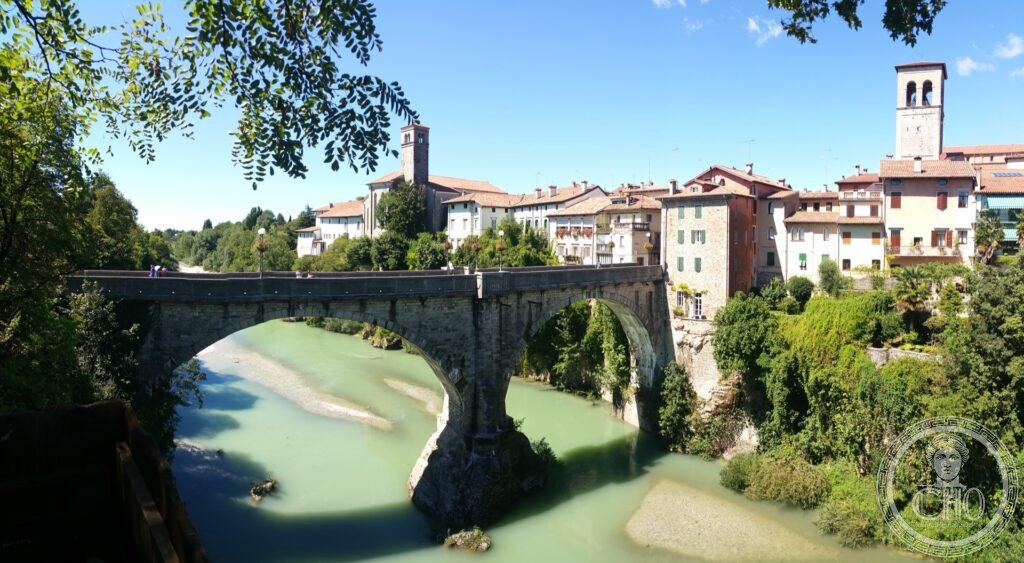
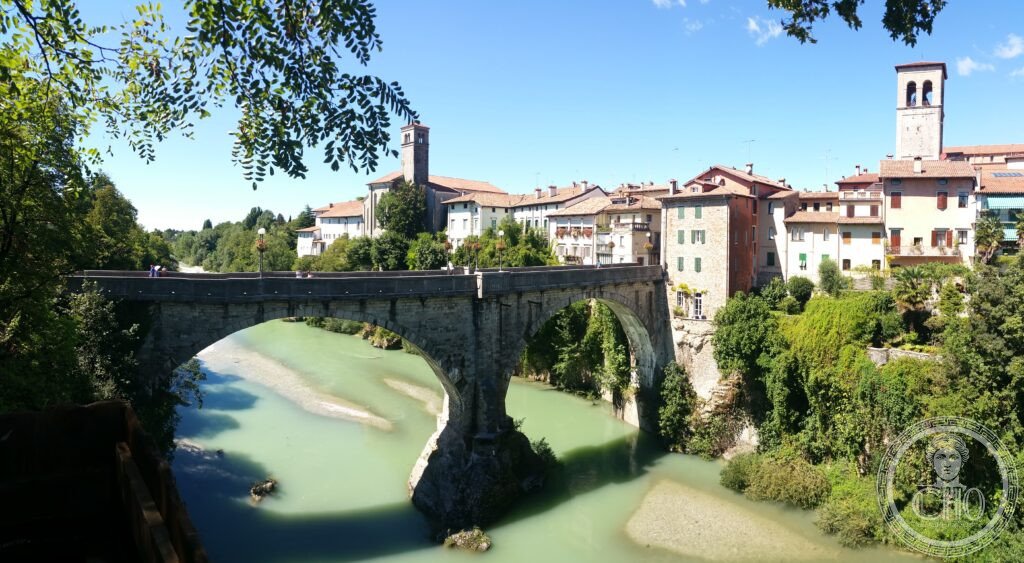
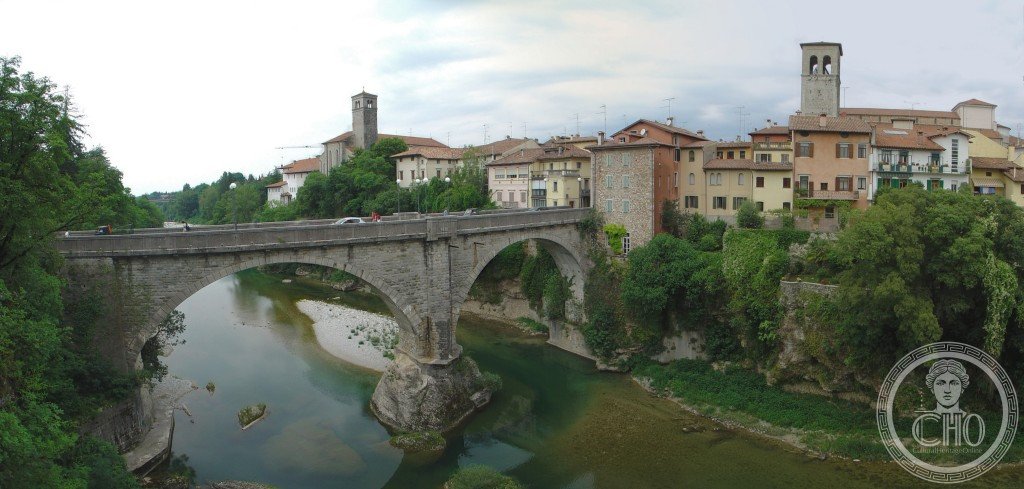
The Museo Cristiano (in the Cathedral crypt, Piazza del Duomo) contains the Altar of Ratchis and the Baptistery of Callistus: the Altar (the three carved marble panels installed in a display case at eye level) can be examined at very close range, which reveals the detail of the drapery, faces, and architectural framing of the Adoration of the Magi relief panel (the finest single piece of 8th-century figurative sculpture in Italy). The Cathedral of Cividale (Duomo, Piazza del Duomo) has 15th-century frescoes and a silver altarpiece (the Pala di Pellegrino II, 12th-13th century), but the main interest is the Museo Cristiano in the crypt. The Ponte del Diavolo (Bridge of the Devil, 14th century, on the site of an older Roman crossing) over the deep Natisone gorge provides the principal photographic viewpoint of the town.
Gallery
Practical information
- Tempietto Longobardo: Via Monastero Maggiore 34, Cividale del Friuli (UD); open daily 10:00-13:00 and 14:00-18:00 (April-October), 10:00-13:00 and 14:00-17:00 (November-March). Admission ~€4. Reservations recommended for groups.
- Museo Cristiano (Cathedral): Piazza del Duomo 13; open Monday-Saturday 9:30-12:00 and 15:00-17:30, Sunday 15:00-17:30. Admission ~€3.50.
- Combined visits: The Museo Archeologico Nazionale (Piazza del Duomo 13) has the important Longobard and Roman archaeological collection from the Friuli region, including grave goods from Lombard-period cemeteries (weapons, fibulas, jewellery) that provide context for the artistic objects; open Monday 8:00-14:00, Tuesday-Sunday 8:30-19:30; admission ~€6 (combined with Museo Cristiano ~€8).
- Friulian cuisine: Cividale is a food destination in its own right — frico (fried crispy cheese patty), brovada (pickled turnips with pork), and local white wines (Friulano, Ribolla Gialla) from the Collio and Colli Orientali del Friuli vineyards 15 km south and east.
Getting there
Via Monastero Maggiore 34, Cividale del Friuli (UD), Friuli-Venezia Giulia. GPS 46.0929, 13.4325. By train: Trenitalia from Udine (16 km, 15 min, direct service every 1-2 hours; Udine is a main regional railway hub on the Venice-Trieste-Ljubljana line). By car: from Venice, A4 to Palmanova exit then SS56 north (120 km, 1h30); from Trieste, A4 west to Palmanova then SS56 north (70 km, 1h). Parking in Viale Libertà (free, 5-min walk from the Tempietto).
Nearby
- Aquileia — 50 km south-west; the most important Roman and early Christian city in northeastern Italy; UNESCO 1998 (ref.825); the Basilica (4th-5th century) has the largest surviving early Christian mosaic floor in the world (760 m²); the Museo Nazionale Archeologico with the finest Roman sculpture collection in northern Italy
- Palmanova — 30 km south-west; the ideal Renaissance star-fortification city (1593, by Vincenzo Scamozzi for the Venetian republic); UNESCO 2017 (ref.1533, inscribed as part of “Venetian Works of Defence”)
- Collio wine region — 20 km east; the Slovenian-Italian border wine region producing some of Italy’s finest white wines (Friulano/Tocai, Ribolla Gialla, Pinot Grigio); many estates offer cellar visits and tastings in vineyards on hillside slopes overlooking the Isonzo valley
Sources
- UNESCO: whc.unesco.org/en/list/1318
- Wikipedia EN: Cividale del Friuli
- Christie, Neil: The Lombards, Blackwell, 1995
- Comune di Cividale del Friuli: cividale.net
Find it on the map
See this place and what’s around it →📷 Diventa un fotografo di Cultural Heritage Online
Condividi le tue foto dei luoghi: restano pubblicate con la tua firma come autore. Più vengono viste, più ti fai conoscere — e presto un concorso premierà le foto più apprezzate.
Accedi o registrati gratis per aggiungere una foto