
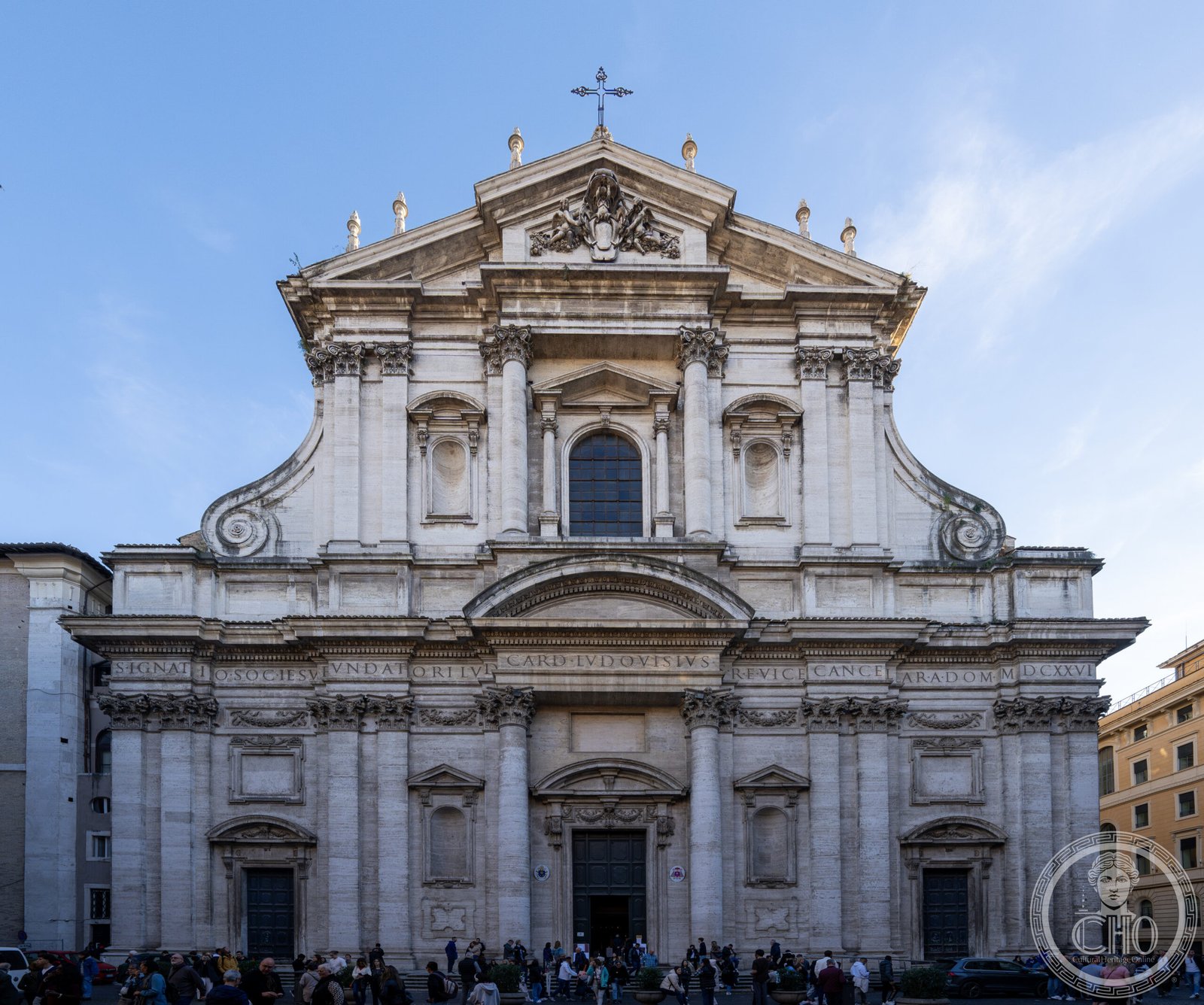
Church of Sant’Ignazio di Loyola
The Church of Sant’Ignazio di Loyola in Campo Marzio is one of the grandest Baroque churches in Rome, built between 1626 and 1685 by the Society of Jesus in honour of its founder, Ignatius of Loyola, canonised in 1622. It is celebrated above all for Andrea Pozzo’s trompe-l’œil ceiling fresco (1691–1694), one of the most spectacular exercises in illusionistic perspective in Western art, and for the false dome — also by Pozzo — painted on a flat canvas disc suspended where the real dome was never built.
At a glance
- Type
- Titular church of the Roman Catholic Church; former Jesuit college church
- Period
- Construction 1626–1685; ceiling fresco 1691–1694
- Style
- Roman Baroque
- Architects
- Orazio Grassi (design, 1626); Carlo Fontana and others (completion); Andrea Pozzo (interior frescoes)
- Location
- Piazza di Sant’Ignazio, Campo Marzio, Rome, Lazio, Italy
- Coordinates
- 41.8979° N, 12.3985° E
Overview
Sant’Ignazio stands in the heart of the historic Campo Marzio district, just steps from the Pantheon, facing a small Rococo piazza designed by Filippo Raguzzini in 1727–1728 that is itself considered one of the finest urban compositions of 18th-century Rome. The church served as the chapel of the Collegio Romano, the flagship Jesuit educational institution, and its scale and magnificence were intended to project the prestige of the Society of Jesus in the Counter-Reformation era. Today it is a titular church, assigned to a cardinal-priest, and remains an active parish.
History
Construction began in 1626 on a design by the Jesuit architect and mathematician Orazio Grassi, a rival and critic of Galileo. The building was funded largely by Cardinal Ludovico Ludovisi and progressed slowly through the 17th century. The planned dome was never built — either for structural reasons or lack of funds — and was replaced by Andrea Pozzo’s painted canvas illusion, installed in 1685. Pozzo, a Jesuit brother and one of the most accomplished perspectivists of his era, subsequently painted the nave ceiling between 1691 and 1694 with an allegorical scene of the Apotheosis of St Ignatius that remains one of the most complex illusionistic ceiling compositions in existence.
What you see
The nave ceiling fresco by Pozzo depicts an imaginary architectural colonnade soaring far above the actual vault, with figures representing the four continents receiving the light of faith from St Ignatius — a dizzying exercise in anamorphic perspective best appreciated from a disc of coloured marble set into the nave floor that marks the optimal viewing point. The false dome, visible from the crossing, is painted on a flat disc of canvas and imitates the drum and lantern of a conventional Baroque dome. The church interior also contains the funerary monuments of Cardinal Roberto Bellarmino and the mathematician Christopher Clavius, both Jesuits of major historical importance.
Cultural significance
Sant’Ignazio di Loyola is a UNESCO World Heritage Site property as part of the Historic Centre of Rome, and Andrea Pozzo’s ceiling fresco is a canonical work of Baroque illusionistic painting studied in art history programmes worldwide. The church and the adjacent Piazza di Sant’Ignazio together form one of the best-preserved examples of the integration of Baroque architecture with urban design in Rome.
Practical information
- Address
- Via del Caravita 8a, 00186 Rome (entrance also from Piazza di Sant’Ignazio)
- Hours
- Generally open daily; check the parish website for current hours and Mass times
- Admission
- Free entry
Getting there
The church is a 5-minute walk from the Pantheon in the historic centre of Rome. The nearest bus stops are on Via del Corso and Via della Rotonda. Metro line A, stop Spagna, is approximately 15 minutes on foot. The area is best explored on foot as part of the Campo Marzio historic district.
Sources & resources
Find it on the map
See this place and what’s around it →📷 Diventa un fotografo di Cultural Heritage Online
Condividi le tue foto dei luoghi: restano pubblicate con la tua firma come autore. Più vengono viste, più ti fai conoscere — e presto un concorso premierà le foto più apprezzate.
Accedi o registrati gratis per aggiungere una foto