
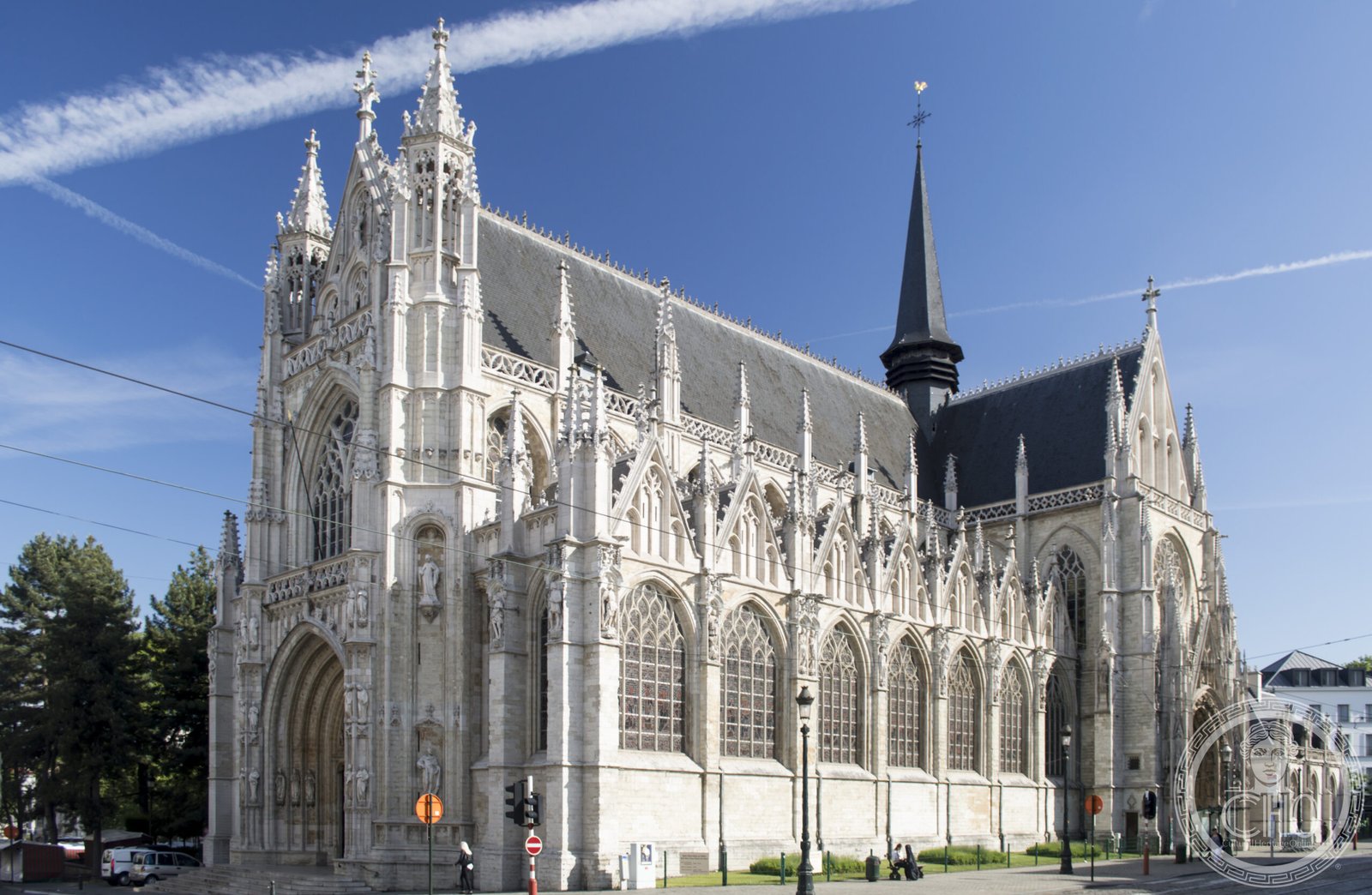
Church of Our Lady of Victories at the Sablon
The Church of Our Lady of Victories at the Sablon (Notre-Dame du Sablon) is a magnificent Brabantine Gothic church standing at the heart of the Sablon quarter in Brussels, constructed between 1400 and 1594 and renowned for the delicacy of its flamboyant Gothic tracery, stained-glass windows, and the legend of its miraculous statue of the Virgin brought by boat from Antwerp in 1348. It is considered one of the finest Gothic buildings in Belgium.
At a glance
- Type
- Roman Catholic church (collegiate church)
- Period
- Constructed 1400–1594
- Style
- Brabantine Gothic; flamboyant Gothic tracery
- Location
- Rue de la Régence, Sablon / Zavel, Brussels, Belgium
- Coordinates
- 50.8404° N, 4.3541° E
Overview
Notre-Dame du Sablon is the principal landmark of the Sablon district, a neighbourhood synonymous with antique dealers, chocolatiers, and the weekend antiques market that spreads across the adjacent Place du Grand Sablon. The church was built by the Guild of Crossbowmen of Brussels and subsequently became one of the favoured burial sites of the noble families of the Spanish Netherlands, whose heraldic chapels line the nave aisles. Its soaring interior of pale stone, lit by a remarkable sequence of nineteenth-century stained-glass windows depicting the history of the church and its patrons, creates one of the most atmospheric Gothic interiors in the Low Countries.
History
According to legend, the miraculous statue of Our Lady of the Sablon was smuggled from Antwerp in a small boat by a pious Brussels woman named Beatrice Soetkens in 1348, acting on instructions received in a vision. The Guild of Crossbowmen, which had custody of the statue, began the construction of the current church in 1400 to replace an earlier chapel. Building proceeded in stages over nearly two centuries, with the nave completed by around 1490 and the choir and transepts finished in 1594. The church became a prestigious site of aristocratic patronage during the era of the Habsburg Spanish Netherlands, and the funerary chapels of families including the Thurn und Taxis postal dynasty were added to the lateral aisles.
What you see
The exterior presents a richly ornamented west facade and lateral elevations with flamboyant tracery in the window heads, flying buttresses, and pinnacled turrets characteristic of late Brabantine Gothic. The interior is a five-aisled hall church of considerable height, with slender compound piers supporting a clerestory and a vaulted ceiling. The stained-glass windows, mostly produced in the nineteenth century to designs referencing the church’s history, bathe the nave in warm coloured light. The lateral chapels preserve original carved altarpieces, epitaphs, and heraldic monuments of the Brussels nobility. The organ case above the west door is a notable piece of Baroque woodcarving.
Cultural significance
Notre-Dame du Sablon is one of Brussels’s defining architectural monuments and a key site of Brabantine Gothic, a regional tradition that produced some of the most refined Gothic architecture in northern Europe. The church’s dual identity — as a place of Marian pilgrimage and as a mausoleum of the aristocracy of the Spanish Netherlands — makes it an exceptional document of religious, social, and artistic history across five centuries of Brussels life.
Practical information
- Address
- Rue de la Régence 3, 1000 Brussels, Belgium
- Hours
- Monday–Friday 09:00–18:30; Saturday–Sunday 10:00–18:30; hours may vary for religious services
- Admission
- Free entry
Getting there
The church is located on Rue de la Régence in the Sablon quarter, a 10-minute walk from the Grand-Place via the Rue de la Régence or the Rue Haute. The nearest metro station is Gare Centrale (lines 1 and 5), a 5-minute walk. Trams 92 and 97 stop on Rue de la Régence directly in front of the church. From the Palace of Justice (Place Poelaert), the church is a 3-minute walk downhill along Rue de la Régence.
Sources & resources
Find it on the map
See this place and what’s around it →📷 Diventa un fotografo di Cultural Heritage Online
Condividi le tue foto dei luoghi: restano pubblicate con la tua firma come autore. Più vengono viste, più ti fai conoscere — e presto un concorso premierà le foto più apprezzate.
Accedi o registrati gratis per aggiungere una foto