
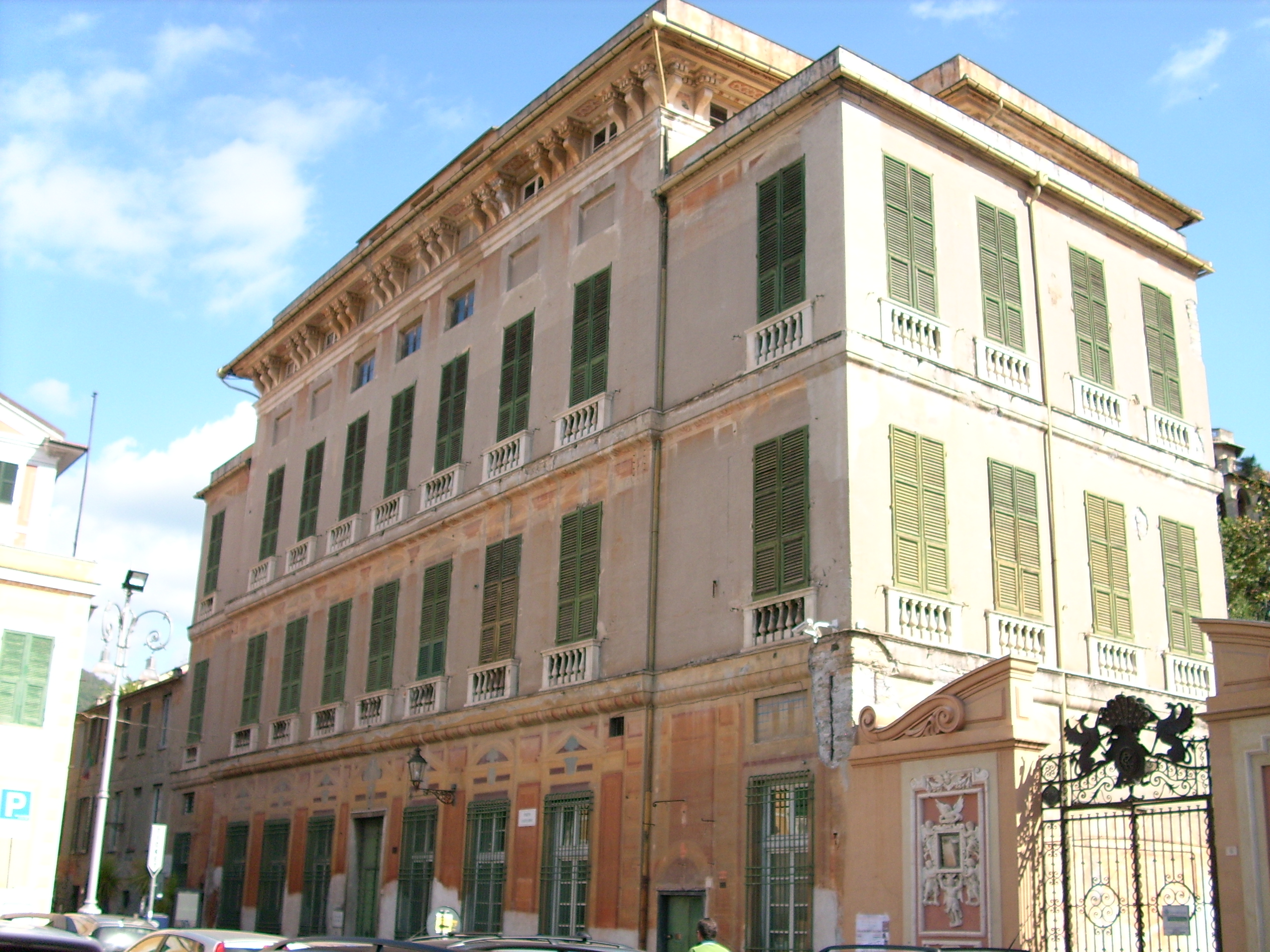
Chiavari Archaeological Museum — Rocca Palace
The Chiavari Archaeological Museum, housed in the historic Rocca Palace in the centre of Chiavari, is the principal repository for finds from the ancient necropolis discovered beneath the city in 1959. The collection documents the pre-Roman Ligurian Iron Age community that inhabited the site between the 8th and 5th centuries BC, and stands as one of the most significant archaeological discoveries in Liguria of the twentieth century.
At a glance
- Type
- Archaeological museum
- Period
- Collections: 8th–5th century BC (Iron Age necropolis); palace: 19th century
- Style
- Neoclassical palace building
- Location
- Via Costaguta, Chiavari, Liguria, Italy
- Coordinates
- 44.3168° N, 9.3273° E
Overview
The Chiavari Archaeological Museum preserves and displays the extraordinary finds from the necropolis of Chiavari, an Iron Age burial ground that came to light during construction work in 1959. The museum occupies the Palazzo Rocca, a grand neoclassical residence in the historic centre that had previously served civic and cultural functions in the town. Together, the palace and its collections form one of the most visited cultural destinations on the Ligurian Riviera di Levante.
History
In 1959, excavations in Chiavari revealed a pre-Roman necropolis containing over 100 tombs belonging to a Ligurian community of the Early Iron Age, roughly contemporaneous with the Villanovan culture further east. The discovery was of national importance, shedding light on a poorly documented people of the northern Tyrrhenian coast before Roman conquest. The finds were subsequently organised into a permanent museum collection hosted at Palazzo Rocca, a nineteenth-century aristocratic residence that the municipality had acquired for public use. The museum has been progressively updated to incorporate contextual displays and improved conservation facilities.
What you see
The museum displays grave goods recovered from the necropolis tombs, including bronze fibulae, amber beads, iron tools, pottery vessels and personal ornaments that reflect the funerary customs of the Ligurian community. The arrangement of the collection follows a tomb-by-tomb logic that allows visitors to reconstruct the social and economic world of individual burials. The neoclassical rooms of Palazzo Rocca provide an elegant counterpoint to the ancient objects, and the building itself retains decorative frescoes and period furnishings in several of its halls.
Cultural significance
The Chiavari necropolis is a primary archaeological reference for the pre-Roman Ligurian culture of the Italian peninsula, and its finds are cited in specialist literature on Iron Age Italy. The museum’s role in local identity is considerable: Chiavari presents the site as proof of its ancient urban roots, predating Roman colonisation by several centuries. The collection is protected under Italian cultural heritage legislation and managed in partnership with the Soprintendenza Archeologia della Liguria.
Practical information
- Address
- Via Costaguta 4, 16043 Chiavari GE, Italy
- Opening hours
- Check the official website or contact the museum directly for current hours
- Admission
- Check official website for current pricing
- Contact
- Comune di Chiavari, Assessorato alla Cultura
Getting there
Chiavari is served by frequent Trenitalia regional trains on the Genoa–La Spezia coastal line; the station is approximately 10 minutes on foot from Palazzo Rocca. By car, take the A12 motorway (Autostrada dei Fiori) and exit at Chiavari; parking is available in the town centre. Local buses connect the station to the historic centre.
Sources & resources
Find it on the map
See this place and what’s around it →📷 Diventa un fotografo di Cultural Heritage Online
Condividi le tue foto dei luoghi: restano pubblicate con la tua firma come autore. Più vengono viste, più ti fai conoscere — e presto un concorso premierà le foto più apprezzate.
Accedi o registrati gratis per aggiungere una foto