
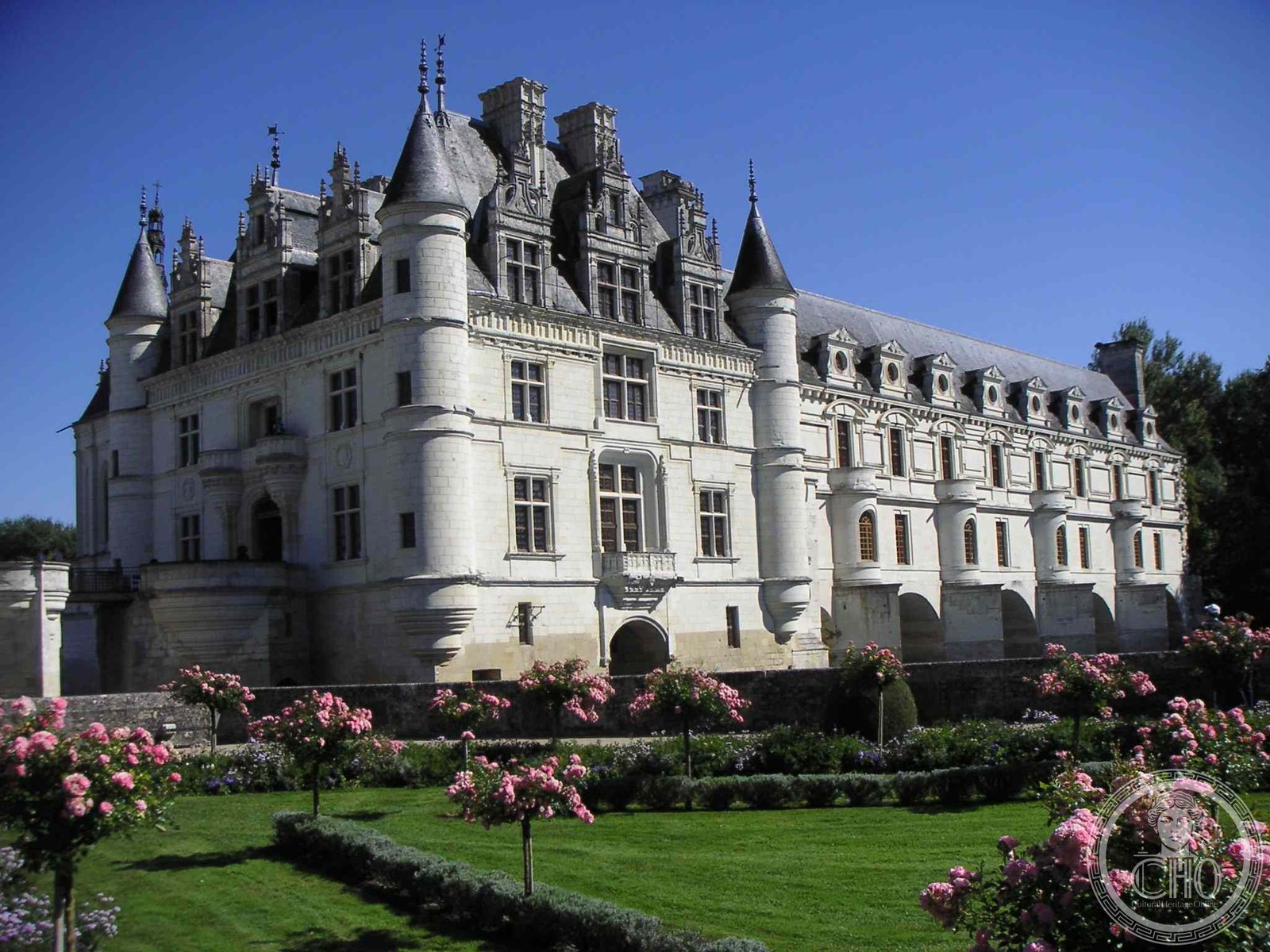
Chenonceau Castle
Château de Chenonceau is a Renaissance castle spanning the River Cher in the Indre-et-Loire department of the Loire Valley, France. Built from 1514 and extended across the river between 1556 and 1559 on the orders of Diane de Poitiers, the château is celebrated for the elongated gallery bridge that carries its great hall directly over the water. One of the most visited châteaux in France, it is listed as a UNESCO World Heritage Site as part of the Loire Valley cultural landscape.
At a glance
- Type
- Royal château and Renaissance palace
- Period
- Built 1514–1522; bridge and gallery added 1556–1576
- Style
- French Renaissance
- Location
- Chenonceaux, Indre-et-Loire, Loire Valley, France (47.4460° N, 0.7496° E)
Overview
Chenonceau is often called the “Château des Dames” — the Ladies’ Castle — in recognition of the remarkable women who shaped its destiny across five centuries. It stands on the site of an earlier mill over the River Cher, whose waters lend the château its singular character. Today it draws over one million visitors a year, making it the second most visited monument in France after the Palace of Versailles.
History
The current stone structure was commissioned by Thomas Bohier from 1514, replacing a medieval fortress. After Bohier’s debts led to its confiscation by the Crown, King Henry II gave the estate to his favourite, Diane de Poitiers, who added the bridge across the Cher in 1559. Following Henry’s death, his widow Catherine de’ Medici reclaimed Chenonceau and had the two-storey gallery built over the bridge between 1570 and 1576, hosting lavish festivities there. During the First World War the gallery served as a military hospital, a role it reprised briefly in the Second World War.
What you see
The château’s most iconic feature is the five-arched bridge spanning the Cher, topped by the long two-storey gallery with its chequered floor and rows of windows mirrored in the river below. The main keep retains its corner turrets and a grand staircase that was innovative for its straight-flight design at the time of construction. The interiors display Flemish and Italian tapestries, royal portraits, and period furniture; the formal gardens — one designed by Diane de Poitiers, another by Catherine de’ Medici — frame the approach from both banks.
Cultural significance
Chenonceau is inscribed on the UNESCO World Heritage List as part of the Loire Valley — Outstanding Universal Value cultural landscape, recognised in 2000. Its association with powerful women patrons and its exceptional state of preservation make it one of the defining monuments of French Renaissance architecture and court culture.
Practical information
- Address
- Château de Chenonceau, 37150 Chenonceaux, France
- Hours
- Open daily; hours vary by season — check the official website
- Admission
- Paid entry; check official website for current prices
- Website
- chenonceau.com
Getting there
From Tours, take the regional train to Chenonceaux station (approx. 30 minutes); the château is a 5-minute walk from the station. By car from Tours, follow the D976 south-east for approximately 35 km. Organised coach tours from Tours and Amboise operate daily in high season.
Sources & resources
Find it on the map
See this place and what’s around it →📷 Diventa un fotografo di Cultural Heritage Online
Condividi le tue foto dei luoghi: restano pubblicate con la tua firma come autore. Più vengono viste, più ti fai conoscere — e presto un concorso premierà le foto più apprezzate.
Accedi o registrati gratis per aggiungere una foto