
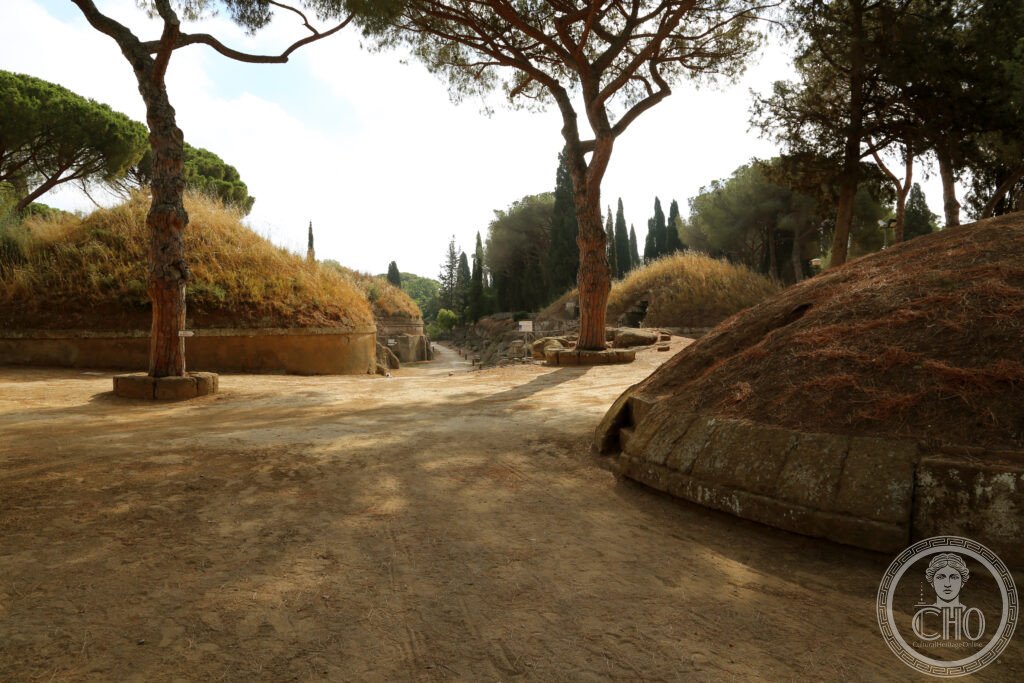
Necropoli Etrusche
Le necropoli etrusche di Cerveteri e Tarquinia (UNESCO 2004, rif. 1158) sono le finestre più complete sulla civiltà che precedette Roma — la Banditaccia di Cerveteri è una città dei morti con 1.000 tumuli e strade regolari su 400 ettari, mentre le 200 camere tombali dipinte di Tarquinia sono l’unico grande ciclo di pittura etrusca sopravvissuto, con scene di banchetti, musici e danzatori del 600–200 BCE.
At a glance
Necropoli etrusche Cerveteri Tarquinia Lazio (the most precisely Necropoli etrusche zone Cerveteri Roma Lazio Italy 42.0038 N 11.9895 E UNESCO WHS 2004 reference 1158 Etruscan Necropolises of Cerveteri and Tarquinia: the site (the UNESCO inscription covers 2 necropolises: (1) the Necropolis of the Banditaccia (Cerveteri): 400 ha; the inscribed core zone: 184 ha; the estimated total number of tombs: 10,000+ (over 3,000 excavated); the open-to-visit section: 50 ha with 100+ accessible tumuli; the tumulus type (the Cerveteri tumulus: a circular mound 5–40 m in diameter and 3–8 m high containing 1–4 individual tomb chambers cut into the tufa bedrock; the tufa (the geology of the Cerveteri area: the volcanic tuff (tufa) formed by the eruption of the Tolfa complex volcano 300,000 BCE; the soft tufa was ideal for carving by Etruscan stone-cutters (the “tufari”)); (2) the Tarquinia Necropolis: the site contains 200 painted tombs (from a total of 6,000 tombs on the Monterozzi plateau, of which 200 have pictorial decoration); the significance (the 200 painted chambers at Tarquinia are the largest surviving body of pre-Roman painted images in the western Mediterranean; they are also the largest body of large-format Etruscan artwork in existence; comparable painted complexes: Paestum tomb of the Diver (480 BCE; 1 tomb; Greek); Macedonian royal tombs of Vergina (Greece; 340–320 BCE; 3 painted chambers)); the painting condition (the humidity problem: the Tarquinia painted tombs are underground and subject to humidity fluctuation that causes salt efflorescence on the plaster; the conservation protocol (since 1990 CE): the tombs are opened for public viewing in 2-hour maximum sessions per day per tomb (the “rotazione” system); 30 tombs are accessible (rotated seasonally); the remaining 170 are closed and monitored).
Key facts
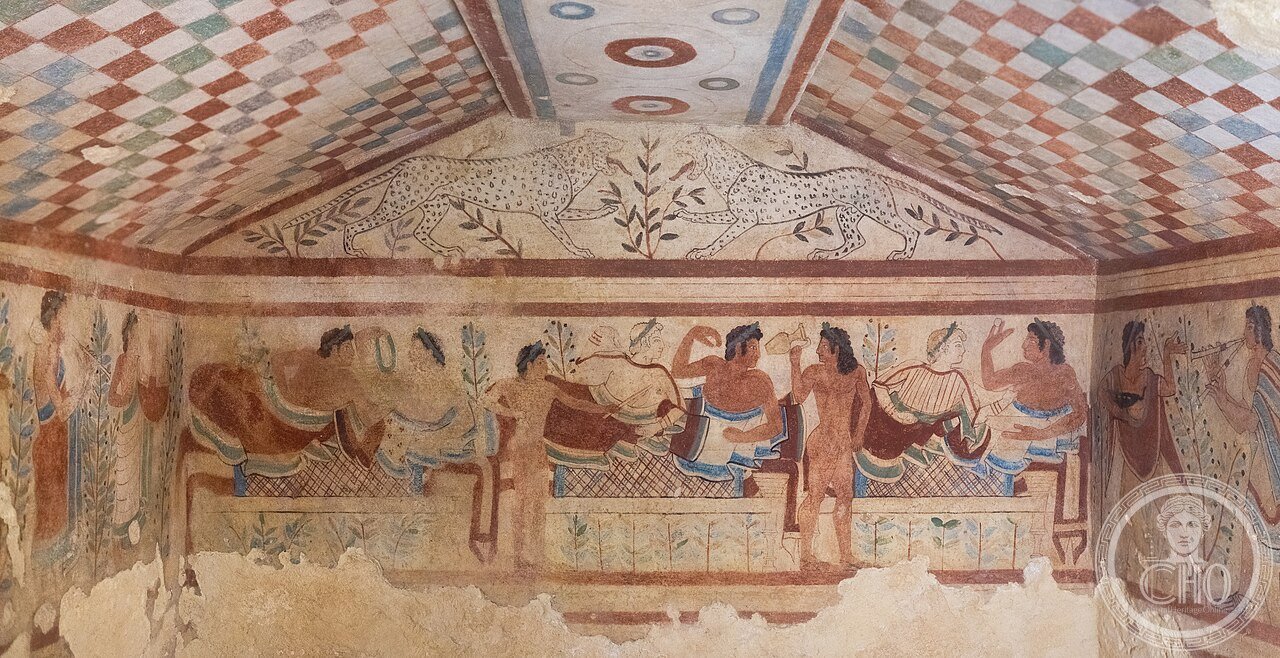
- La Tomba dei Leopardi di Tarquinia (480-470 BCE) e il simposio etrusco: perché il banchetto funebre etrusco era scandaloso per i greci e cosa dicono le scene pittoriche sullo statuto della donna nella società etrusca: the Tomb of the Leopards (the Tomba dei Leopardi (c.480–470 BCE; Tarquinia): the name derives from the 2 leopards facing each other above the main banquet scene on the back wall of the burial chamber; the dimensions (the chamber: 3.8 m × 2.4 m × 2.5 m high; the painting (the 3-wall composition: (1) the back wall: the “triclinium” scene: 3 male banqueters (reclining on klinai = banquet couches) with garlands and wine cups; 3 women at the head of the couch (the debated identity of the women: (a) the wives of the banqueters: supported by the Etruscan custom of mixed-gender dining (Athenaeus of Naucratis (c.200 CE) “Deipnosophistae” XIV: “the Etruscans dine with their wives on the same couches, and the women are shameless by the standards of the Greeks”; the “scandal” for Greeks: in Greek culture, respectable women (the “gynē”) never attended the male symposium; only “hetairai” (courtesans) dined with men; the Etruscan custom of mixed dining was thus interpreted by Greek writers as evidence of female immodesty); (2) the left wall: a procession of male figures carrying wine and musical instruments toward the banquet); (3) the right wall: dancing figures with musicians (the lyre + the aulos (double flute)); the color condition (the Leopards tomb has the best-preserved color of any Tarquinian tomb: the mineral pigments (the 6 pigments: black (manganese oxide), white (calcite), red (cinnabar/iron oxide), yellow (iron ocher), blue (Egyptian blue copper silicate), green (malachite/green earth)) are still vivid after 2,500 years))
- GPS (Necropoli Banditaccia, Via della Necropoli, Cerveteri): 42.0038° N, 11.9895° E; Necropoli Tarquinia: 42.2616° N, 11.7694° E
History
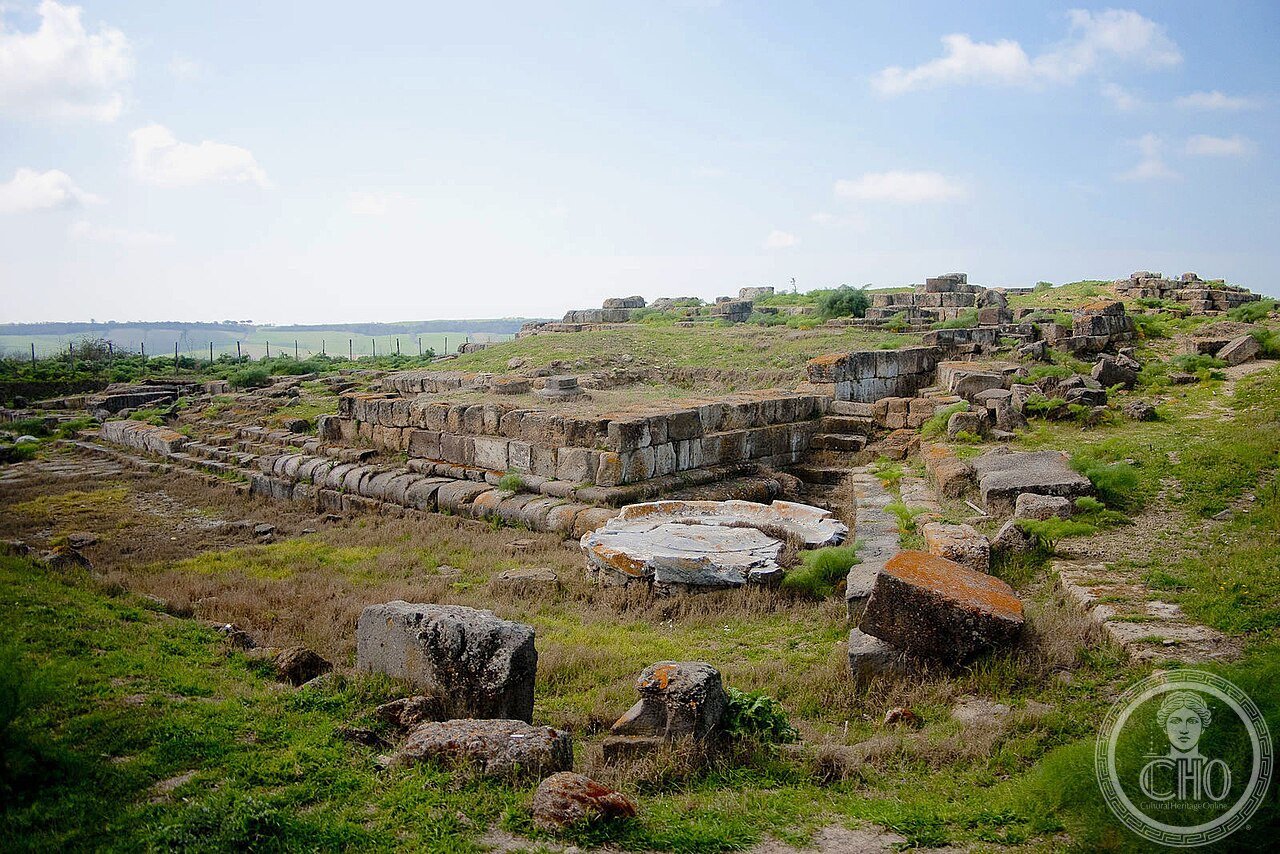
Da Caere VIII sec. BCE al UNESCO 2004 (the most precisely Necropoli etrusche zone history: the Etruscan civilization (the Etruscans: the ancient Italian people (the Etruscan name for themselves: “Rasenna”; the Latin name: “Etrusci”; the Greek name: “Tyrsenoi”; the origin debate: the “autochthonous” theory (Dionysius of Halicarnassus (1st century BCE): the Etruscans are a separate people indigenous to Italy; the modern consensus) vs. the “Lydian origin” theory (Herodotus (5th century BCE): the Etruscans migrated from Lydia in Asia Minor due to a famine; the modern DNA evidence (2019 CE; Max Planck Institute for Evolutionary Anthropology; ancient DNA from Etruscan skeletons): the Etruscan DNA is closest to Italic Bronze Age populations (not Anatolian): supports autochthonous or Western Steppe origin; the Lydian origin is not supported by the genetics)); the Caere (Cerveteri): the Etruscan name for Cerveteri was “Cisra”; the Latin name (assigned after Roman conquest 273 BCE): “Caere”; the city (the settlement of Cerveteri: from the 8th century BCE; peak population (6th century BCE): estimated 25,000 inhabitants; the richest city in Etruria (the “Caere treasure”: the Etruscan gold and silver objects found in the 19th century CE in the Cerveteri area and now in the Louvre and the Villa Giulia museum in Rome); the decline (the Etruscan cities of southern Etruria (Cerveteri, Tarquinia, Veii) were conquered by Rome between 396 BCE (Veii) and 273 BCE (Caere)); the UNESCO inscription (2004 CE: reference 1158).
What you see
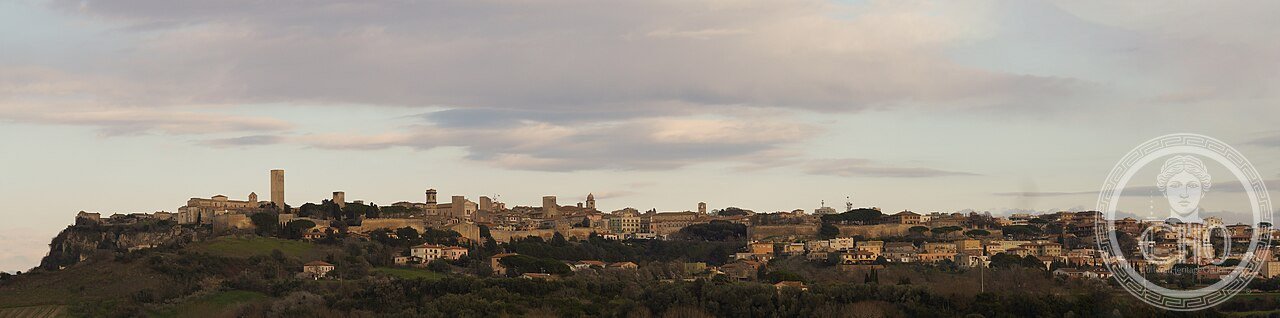
Banditaccia e tumuli, Tomba dei Leopardi a Tarquinia, Museo Nazionale Etrusco (the most precisely Necropoli etrusche zone visit (1 day for both sites)): Cerveteri/Banditaccia (bus da Cerveteri centro (15 min; 3 euro); aperta 9:00–17:30; chiuso lunedì; il biglietto: €6; la visita: 2 ore per il percorso base (the 3 “must-see” tumuli: (1) Tumulo II (the Tomb of the Shields and Chairs (550 BCE): the most elaborate interior; the carved stone furniture (2 thrones; 2 beds; 4 chairs) in the main chamber; the 3 side chambers with carved shields and female busts above the doorways); (2) Tomba dei Rilievi (the Tomb of the Reliefs (the only tomb at Cerveteri with painted stucco reliefs depicting Etruscan domestic objects: hunting weapons, ropes, knives, ladles — a complete inventory of Etruscan daily life, 340 BCE); (3) the Avenue of the Tumuli (the main “street” of the Banditaccia lined with circular tumuli 5–15 m in diameter; the best aerial view: from the eastern hilltop overlooking the necropolis (the viewpoint at 150 m altitude 300 m from the entrance))); Tarquinia (bus from Civitavecchia (45 min; 3.50 euro) or taxi (25 km; 40 euro); the Museo Nazionale Tarquiniese (Palazzo Vitelleschi; €6 includes 1 tomb visit; the winged terracotta horses (the “Cavalli Alati”: 4th century BCE; the masterwork of Etruscan terracotta)); the Painted Tombs visit (the “Tombaroli Circuit”: 30 accessible tombs; the glass-fronted entrances allow viewing without entering; the Tomba dei Leopardi and the Tomba del Triclinio (460 BCE) are the top 2; the ticket includes 1 tomb that can be entered inside (rotated monthly))).
Practical information
- Come raggiungere Cerveteri e Tarquinia da Roma e Civitavecchia, e perché conviene visitare entrambi i siti nello stesso giorno ma in senso inverso (Tarquinia la mattina, Cerveteri il pomeriggio): il trasporto (Roma Termini → Cerveteri: COTRAL (bus Cerveteri Ladispoli → Cerveteri centro; 1h30 totale; €4.00; da Roma Lepanto Metro A bus COTRAL LAD069)); Roma Termini → Civitavecchia: Trenitalia (1h; €6.00; ogni 30 min) poi bus da Civitavecchia → Tarquinia (€3.50; 45 min; ogni 2h); il programma combinato (il senso ottimale: (1) mattina 9:00–12:30: Tarquinia (aperta dal lunedì; le tombe dipinte: la visita mattinale quando la temperatura interna delle tombe è stabile (14–16°C: la variazione termica giornaliera dà problemi di condensa; visitare prima che il caldo di luglio-agosto alzi la temperatura atmosferica)); (2) pranzo a Civitavecchia 13:00–14:30: pesce fresco (il porto di Civitavecchia: il mercato del pesce all’ingrosso; la trattoria di Civitavecchia: €15 con coperto); (3) pomeriggio 15:00–17:30: Cerveteri Banditaccia (la visita pomeridiana è superiore per la luce sulla Banditaccia: i tumuli vengono dorati dal sole basso dell’ovest (15:00–17:00) con le ombre lunghe nei solchi delle strade della necropoli))
Getting there
Da Roma: COTRAL a Cerveteri (1h30, €4) o Trenitalia a Civitavecchia (1h, €6) poi bus a Tarquinia (45 min, €3.50). GPS Banditaccia: 42.0038/11.9895. €6 entrambi i siti. Chiusi lunedì.
Nearby
- Villa Giulia Roma (Museo Nazionale Etrusco — la collezione etrusca più importante del mondo) — Roma (Metro A Flaminio; Piazzale di Villa Giulia 9; €8; mar-dom 9:00-20:00; la Lupa Capitolina (VI sec. BCE); la Statua di Apollo di Veio (510 BCE); la Coppa di Nestor (XII sec. BCE: il boccale più antico con iscrizione alfabetica in Europa))
- Civitavecchia (porto romano Traiano 106 CE; Michelangelo disegnò il bastione) — 80 km da Roma (Trenitalia 1h; €6; il porto: lo scalo merci più attivo del Tirreno centrale (4 milioni passeggeri/anno); la Fortezza Michelangela (1508 CE: il “Forte Michelangelo”: Michelangelo disegnò il bastione nord-est nel 1508 su commissione di Giulio II))
Gallery
Sources
- Wikipedia, Necropolis of Cerveteri; Tarquinia; Etruscan civilization; Tomb of the Leopards, accessed June 2026
- UNESCO, Etruscan Necropolises of Cerveteri and Tarquinia, WHS reference 1158, inscribed 2004
- Pallottino, Massimo. The Etruscans. Penguin Books, 1975 (standard reference on Etruscan art and culture)
Find it on the map
See this place and what’s around it →📷 Diventa un fotografo di Cultural Heritage Online
Condividi le tue foto dei luoghi: restano pubblicate con la tua firma come autore. Più vengono viste, più ti fai conoscere — e presto un concorso premierà le foto più apprezzate.
Accedi o registrati gratis per aggiungere una foto