
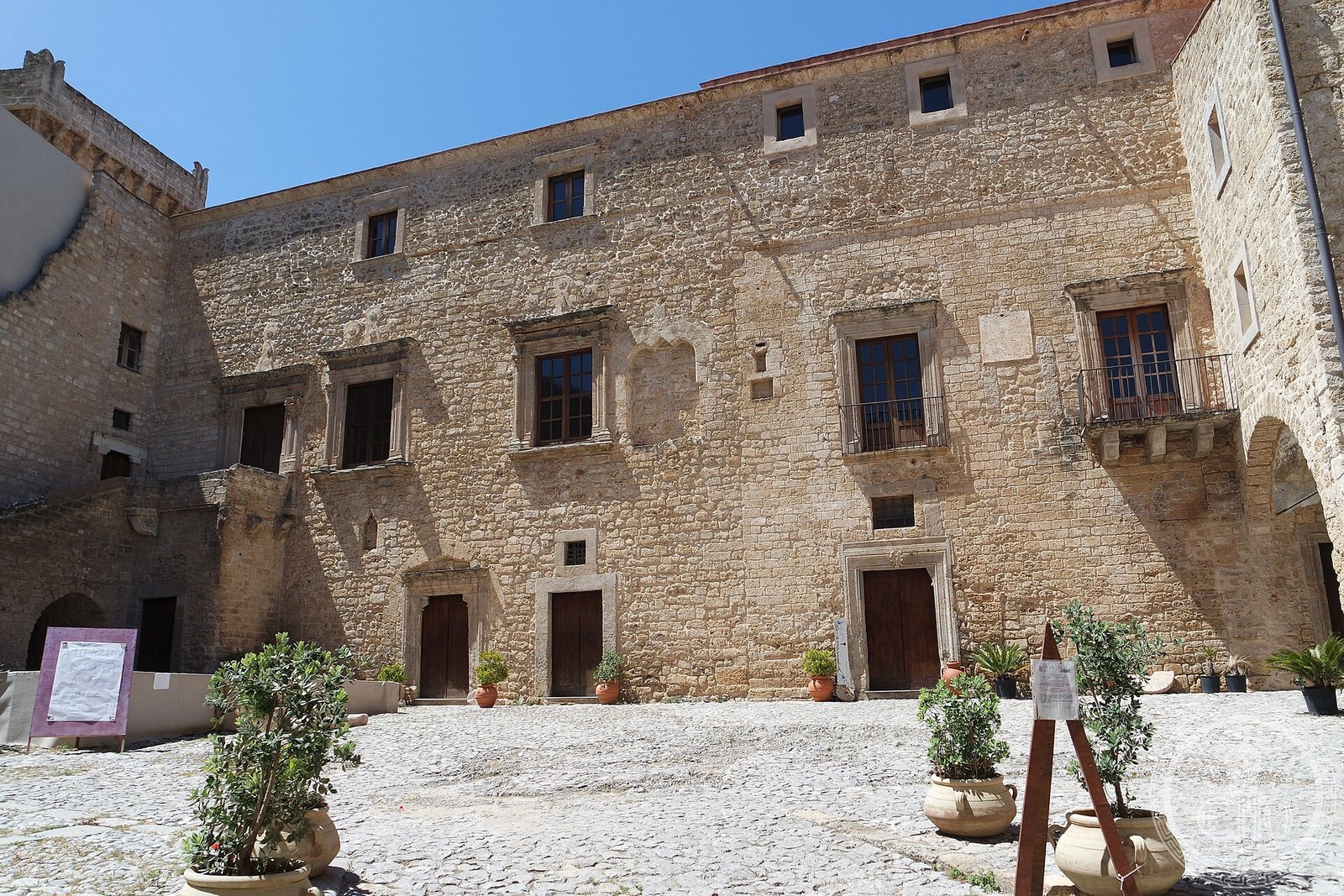
Castle of Carini
The Castle of Carini is a Norman-era fortified complex in the town of Carini, 20 kilometres west of Palermo, renowned in Sicilian cultural memory as the setting of the “Caso di Carini,” a late-16th-century murder ballad recounting the killing of Laura La Grua by her father, Baron Cesare Lanza, after discovering her illicit love affair. The castle, documented from the 11th century and repeatedly enlarged under its successive noble families, combines medieval military architecture with Renaissance residential additions and stands as one of the most visited heritage sites in the Palermo metropolitan area.
At a glance
- Type
- Norman castle · baronial residence
- Period
- 11th century (Norman foundation); major works 14th–17th century
- Style
- Norman military; Sicilian Renaissance residential additions
- Location
- Carini, Metropolitan City of Palermo, Sicily, Italy
- Coordinates
- 38.1332° N, 13.1812° E
Overview
The Castle of Carini dominates the hilltop historic centre of its eponymous town from a commanding position above the Tyrrhenian coastal plain. Its history spans nearly a thousand years of Sicilian political life, from the Norman consolidation of the island through the Aragonese, Spanish, and Bourbon periods. The castle is equally celebrated as an architectural monument and as the locus of one of the most famous tragic narratives in Sicilian oral tradition, the “Baronessa di Carini,” which has inspired poetry, theatre, and operatic works since the 19th century.
History
A fortification at Carini is attested from the Norman period, when Roger I of Sicily distributed fiefs across the island to consolidate his conquest completed in 1072. The castle passed through the La Grua, Settimo, and Lanza families during the medieval and early modern centuries, each adding to its defensive and residential fabric. The most celebrated episode in its history occurred on 4 December 1563 (the date most commonly cited), when Laura La Grua Talamanca, wife of Vincenzo Imperatore, was killed by her father Baron Cesare Lanza upon discovery of her affair with Ludovico Vernagallo. The episode entered Sicilian popular culture through a 16th-century anonymous poem rediscovered and published in 1870 by Giuseppe Salvo Cozzo. Later periods saw the castle used as a baronial seat and administrative centre until its eventual state of partial abandonment in the 19th century.
What you see
The castle presents an irregular plan shaped by successive building campaigns, with surviving Norman and medieval towers integrated into later Renaissance courtyard architecture. The main entrance leads through a fortified gateway into a central courtyard flanked by residential wings that retain carved stone portals, fresco fragments, and period architectural details. A large square tower of Norman origin anchors the complex. The rooms associated with the “Baronessa di Carini” legend have become the focus of visitor interest; local tradition identifies specific chambers with the events of 1563. Views from the castle walls extend across Carini bay to the Tyrrhenian Sea.
Cultural significance
The Castle of Carini occupies a unique position in Sicilian cultural heritage as both an architectural monument and a site of living literary and folk tradition. The “Baronessa di Carini” ballad is considered one of the masterpieces of Sicilian oral poetry and a document of 16th-century Sicilian social history. The castle is protected as a national monument and subject to ongoing restoration works coordinated by the Regional Archaeological and Monumental Heritage Superintendency of Palermo.
Practical information
The castle is open to visitors; hours vary seasonally. Admission is charged. Guided tours in Italian are available; English-language tours should be requested in advance. Check the official Comune di Carini website or contact the castle directly for current opening times and group visit arrangements.
Getting there
Carini is located 20 km west of Palermo on the A29 motorway and is served by frequent trains from Palermo Centrale (journey approximately 25 minutes). From Carini railway station, the castle is a 15-minute uphill walk or short taxi ride through the historic centre. By car, parking is available near the lower town; the castle is signposted from the main road.
Sources & resources
- Carini Castle — Wikipedia
- La Baronessa di Carini — Wikipedia
- Cultural Heritage Online — Sicily guides
Find it on the map
See this place and what’s around it →📷 Diventa un fotografo di Cultural Heritage Online
Condividi le tue foto dei luoghi: restano pubblicate con la tua firma come autore. Più vengono viste, più ti fai conoscere — e presto un concorso premierà le foto più apprezzate.
Accedi o registrati gratis per aggiungere una foto