
Castelseprio e Torba (VII-VIII sec. d.C.): gli Affreschi Longobardi di Santa Maria foris Portas — il Ciclo dell’Infanzia di Cristo più Raffinato dell’Alto Medioevo (UNESCO 2011)
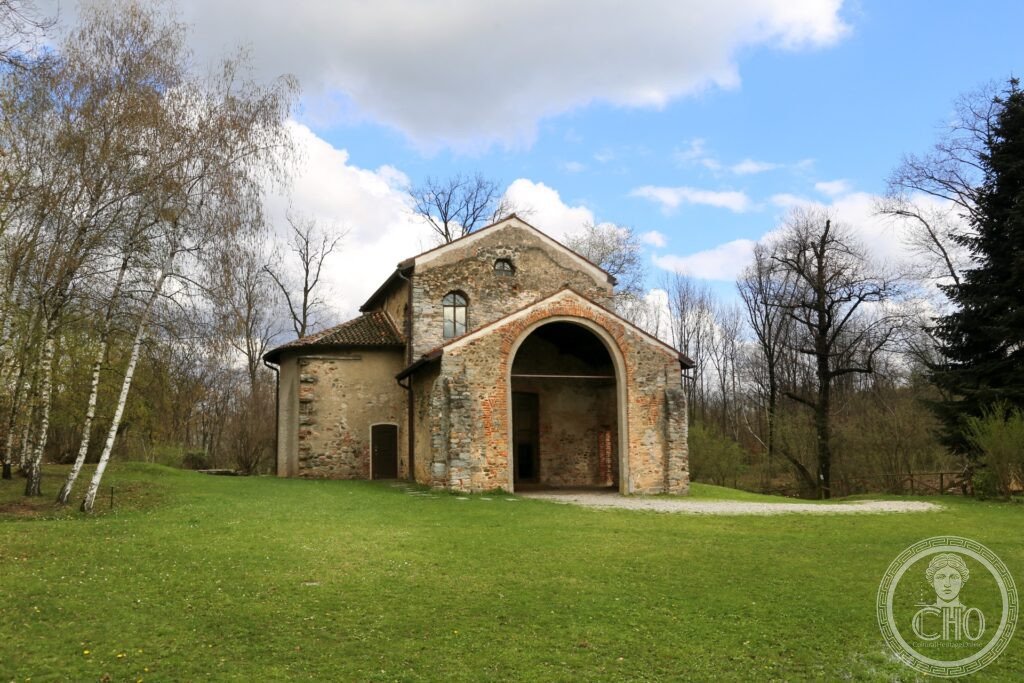
The church of Santa Maria foris Portas at Castelseprio — a small three-apsed brick building outside the walls of the abandoned Lombard-Carolingian town of Castrum Seprium (destroyed by Milan in 1287 and never rebuilt) — contains a cycle of frescoes depicting scenes from the childhood of Christ that represent the most technically refined pictorial work surviving from 7th-8th century Italy, executed by an artist of Byzantine-influenced training so exceptional that for decades after their discovery (1944) art historians debated whether they were medieval originals or a Renaissance fabrication.
At a glance
Castelseprio (municipality of Castelseprio, province of Varese, Lombardia; UNESCO 2011, ref. 1318) was inscribed as part of the serial property “Longobards in Italy: Places of Power (568-774 AD).” The UNESCO component at Castelseprio covers two elements: the archaeological park of Castelseprio (the remains of the Lombard-Carolingian town on the hilltop, including the basilica of San Giovanni Evangelista and the defensive walls) and the church of Santa Maria foris Portas (outside the walls of the Castelseprio hilltop, in the valley; “foris portas” = “outside the gates”). The Torba element of the inscription (Monastero di Torba, 2 km north of Castelseprio, administered by FAI — Fondo Ambiente Italiano) covers a 5th-century watchtower complex that was converted into a Benedictine nunnery in the 8th century and retains a painted tower interior and a small church with 8th-century frescoes.
Key facts
- Gli affreschi di Santa Maria foris Portas (VII-VIII sec.): The apse and the triumphal arch of Santa Maria foris Portas are decorated with a fresco cycle depicting the childhood of Christ (the Annunciation, the Visitation, the Nativity, the Journey of the Magi, the Presentation in the Temple, the Adoration of the Magi, and the Flight into Egypt — 9 scenes in total) in an expressive, dynamic style that derives from late antique and early Byzantine pictorial conventions but applies them with exceptional freedom of line and psychological intensity. The frescoes were discovered by the Milanese art historian Gian Alberto Dell'Acqua in 1944 (the church had been used as a barn and the fresco surface was obscured by whitewash); their date and authorship have been disputed since discovery: proposed dates range from the 6th to the 11th century, with the current scholarly consensus placing them in the late 7th or early 8th century; the artist's origins are unknown but the stylistic parallels with the mosaic cycles at Santa Maria Maggiore in Rome and the early Byzantine painted manuscripts in Sinai suggest an artist trained in the Eastern Mediterranean tradition. The quality of the line drawing (particularly the drapery and the facial expressions in the Annunciation scene) is technically superior to anything else surviving from early medieval Italy
- Il Monastero di Torba (VIII sec., FAI): The Torba complex (2 km north of Castelseprio; administered by FAI, the Italian National Trust) consists of a late Roman watchtower (5th century, originally part of the Late Antique defensive line between Mediolanum/Milan and the Alpine passes) converted into a Benedictine nunnery in the 8th century; the tower has painted interiors with 8th-9th century portraits of abbesses (frescoed on the tower walls with their names, a unique pictorial document of early medieval female monastic life in Italy) and a small adjacent church with further 8th-century frescoes. The FAI has restored the complex and opened it as a museum/cultural site with a garden and an educational programme
- Castrum Seprium (destroyed 1287): The Lombard-Carolingian town on the hilltop (c.500-1287) was one of the principal fortified towns of the Lombard duchy of Milan; it was destroyed by the Visconti-controlled commune of Milan in 1287 during the wars between Milan and the smaller Lombard towns, and the population relocated to the valley (the current town of Castelseprio). The hilltop ruins are now an archaeological park (Parco Archeologico di Castelseprio), with the basilica of San Giovanni Evangelista (5th century, destroyed in 1287, with the mosaic floor partially preserved) and the defensive walls
- UNESCO: 2011, ref. 1318
- GPS: 45.6710, 8.8716 — Google Maps (Santa Maria foris Portas, Castelseprio)
History
The Castrum Seprium site was a Roman road station and minor administrative centre on the road between Milan and the Verbano (Lake Maggiore) / Alpine passes. The Late Antique watchtower at Torba (c.400-430 CE) was part of the Claustra Alpium Iuliarum defensive system built to control access from the Alpine passes. Under the Lombards (568-774 CE) Castrum Seprium developed as a significant fortified settlement, with the construction of Santa Maria foris Portas and the San Giovanni Evangelista basilica; the Torba tower was converted into a nunnery. Under the Carolingians (774-10th century) the site continued as a regional centre; the Lombard-Carolingian transition is documented by the Torba tower abbess portraits (some names are Lombard, some Carolingian). The Visconti-led Milanese destruction of 1287 ended the hilltop settlement permanently; the archaeological park preserves the ruins.
What you see
The Castelseprio-Torba visit has two separate components: Santa Maria foris Portas (the main UNESCO highlight) is at the base of the Castelseprio hill, accessible from the archaeological park car park; the church exterior is a modest three-apsed brick structure; inside (admit/guided or self-guided with the illustrated booklet at the entrance) the apse fresco cycle is immediately visible from the entrance — the Annunciation on the triumphal arch (the most legible single image), then the sequence of scenes in the curved apse wall. Bring a torch (there is lighting, but the frescoes are better seen with raking light on the surface). The archaeological park above (the hilltop ruins: 20-30 min walk from the car park) has the San Giovanni basilica outline, the defensive walls with towers, and panoramic views of the Po plain and the pre-Alps. The Monastero di Torba (2 km north, accessible on foot or by car, FAI admission required) has the painted tower interior (portraits of abbesses) and the small church.
Gallery
Practical information
- Parco Archeologico di Castelseprio (incl. Santa Maria foris Portas): Via Castelseprio 1, Castelseprio (VA); open Tuesday-Sunday 8:30-19:30 (summer), 8:30-16:30 (winter); admission ~€2-4. The church of Santa Maria foris Portas is within the park and is included in the park admission.
- Monastero di Torba (FAI): Via Piero Chiara 2, Castelseprio (VA); open Wednesday-Friday 10:00-13:00, Saturday-Sunday and holidays 10:00-18:00 (April-October); winter by appointment; admission ~€7 (FAI members free). The FAI tour includes the painted tower interior.
- Note on photography: Flash photography is not permitted inside Santa Maria foris Portas; the frescoes are sensitive to light; long-exposure photography is possible on a tripod (bring one if you have it).
Getting there
Santa Maria foris Portas, Castelseprio (VA), Lombardia. GPS 45.6710, 8.8716. By car: from Milan, A8 north to Varese then SP1/SP13 south-west to Castelseprio (50 km, 45 min); from Varese, 12 km south-east (SP13, 15 min). No public transport to the archaeological park itself; the nearest bus stop is in Cairate (3 km), served by CTPI buses from Varese. For visitors without a car: taxi from Varese or from Malpensa airport (30 km).
Nearby
- Varese e il Sacro Monte di Varese — 12 km north-east; the Sacro Monte di Varese (UNESCO 2003, ref.1025 — one of the nine Sacri Monti of Piedmont and Lombardy) is a hillside devotional complex (14 small chapels along a processional route, with 17th-century life-size terracotta figures in each chapel); the Via Sacra from the valley to the Sacro Monte (3 km) is one of the best walks near Varese
- Lago Maggiore — 25 km north-west; the Borromean Islands (Isola Bella, Isola Madre) with their 17th-century Baroque palaces and gardens are a major day trip from Castelseprio
- Malpensa Airport — 15 km south-east; Castelseprio is within easy reach of Malpensa (one of Milan's international airports); a useful combination for visitors with a half-day between flights
Sources
- UNESCO: whc.unesco.org/en/list/1318
- Wikipedia EN: Castelseprio
- Dell'Acqua, Gian Alberto: Gli affreschi di Castelseprio, Milano: Electa, 1948 (the first scholarly publication of the frescoes)
- FAI Monastero di Torba: fondoambiente.it
Find it on the map
See this place and what’s around it →📷 Diventa un fotografo di Cultural Heritage Online
Condividi le tue foto dei luoghi: restano pubblicate con la tua firma come autore. Più vengono viste, più ti fai conoscere — e presto un concorso premierà le foto più apprezzate.
Accedi o registrati gratis per aggiungere una foto