
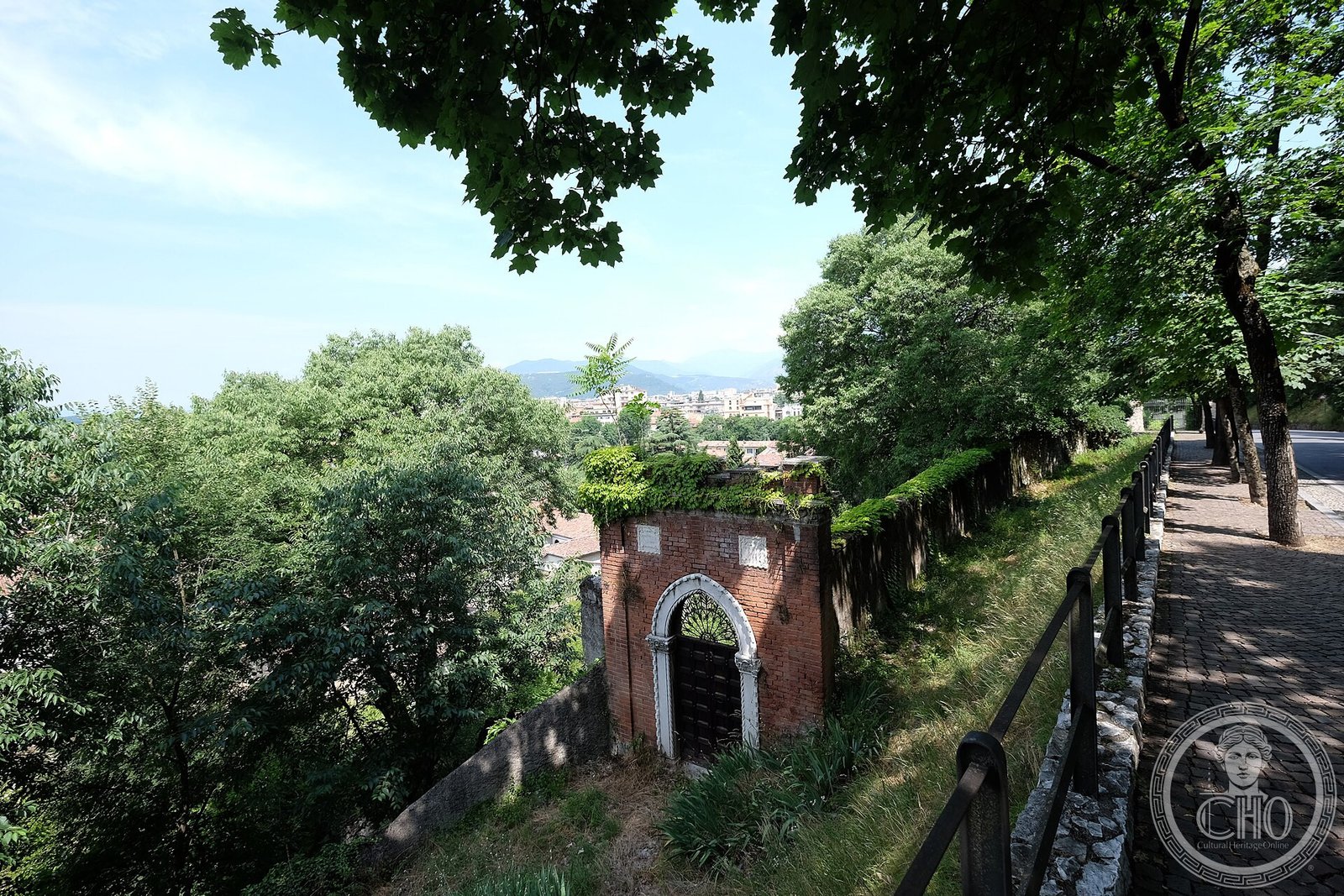
Castello di Brescia
The Castello di Brescia, also known as the Falcone d’Italia (“Falcon of Italy”), is a large medieval fortress crowning the Cidneo hill above the historic centre of Brescia, Lombardy, and ranks among the best-preserved and most extensive urban castles in northern Italy. Its origins reach back to Roman times, but the main fabric visible today accumulated from the thirteenth century onwards through successive Lombard, Visconti, Venetian, and Napoleonic phases of construction and adaptation. Today the castle complex houses two civic museums — the Museo delle Armi Luigi Marzoli and the Museo del Risorgimento — as well as gardens, promenades, and panoramic terraces accessible to the public free of charge.
At a glance
- Type
- Hilltop fortress / civic museum complex
- Period
- Roman origins; medieval and Renaissance construction from 13th century; Napoleonic modifications late 18th–early 19th century
- Style
- Lombard medieval military architecture; Venetian and Napoleonic additions
- Location
- Cidneo hill, Brescia, Province of Brescia, Lombardy, Italy
- Coordinates
- 45.5428° N, 10.2231° E
Overview
The Castello di Brescia rises on the Cidneo hill, a limestone promontory that has been fortified since at least the Iron Age and that dominates Brescia’s historic centre immediately to the south. The site’s strategic importance — commanding views across the Po Valley while controlling the Alpine foothills — ensured that every power that held Brescia left its mark on the hill: Roman, Lombard, Visconti, Venetian, French. The result is one of the most architecturally layered fortresses in northern Italy, its fabric a palimpsest of military engineering from the Middle Ages to the Napoleonic era. The castle is now a public park and museum complex, visited daily by Brescians and tourists alike.
History
Roman Brixia had a temple and civic structures on Cidneo hill, and the site retained strategic importance through the early medieval period when Lombard kings used it as a fortified seat. The medieval castle in its core form was developed from the thirteenth century, with the Visconti adding towers and curtain walls during their domination of Brescia in the fourteenth century. Venice, which held Brescia from 1426 to 1797 with a single Napoleonic interruption, undertook major reconstruction works including the Mirabella tower and the system of bastions adapted for artillery. Napoleon’s forces used the castle as a military base, adding the round powder magazine and other functional structures. The castle saw its last military action in the Ten Days of Brescia uprising of 1849 before passing to civic use.
What you see
The castle occupies approximately 30 hectares on and around the Cidneo hill, enclosed by a complex of walls, bastions, and towers of different periods. The keep and the Mirabella circular tower are the most prominent vertical elements. Within the walls, the Museo delle Armi Luigi Marzoli houses one of Europe’s most important collections of medieval and Renaissance arms and armour, while the Museo del Risorgimento traces Italian unification with emphasis on the Brescian uprising of 1849. The castle also contains a Roman archaeological zone, the ruins of a Roman temple visible on the hilltop, and extensive gardens with panoramic views over Brescia and the pre-Alpine landscape.
Cultural significance
The Castello di Brescia is inseparable from the city’s identity and from the broader history of Lombard and Venetian rule in northern Italy. Its nickname “Falcon of Italy” reflects its military reputation, while the arms collection within is considered a European reference for the study of Renaissance weapons production — appropriate for a city whose metal-working tradition has survived for five centuries and remains active in the Brescia gun-making district today.
Practical information
- Address
- Via del Castello, 25121 Brescia BS
- Hours
- Castle grounds: daily, sunrise to sunset (free); Museums: check Musei di Brescia website for current hours
- Admission
- Castle grounds free; museum tickets apply — check Musei di Brescia for current prices
Getting there
The castle is a 15-minute walk from Brescia Centrale railway station (on the Milano–Venezia high-speed and regional lines). From the station, walk along Via Moretto and Via dei Musei into the historic centre, then follow signs uphill to the castle. The castle is also served by a funicular from the Piazza del Mercato. By car, exit the A4 at Brescia Centro; parking available near the city walls.
Sources & resources
Find it on the map
See this place and what’s around it →Historical events at this place (1)
📷 Diventa un fotografo di Cultural Heritage Online
Condividi le tue foto dei luoghi: restano pubblicate con la tua firma come autore. Più vengono viste, più ti fai conoscere — e presto un concorso premierà le foto più apprezzate.
Accedi o registrati gratis per aggiungere una foto