
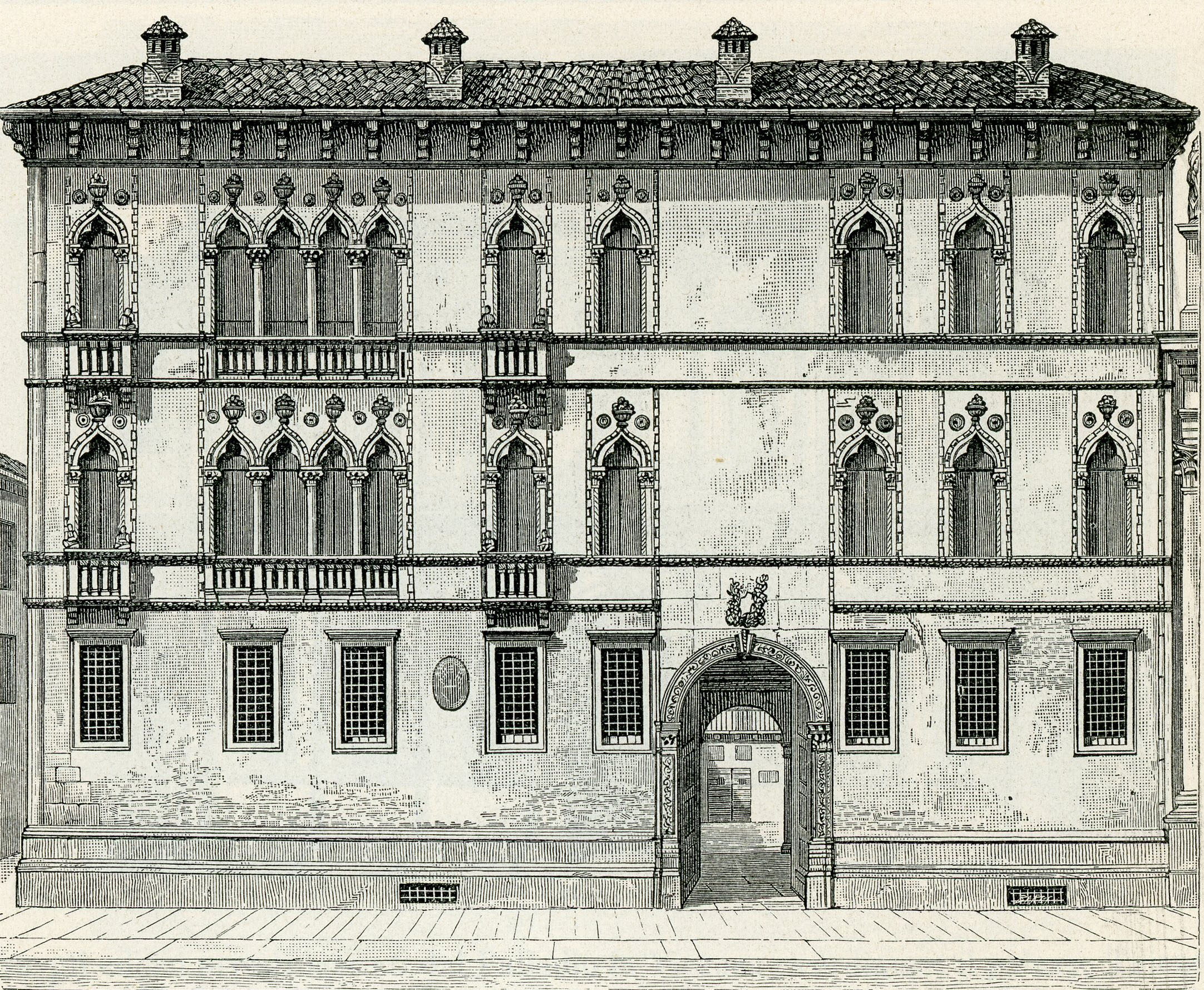
Palazzo Caldogno Dal Toso Franceschini da Schio (Ca’ d’Oro), Vicenza
Known locally as the Ca’ d’Oro of Vicenza, the Palazzo Caldogno Dal Toso Franceschini da Schio is one of the finest surviving examples of Flamboyant Gothic civic architecture in the Veneto. Standing at the corner of Corso Palladio and Contra’ San Gaetano Thiene in the historic centre of Vicenza, it was built for the noble Caldogno family and takes its popular name from the gilded decorative details that once distinguished its elaborately carved stone facade.
At a glance
- Type
- Gothic noble palace
- Period
- 15th century
- Style
- Flamboyant Gothic (gotico fiorito)
- Location
- Corso Palladio / Contra’ San Gaetano Thiene, 36100 Vicenza, Veneto
- Coordinates
- 45.5484° N, 11.5446° E
Overview
The Palazzo Caldogno Dal Toso Franceschini da Schio, universally known as Vicenza’s Ca’ d’Oro, stands as testimony to the Gothic architectural tradition that preceded Palladio’s transformation of the city’s visual character. Located on Corso Palladio — the main thoroughfare of the historic centre — it occupies a prominent corner plot that ensures its visibility to every visitor walking through the heart of Vicenza. The palace passed through several noble families over the centuries, each adding their name to its long official title.
History
The palace was built in the 15th century for the Caldogno family, one of the prominent noble lineages of the Vicentine territory. The “gotico fiorito” (Flamboyant Gothic) style of its construction reflects the late-medieval taste for elaborate decorative stonework, a tradition well established across northern Italy and the Veneto before the Renaissance. The name Ca’ d’Oro — “House of Gold” — is shared with the more famous palazzo in Venice and in both cases derives from gilded ornamental details on the facade, now faded but preserved in the popular imagination. Subsequent ownership by the Dal Toso, Franceschini, and da Schio families is recorded in its compound official name.
What you see
The palace’s most striking feature is its carved stone facade, which displays the pointed arches, tracery, and decorative crockets typical of the Flamboyant Gothic. The corner position gives it a distinctive presence on Corso Palladio, and the two-street frontage allows the full extent of its composition to be read. The upper-floor windows with their delicate Gothic tracery are the most photographed element, contrasting with the more austere lower storey. The building stands in direct visual dialogue with the later Renaissance and Baroque palaces that line Corso Palladio, making the street a compressed anthology of Vicentine architectural history.
Cultural significance
The Ca’ d’Oro of Vicenza is among the best-preserved Gothic palaces on Corso Palladio, a street where Palladian classicism dominates the urban fabric. Its survival is therefore doubly significant: it offers a rare counterpoint to the Renaissance ideal and reminds visitors that Vicenza’s architectural identity predates Palladio by centuries. The palace is protected as a heritage asset and contributes to the UNESCO World Heritage value of the “City of Vicenza and the Palladian Villas of the Veneto.”
Practical information
- Address
- Corso Palladio / Contra’ San Gaetano Thiene, 36100 Vicenza VI
- Opening hours
- Exterior visible at all times; check for any interior access arrangements
- Admission
- Exterior viewing free; check official sources for any interior visits
Getting there
Corso Palladio is the main axis of Vicenza’s historic centre, running from Piazza Castello to Piazza Matteotti. Vicenza railway station is a 10-minute walk from the start of Corso Palladio. City buses stop near Piazza dei Signori and Piazza Castello. The historic centre is pedestrianised on Corso Palladio; visitors by car should park at the external car parks and walk in.
Sources & resources
Find it on the map
See this place and what’s around it →📷 Diventa un fotografo di Cultural Heritage Online
Condividi le tue foto dei luoghi: restano pubblicate con la tua firma come autore. Più vengono viste, più ti fai conoscere — e presto un concorso premierà le foto più apprezzate.
Accedi o registrati gratis per aggiungere una foto