
Belgian Academy in Rome
The Belgian Academy in Rome (Académie Belge de Rome / Belgische Academie te Rome), formally the Royal Academy of Belgium’s Rome Prize institute, is a foreign academy established to support Belgian artists and scholars working in Rome. Like the French Villa Medici and the British School at Rome, it embodies the tradition of state-sponsored residency programmes that since the 17th century have brought northern European artists to study the classical and Renaissance heritage of Italy. The academy is located in the Palazzo Posta Vecchia area of central Rome, providing studio and residence spaces for prize-winning Belgian researchers in the arts, humanities, and heritage studies.
At a glance
- Type
- Foreign cultural academy and artist residency
- Period
- Established 1902 (Belgian Prix de Rome programme)
- Style
- Historic Roman palazzo adapted for scholarly and artistic residency
- Location
- Rome, historic centre, near Villa Borghese
- Coordinates
- 41.9166° N, 12.4794° E
Overview
Belgium’s Prix de Rome — the Belgian equivalent of the French Grand Prix de Rome — awarded outstanding graduates in fine arts, architecture, music, and literature a funded residency period in Rome to pursue advanced study. The Roman academy was established as the physical home for these laureates, providing studios, a library of Belgian and Italian art references, and a collegial environment that facilitated exchange between disciplines. Residents typically stay for one to two years, producing work and research that they bring back to Belgium.
The Belgian Academy sits within a wider ecosystem of foreign academies in Rome — French, German (Bibliotheca Hertziana, Villa Massimo), American (American Academy in Rome), British (British School at Rome), and many others — that together make Rome one of the world’s densest concentrations of international scholarly and artistic institutions dedicated to the study of Italian and classical heritage. The co-presence of these institutions has fostered a tradition of cross-national scholarly exchange unique to Rome.
The academy operates under the patronage of the Royal Academy of Belgium and maintains connections with Belgian universities, art schools, and heritage bodies, functioning as both a residency and a cultural diplomacy post for Belgium in Italy.
History
Belgium’s Prix de Rome was modelled on the prestigious French competition, itself established by Louis XIV in 1663. The Belgian version emerged in the 19th century as an aspiration of the new Belgian state (independent from 1830) to cultivate a national artistic tradition through exposure to the classical and Renaissance heritage concentrated in Rome. By 1902 the programme had its own permanent Rome presence, formalising what had been an ad-hoc arrangement of prizes and travel grants.
The 20th century brought financial pressure and ideological challenges to the grand-prize residency model across Europe — the French abolished the Prix de Rome in 1968, Germany reformed its analogues, and Belgium restructured its programme — but the Belgian Academy persisted, adapting its selection criteria to embrace a broader range of disciplines including heritage conservation, musicology, and the digital humanities.
In recent decades the academy has expanded its public programming, hosting lectures, exhibitions, and symposia that open the institution to a broader Italian and international audience, moving beyond its historical identity as a closed laureate residence toward a role as a cultural exchange platform.
What you see
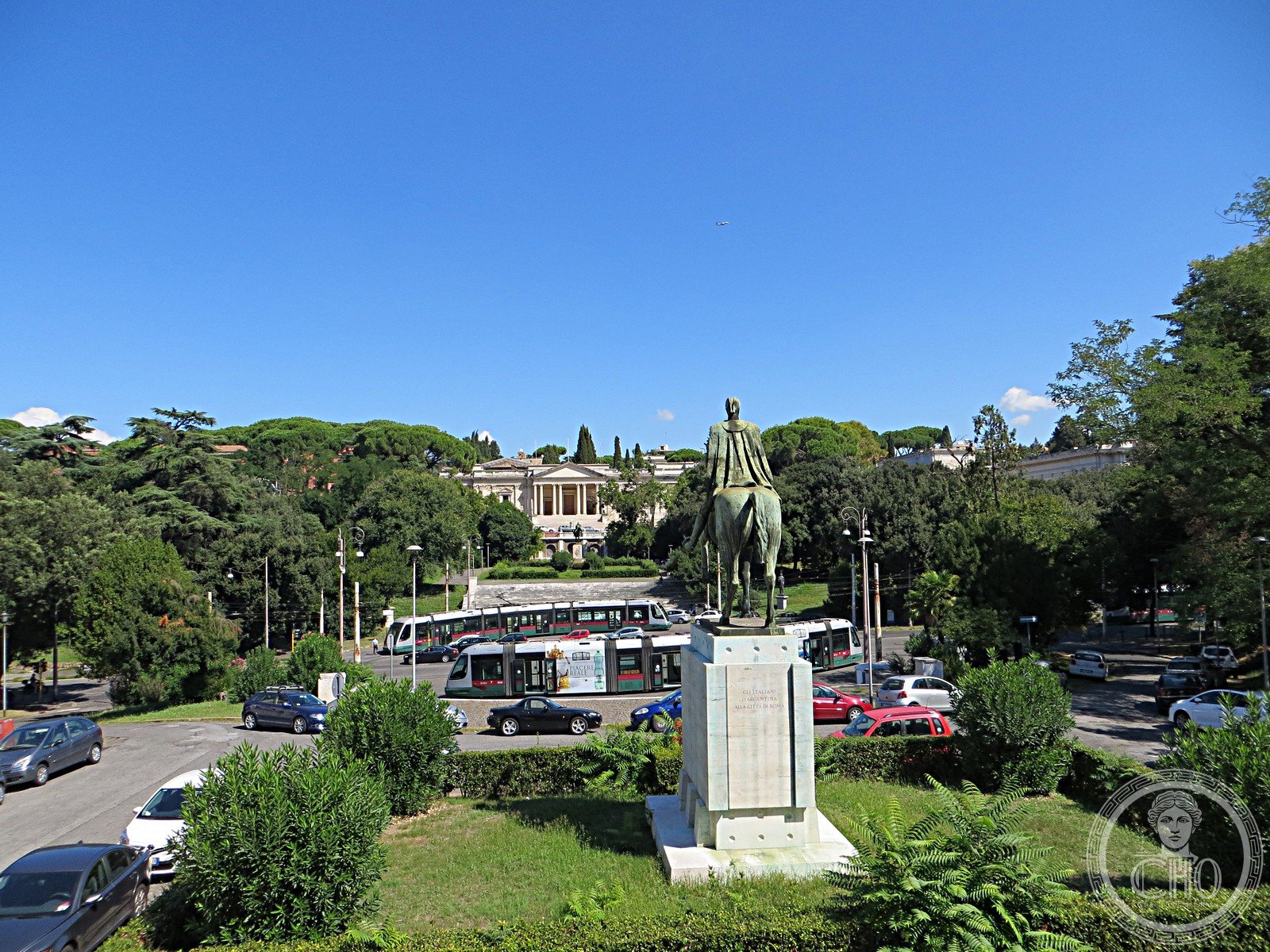
Foreign academies in Rome typically occupy historic palazzi whose monumental scale and period decoration coexist with the working studios and seminar rooms of an active scholarly institution. The Belgian Academy’s spaces include resident studios with high ceilings and good north light, a library and archive documenting Belgian laureates’ Roman work since the 19th century, and common spaces that accommodate the colloquia and receptions that mark the academic calendar.
The surrounding neighbourhood near the Pincian Hill and Villa Borghese places the academy within a cluster of cultural institutions: the Istituto Svedese di Studi Classici a Roma, the Accademia di Danimarca, and numerous other national academies whose handsome palazzi punctuate the streets between Via Veneto and the Aurelian Wall. Walking this district is a study in the geography of European cultural diplomacy.
Public exhibitions by current and former laureates are periodically held in the academy’s ground-floor gallery space; these offer the best opportunity for casual visitors to enter the building and experience the blend of historic architecture and contemporary artistic practice.
Cultural significance
The foreign academy model was one of the most effective mechanisms by which northern and western European nations internalised the visual grammar of Italian Renaissance and Baroque art, transmitting it back to their national schools. Belgian art and architecture of the 19th and early 20th century is significantly shaped by the Rome experience of its Prix de Rome laureates — an influence traceable in the Neoclassical and Beaux-Arts fabric of Brussels and in the careers of painters such as Jean-Baptiste van Moer and later generations.
In the 21st century the academy’s significance has shifted toward cross-disciplinary research and cultural dialogue, contributing to EU-funded heritage research networks and supporting Belgian scholars working on Italian-Belgian connections in art history, conservation science, and urban studies.
Practical information
- Address
- Rome, historic centre (check the official website for current address and visiting hours)
- Access
- The academy hosts periodic public exhibitions and events; residency facilities are reserved for laureates and affiliated researchers
- Website
- Check official Belgian cultural institutions’ listings for current information
Getting there
The coordinates place the academy near Villa Borghese and the Pincian Hill area. The nearest metro station is Spagna (Line A) or Flaminio (Line A), each approximately 10–15 minutes on foot. Bus routes on Via Veneto and Via Pinciana serve the area. The Via Gregoriana and Via Sistina axis connects to the Spanish Steps district. Taxis and ride-share services reach the area easily from any part of central Rome.
Sources & resources
- Prix de Rome — Wikipedia
- Foreign academies in Rome — Wikipedia
- Cultural Heritage Online — Rome guides
Find it on the map
See this place and what’s around it →📷 Diventa un fotografo di Cultural Heritage Online
Condividi le tue foto dei luoghi: restano pubblicate con la tua firma come autore. Più vengono viste, più ti fai conoscere — e presto un concorso premierà le foto più apprezzate.
Accedi o registrati gratis per aggiungere una foto