
Basilica of Superga
The Basilica of Superga is a hilltop late-Baroque Catholic basilica above Turin, designed by Filippo Juvarra and built between 1717 and 1731 for Victor Amadeus II of Savoy in fulfilment of a vow made before the Battle of Turin in 1706. The building serves as the dynastic mausoleum of the House of Savoy, and its hilltop silhouette — visible from much of the Po plain — became one of the defining landmarks of the Piedmontese capital. In 1949 the rear wall of the basilica was struck by the aircraft carrying the Grande Torino football team, killing all 31 people aboard.
At a glance
- Type
- Catholic minor basilica and royal mausoleum
- Period
- Groundbreaking 1717; dome completed 1726; consecrated 1 November 1731
- Style
- Late Baroque-Classicism
- Architect
- Filippo Juvarra
- Patron
- Victor Amadeus II of Savoy, Duke of Savoy and King of Sardinia
- Location
- Superga, Metropolitan City of Turin, Piedmont, Italy
- Coordinates
- 45.0807° N, 7.7675° E
Overview
Superga stands on a 672-metre ridge east of Turin and functions simultaneously as a place of pilgrimage, a dynastic necropolis, and one of the supreme examples of eighteenth-century Piedmontese architecture. Juvarra positioned the building so that its dome aligns on a sight line with the distant Castle of Rivoli, reinforcing the symbolic geometry of Savoy territorial power. The basilica is administered by the Archdiocese of Turin and is accessible by historic rack railway from the city.
History
Victor Amadeus II vowed to build a great church on the hilltop of Superga if the allied forces defeated the French besieging Turin in 1706. The city was saved, and Juvarra — the leading architect of the Savoy court — began construction in 1717. The dome was structurally complete by 1726, and the basilica was consecrated on 1 November 1731. Over the following two centuries it became the burial place of successive Dukes, Kings of Sardinia, and Kings of Italy. On 4 May 1949, the aircraft carrying the entire Grande Torino football team returning from a match in Lisbon struck the rear wall in thick fog, killing all 31 people on board in what became known as the Superga air disaster.
What you see
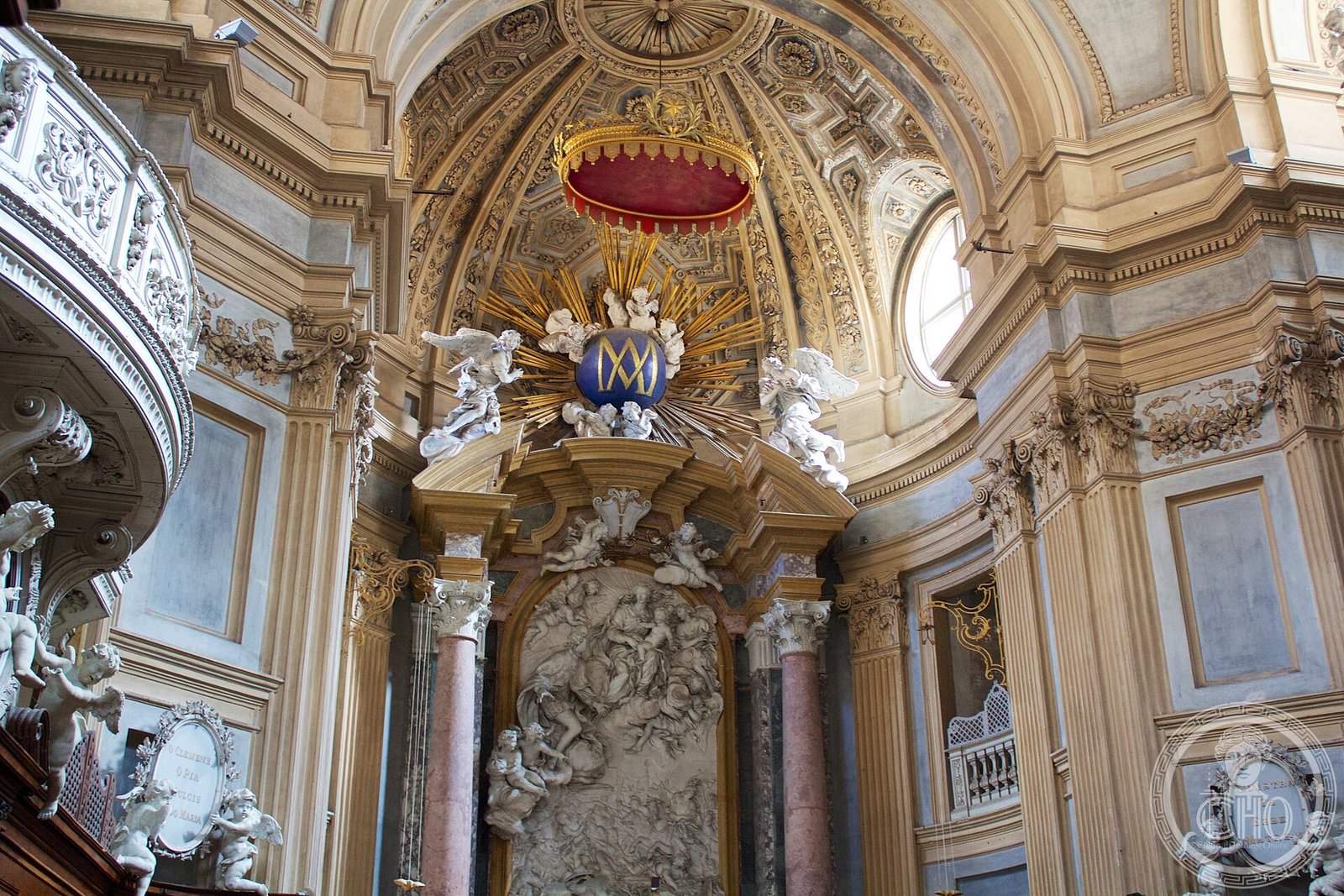
The basilica rises from a broad drum on a circular base, with a great dome flanked by two bell towers that echo Roman and Borromini precedents. The Pantheon-like portico at the entrance is fronted by eight columns and is inscribed with the dedication to the Virgin. Inside, the circular nave is ringed by chapels and gives onto the royal crypt beneath, where sarcophagi of Savoy monarchs are arranged in a vaulted chamber. From the exterior terrace the views extend across Turin and the Po plain to the Alps — on clear days as far as Monte Rosa.
Cultural significance
Superga is both the dynastic monument of the House of Savoy — the family that unified Italy in 1861 — and a site of collective Turinese mourning after the 1949 air disaster, which destroyed the national football team at the height of its powers. Every year on 4 May, Torino FC supporters gather at the basilica to commemorate the Grande Torino team, making Superga a site of layered national memory that extends well beyond its religious and architectural importance.
Practical information
- Address
- Strada della Basilica di Superga 73, 10132 Torino TO, Italy
- Opening hours
- Basilica and crypt generally open daily; check the official website for seasonal hours
- Admission
- Free entry to the basilica; admission fee for the royal crypt and panoramic terrace
Getting there
The Tramvia di Superga rack railway departs from Sassi (reachable by GTT bus from Turin city centre) and climbs to the basilica in approximately 18 minutes. By car, the winding Strada della Basilica di Superga is accessible from the eastern outskirts of Turin; parking is available at the summit. The rack railway is the recommended option for visitors seeking the most scenic approach.
Sources & resources
Find it on the map
See this place and what’s around it →📷 Diventa un fotografo di Cultural Heritage Online
Condividi le tue foto dei luoghi: restano pubblicate con la tua firma come autore. Più vengono viste, più ti fai conoscere — e presto un concorso premierà le foto più apprezzate.
Accedi o registrati gratis per aggiungere una foto