
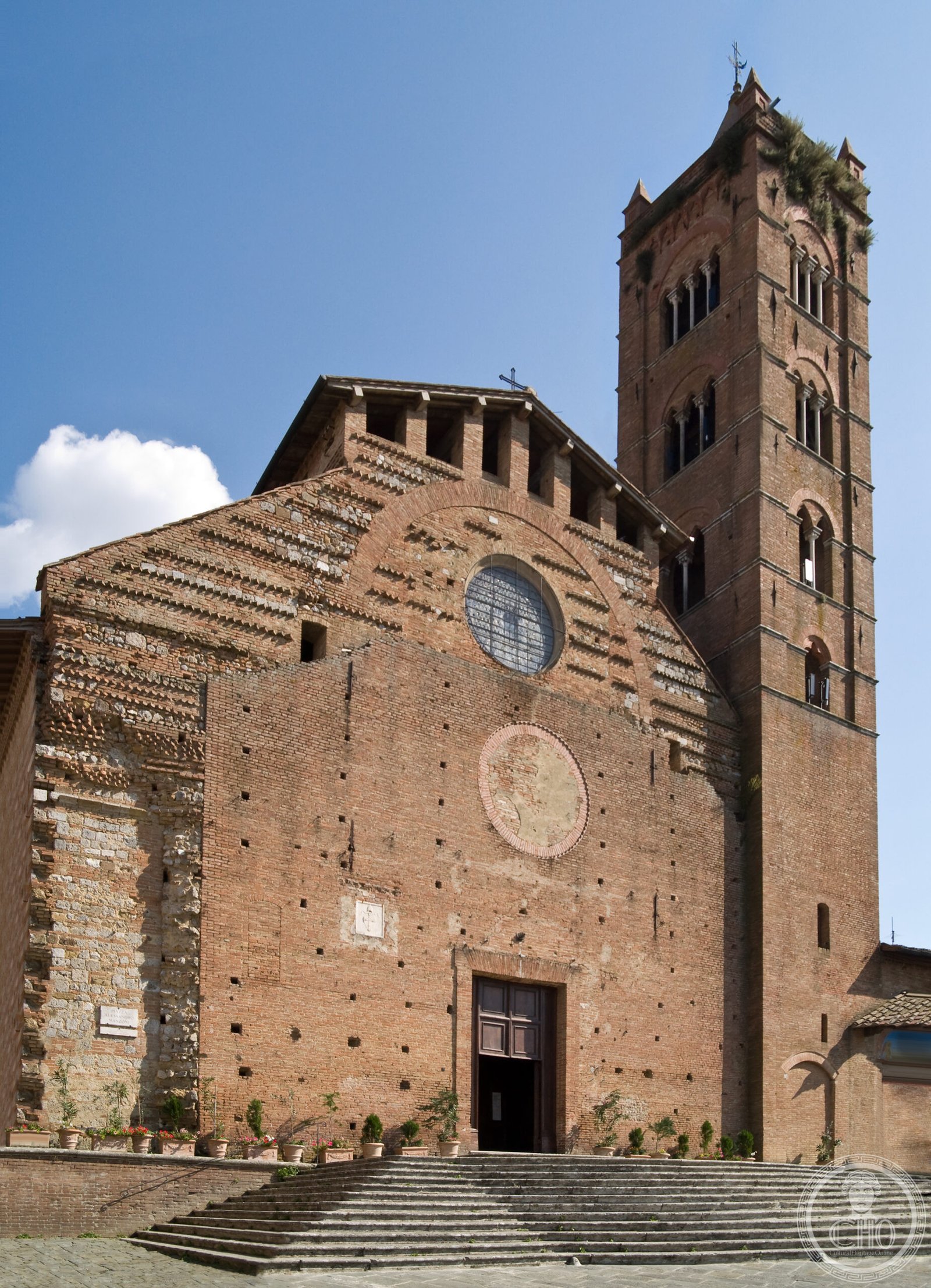
Basilica of Santa Maria dei Servi, Siena
The Basilica of Santa Maria dei Servi is a Romanesque-Gothic church in the Terzo of San Martino in Siena, Tuscany. Founded in the thirteenth century by the Servite order and completed over the following two centuries, it contains one of the finest collections of Sienese Gothic and early-Renaissance painting outside the Pinacoteca Nazionale, including Coppo di Marcovaldo’s celebrated Madonna del Bordone (1261) and Lippo Memmi’s Madonna dei Magi (1317).
At a glance
- Type
- Catholic basilica (Servite order)
- Period
- Founded mid-13th century; construction continued through 15th century
- Style
- Romanesque-Gothic; interior with Sienese Gothic and Renaissance altarpieces
- Location
- Piazza Alessandro Manzoni, Siena, Tuscany, Italy
- Coordinates
- 43.3150° N, 11.3361° E
Overview
Santa Maria dei Servi stands at the southern edge of Siena’s historic centre, just outside the main medieval ring yet firmly within the UNESCO-protected zone. The Servite friars built it on a prominent hilltop position that commands views over the Sienese countryside. Though less visited than the Duomo, it rewards those who seek out its extraordinary concentration of medieval painting.
History
The Servites established their Sienese community around 1253 and began constructing the church shortly after. Building proceeded in phases through the fourteenth and fifteenth centuries, producing the broad nave and brick campanile visible today. The interior was enriched by commissions from prominent Sienese families, who endowed chapels and altarpieces as acts of piety and civic display. The church survived the suppressions of the Napoleonic era and remains an active place of worship.
What you see
The wide nave is lined with lateral chapels containing a remarkable sequence of Sienese masterworks. Coppo di Marcovaldo’s Madonna del Bordone (1261) is among the earliest signed and dated panel paintings in Tuscan art. Nearby, Pietro Lorenzetti’s Massacre of the Innocents (c. 1330) occupies a full altar face with dramatic narrative intensity. The apse preserves frescoes and the Romanesque bell tower anchors the exterior silhouette visible from many parts of Siena.
Cultural significance
The basilica functions as an informal survey of Sienese painting from the Byzantine-influenced Duecento through the refined Gothic of the Trecento, documenting how Sienese artists developed a distinctive vocabulary independent of the Florentine tradition. For art historians, its altarpieces provide primary evidence for dating and attribution of key Sienese masters.
Practical information
- Address
- Piazza Alessandro Manzoni, 53100 Siena SI, Italy
- Opening hours
- Generally open daily; check official sources for current times
- Admission
- Free entry (donations welcome)
Getting there
From Piazza del Campo, follow Via Roma southward for approximately 10 minutes on foot; the basilica’s brick façade and campanile become visible as you descend toward the Porta Romana quarter. Siena is connected to Florence by Sita Nord bus (approx. 75 minutes) and by train with a change at Empoli. Within Siena, city buses serve the southern districts from Piazza Gramsci.
Sources & resources
Find it on the map
See this place and what’s around it →📷 Diventa un fotografo di Cultural Heritage Online
Condividi le tue foto dei luoghi: restano pubblicate con la tua firma come autore. Più vengono viste, più ti fai conoscere — e presto un concorso premierà le foto più apprezzate.
Accedi o registrati gratis per aggiungere una foto