
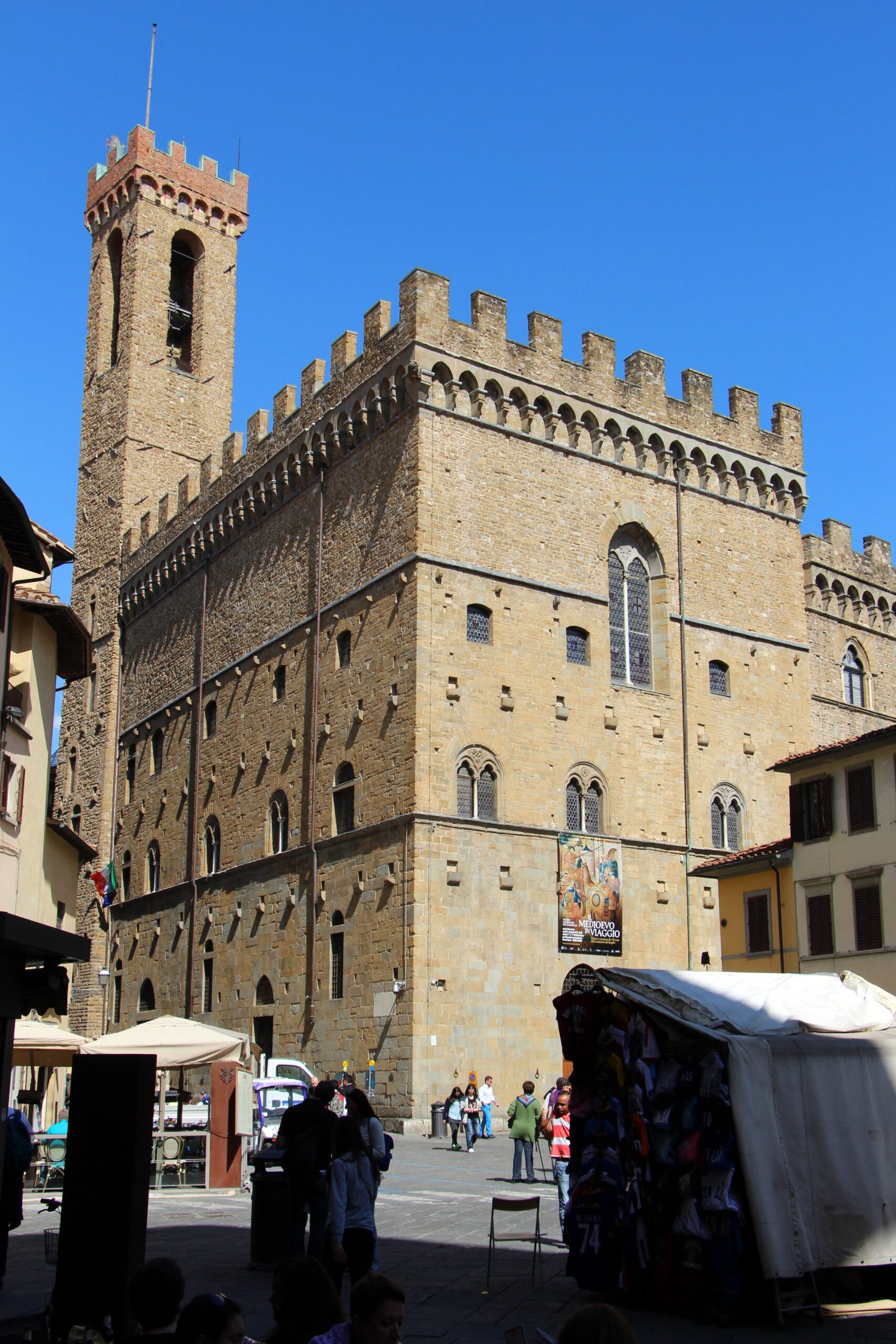
Bargello National Museum
The Bargello, also known as the Palazzo del Bargello or Palazzo del Popolo, is a former public building and police headquarters in Florence that has housed the Museo Nazionale del Bargello since 1865. The museum holds Italy’s foremost collection of Renaissance sculpture, including major works by Donatello, Michelangelo, Benvenuto Cellini, and Giambologna, in one of the oldest surviving civic buildings in the city.
At a glance
- Type
- National art and sculpture museum
- Period
- Begun 1255; extended through 14th century; museum since 1865
- Style
- Florentine Gothic civic architecture
- Location
- Via del Proconsolo 4, 50122 Florence, Tuscany
- Coordinates
- 43.7704° N, 11.2580° E
Overview
The Bargello is Florence’s oldest surviving public building, begun in 1255 as the seat of the Capitano del Popolo and later serving successively as the residence of the Podestà, a court of justice, and the headquarters of the chief of police — the bargello — from whom the palace takes its current name. Since 1865 it has been a national museum, recognised as holding the richest collection of Italian Renaissance sculpture in existence. Its courtyard, staircase, and vaulted halls constitute an outstanding ensemble of medieval civic architecture in their own right.
History
Construction of the Palazzo del Popolo began in 1255 on land near the cathedral, intended as the administrative heart of the newly independent commune of Florence. It became the residence of the Podestà in 1261, and the tower was raised to its present height in 1330. For centuries the inner courtyard served as the site of public executions, and the walls still bear the faded outlines of painted effigies of condemned criminals. After the unification of Italy the building was restored by architects Luigi del Moro and Francesco Mazzei, and inaugurated as a museum in 1865 — making it one of the first national museums in the newly unified state.
What you see
The ground floor hall contains Michelangelo’s early works — including his Bacchus, Brutus, and the Pitti Tondo — alongside pieces by Cellini and Ammannati. The first floor loggia and Donatello Hall display the bronze David (c. 1440s), the marble Saint George from Orsanmichele, and the celebrated competition panels by Ghiberti and Brunelleschi for the Baptistery doors of 1401. Upper rooms cover decorative arts, arms and armour, Islamic art, and a remarkable collection of small bronzes and medals. The courtyard itself, with its elegant well-head and coats of arms of past officials, is one of the finest Gothic secular spaces in Italy.
Cultural significance
The Bargello’s collection documents the entire trajectory of Italian Renaissance sculpture across two centuries, from the proto-Renaissance innovations of Tino da Camaino and Arnolfo di Cambio through to Giambologna’s late-Mannerist bronzes. The presence of Donatello’s bronze David — long considered the first free-standing nude statue since antiquity — makes the museum a landmark in the history of Western art. Its dual identity as medieval civic architecture and Renaissance art treasury is unique among Italian national museums.
Practical information
- Address
- Via del Proconsolo 4, 50122 Florence
- Opening hours
- Check official website for current hours; closed on certain Mondays and public holidays
- Admission
- Check official website for current ticket prices; advance booking recommended
- Website
- bargellomusei.beniculturali.it
Getting there
The Bargello stands on Via del Proconsolo, two minutes’ walk from the Piazza del Duomo and five minutes from Piazza della Signoria. It is easily reached on foot from the central train station Santa Maria Novella (roughly 15 minutes) or from the Accademia and San Marco area. City buses serving Piazza San Firenze stop nearby. No dedicated car park; the nearest is at Piazza della Signoria underground or at Santa Croce.
Sources & resources
Find it on the map
See this place and what’s around it →📷 Diventa un fotografo di Cultural Heritage Online
Condividi le tue foto dei luoghi: restano pubblicate con la tua firma come autore. Più vengono viste, più ti fai conoscere — e presto un concorso premierà le foto più apprezzate.
Accedi o registrati gratis per aggiungere una foto