
Bachelor’s Grove Cemetery
Bachelor’s Grove Cemetery is a small, largely abandoned 19th-century burial ground located in the Rubio Woods forest preserve near Midlothian, Illinois, roughly 25 kilometres south of Chicago. Established in the 1840s by early settlers of German and Swedish descent, the cemetery fell into disuse after the mid-20th century and became overgrown, its monuments scattered and vandalised over the decades. It is now most widely known as one of the most reportedly haunted locations in the Chicago area, documented by numerous paranormal investigators since the 1970s, though its cultural significance also lies in its status as a rare surviving witness to the earliest rural settlement of the southern Cook County region.
- Type
- Abandoned historic rural cemetery
- Period
- Established c. 1844; active burials through late 19th century
- Style
- Rural vernacular cemetery; 19th-century headstones
- Location
- Rubio Woods Forest Preserve, Midlothian, Illinois, USA
- Coordinates
- 41.6307° N, 87.7710° W
At a glance
- Type
- Abandoned rural historic cemetery
- Period
- Established c. 1844; last recorded burial 1965
- Style
- 19th-century vernacular rural burial ground
- Location
- Midlothian, Cook County, Illinois, USA
Overview
Bachelor’s Grove Cemetery covers less than an acre within the Rubio Woods forest preserve. At its peak in the mid-19th century it contained the graves of several dozen settlers from the German and Scandinavian communities that homesteaded in the Midlothian area. A small pond adjacent to the cemetery was historically used for baptisms by local congregations. The last known burial took place in 1965, after which the site fell into neglect. Today, fewer than 20 legible headstones remain standing, the remainder having been overturned by vandals or lost to natural decay.
History
The cemetery is believed to have been established around 1844, shortly after German immigrant settlers began farming the flat prairies of southern Cook County. The name “Bachelor’s Grove” likely refers either to a grove of trees frequented by unmarried male settlers or to a family named Bachelor. As the surrounding rural community gradually urbanised and the population centre shifted northward, the cemetery lost its congregation and maintenance ceased. From the 1970s onward it became a well-known destination for ghost hunters and paranormal researchers, and was listed among the most-investigated reportedly haunted sites in the American Midwest.
What you see
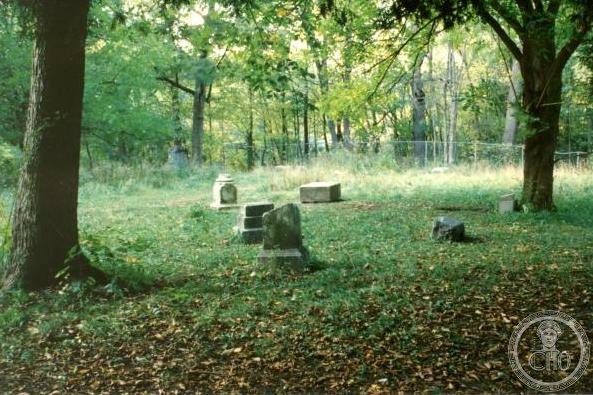
Accessible via a short woodland trail from the forest preserve parking area, the cemetery occupies a small clearing surrounded by dense secondary-growth forest. Surviving headstones — many cracked, tilted, or covered in lichen — date from the 1840s to the early 20th century. Inscriptions in English and German remain partially legible on several markers. The adjacent pond, now largely screened by vegetation, adds to the isolated, atmospheric quality of the site. The Cook County Forest Preserve maintains the path and a simple sign marking the location.
Cultural significance
Bachelor’s Grove Cemetery is both a vernacular heritage site documenting the German and Scandinavian settlement of the Chicago southland in the 1840s and a significant location in American popular folklore. Its combination of genuine historical abandonment and well-documented paranormal reputation has made it an enduring subject of Chicago cultural history and a landmark in the literature of American haunted places.
Practical information
Address: Rubio Woods Forest Preserve, Midlothian, IL 60445, USA (access from 143rd Street near the Cal-Sag Trail). The cemetery is accessible year-round during forest preserve daylight hours. Admission is free. The trail from the parking area to the cemetery is approximately 500 metres on a dirt path.
Getting there
A car is the most practical option from Chicago. Take I-294 south to Cicero Avenue (IL-50), then head south to 143rd Street and turn east into the Rubio Woods forest preserve parking area. Public transit connections are limited; Metra Rock Island District Line serves nearby Blue Island, from where a taxi or rideshare is required.
Sources & resources
Find it on the map
See this place and what’s around it →📷 Diventa un fotografo di Cultural Heritage Online
Condividi le tue foto dei luoghi: restano pubblicate con la tua firma come autore. Più vengono viste, più ti fai conoscere — e presto un concorso premierà le foto più apprezzate.
Accedi o registrati gratis per aggiungere una foto