
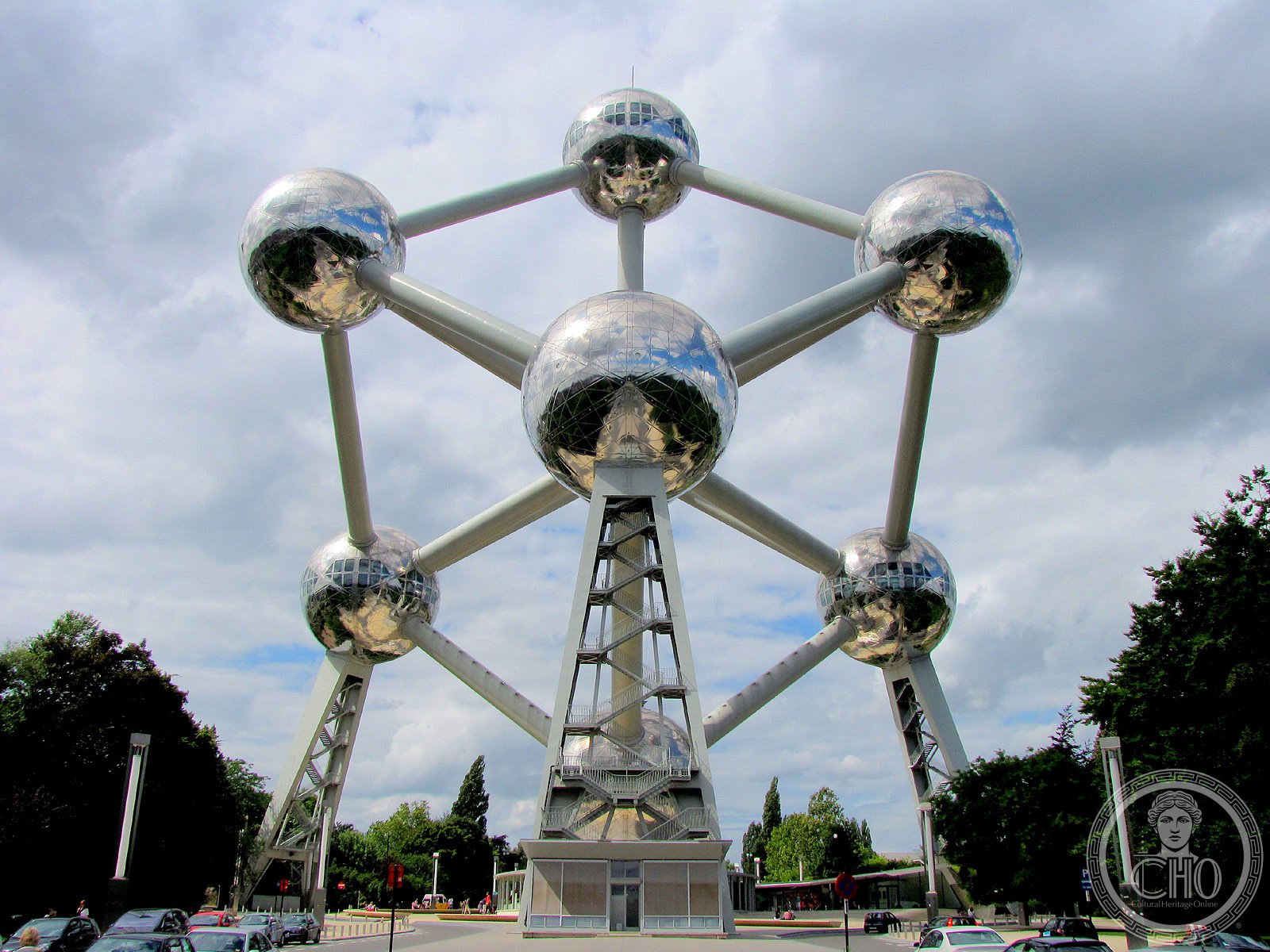
Atomium
The Atomium is a landmark modernist building in Brussels, Belgium, originally constructed as the centrepiece of the 1958 Brussels World’s Fair (Expo 58). Designed by engineer André Waterkeyn and architects André and Jean Polak, it represents an iron crystal magnified 165 billion times. Standing 102 metres tall, it has become one of the most recognisable symbols of post-war European optimism and is today the most visited monument in Belgium.
At a glance
- Type
- Modernist exhibition structure / museum
- Period
- Built 1956–1958; major renovation completed 2006
- Style
- Atomic Age Modernism
- Location
- Laeken, Brussels, Belgium
- Coordinates
- 50.8949° N, 4.3415° E
- Height
- 102 metres
Overview
The Atomium consists of nine interconnected steel spheres, each 18 metres in diameter, arranged in the shape of a unit cell of an iron crystal. Tubes connecting the spheres house escalators and lifts linking the publicly accessible spheres, which contain permanent and temporary exhibitions on science, design, and Expo 58. The structure was originally intended as a temporary installation but was retained after the fair due to its popularity and has since been renovated and stabilised for long-term preservation.
History
Engineer André Waterkeyn proposed the iron-crystal design as a symbol of the peaceful use of nuclear energy and the optimism of the atomic age, themes central to Expo 58’s Cold War context. Construction began in 1956 and the structure was inaugurated in April 1958 alongside the World’s Fair, which attracted 41 million visitors. After decades of light maintenance, a comprehensive restoration between 2004 and 2006 replaced the original aluminium cladding with stainless steel and upgraded the interior infrastructure, allowing the Atomium to reopen as a full-scale museum.
What you see
Visitors enter through the base sphere and ascend via high-speed panoramic lifts to the top sphere at 92 metres, which offers a 360-degree view over Brussels and, on clear days, to the edges of the Belgian capital region. Five of the nine spheres are open to the public and house the Atomium museum, displaying original Expo 58 artefacts, models, and interactive science exhibits. The connecting tubes contain some of Europe’s longest escalators within a building. The upper restaurant sphere provides a dining experience embedded within a piece of 20th-century design history.
Cultural significance
The Atomium is emblematic of the post-war belief in science and technology as forces for peace and prosperity, making it a primary document of mid-20th-century European cultural attitudes. It has been cited as one of the defining symbols of Belgian identity in the modern era and appears frequently in international discussions of Atomic Age design alongside structures such as the Seattle Space Needle. Its 2006 renovation demonstrated how engineering landmarks of the postwar period can be adapted for contemporary cultural use without sacrificing their original character.
Practical information
- Address
- Square de l’Atomium 1, 1020 Brussels (Laeken), Belgium
- Opening hours
- Open daily; check atomium.be for current hours
- Admission
- Paid entry; combined tickets available with Mini-Europe park
- Official website
- atomium.be
Getting there
The Atomium is easily reached by Brussels Metro Line 6 to Heysel station (a two-minute walk). Tram line 7 also stops at Atomium. By car, follow the Ring Road (R0) and exit at Laeken/Heysel; parking is available at Parking C adjacent to the site. From Brussels city centre the journey by public transport takes approximately 20 minutes.
Sources & resources
Find it on the map
See this place and what’s around it →📷 Diventa un fotografo di Cultural Heritage Online
Condividi le tue foto dei luoghi: restano pubblicate con la tua firma come autore. Più vengono viste, più ti fai conoscere — e presto un concorso premierà le foto più apprezzate.
Accedi o registrati gratis per aggiungere una foto