
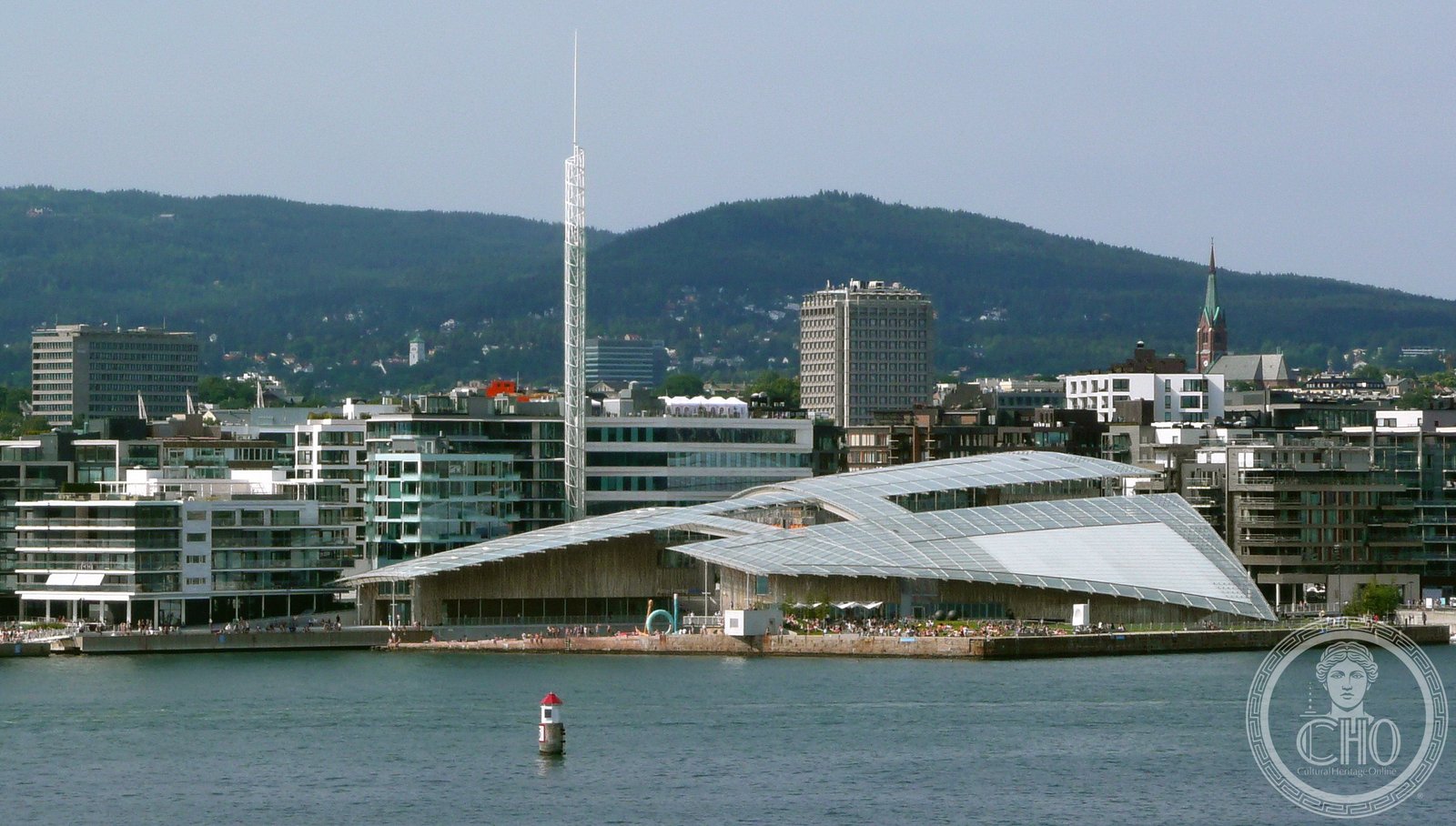
The Astrup Fearnley Museum of Modern Art is a privately owned contemporary art museum in Oslo, Norway, founded in 1993 and relocated in 2012 to two striking new buildings designed by architect Renzo Piano on the Tjuvholmen peninsula. The museum holds one of Scandinavia’s most significant collections of post-1980 international contemporary art, with particular strength in American appropriation art, and presents six to seven major temporary exhibitions each year alongside its permanent collection displays.
At a glance
- Type
- Private contemporary art museum
- Period
- Founded and opened to the public 1993; current building 2012
- Style
- Contemporary architecture by Renzo Piano (Piano Building Workshop)
- Location
- Tjuvholmen, Oslo, Norway
- Coordinates
- 59.9068° N, 10.7194° E
Overview
The Astrup Fearnley Museum takes its name from the Astrup Fearnley Group, a Norwegian shipping and investment company, whose philanthropic foundation established and continues to support the institution. The collection’s primary focus is the American appropriation artists of the 1980s — a generation including Jeff Koons, Richard Prince, and Cindy Sherman who challenged notions of originality and authorship by reusing existing imagery — but the holdings have expanded to encompass a broad range of international contemporary practices. Artists represented include Matthew Barney, Tom Sachs, Doug Aitken, Olafur Eliasson, and Cai Guo-Qiang, making the collection one of the most internationally ambitious in northern Europe.
History
The museum was founded in 1993 in premises in central Oslo, building its collection rapidly over the following decade through acquisitions guided by an emphasis on major figures of the American and international contemporary art scenes. In 2012 the museum made a landmark move to Tjuvholmen, a former shipyard site on Oslo’s inner fjord that was being transformed into a mixed-use cultural and residential quarter. Renzo Piano’s commission for the new museum buildings — two interconnected structures with a curved glass roof and an outdoor sculpture park extending into the water — created one of the most acclaimed pieces of contemporary architecture in Scandinavia and helped anchor the entire Tjuvholmen redevelopment.
What you see
The museum occupies two linked buildings by Renzo Piano, characterised by a sweeping glazed roof that floods the interior galleries with natural light, a hallmark of the architect’s approach at institutions from the Centre Pompidou to the Whitney Museum of American Art. The permanent collection galleries display signature works by Koons — including large-scale sculptures and paintings — alongside installations, photographs, and paintings by the core generation of appropriation artists and their successors. An outdoor sculpture terrace and boardwalk over the fjord integrate the museum with Tjuvholmen’s public waterfront and provide dramatic views of the Oslofjord.
Cultural significance
The Astrup Fearnley Museum has established Oslo as a significant node on the international contemporary art circuit, producing exhibitions that travel to partner institutions worldwide and attracting major loans and collaborations. The combination of an exceptional private collection, a Renzo Piano building, and a high-quality exhibition programme distinguishes the museum within a Scandinavian art landscape otherwise dominated by publicly funded institutions, and offers visitors to Oslo a counterpoint to the National Museum’s focus on historical Norwegian art.
Practical information
- Address
- Strandpromenaden 2, 0252 Oslo, Norway
- Admission
- Admission charged; discounts available for students and groups; check official website for current prices
- Website
- afmuseet.no
Getting there
The museum is located at Tjuvholmen, a 15-minute walk west from Oslo Central Station along the Aker Brygge waterfront, or reachable by tram on lines 12 and 13 (stop Aker Brygge). Buses 30 and 31 also serve the area. Bicycle parking is available on site, and the museum is accessible by boat along the inner Oslofjord in summer.
Sources & resources
See the place
Find it on the map
See this place and what’s around it →📷 Become a Cultural Heritage Online photographer
Share your photos of places: they stay published under your name as the author. The more they're seen, the more you get noticed — and soon a contest will reward the most appreciated photos.
Log in or sign up free to add a photo