
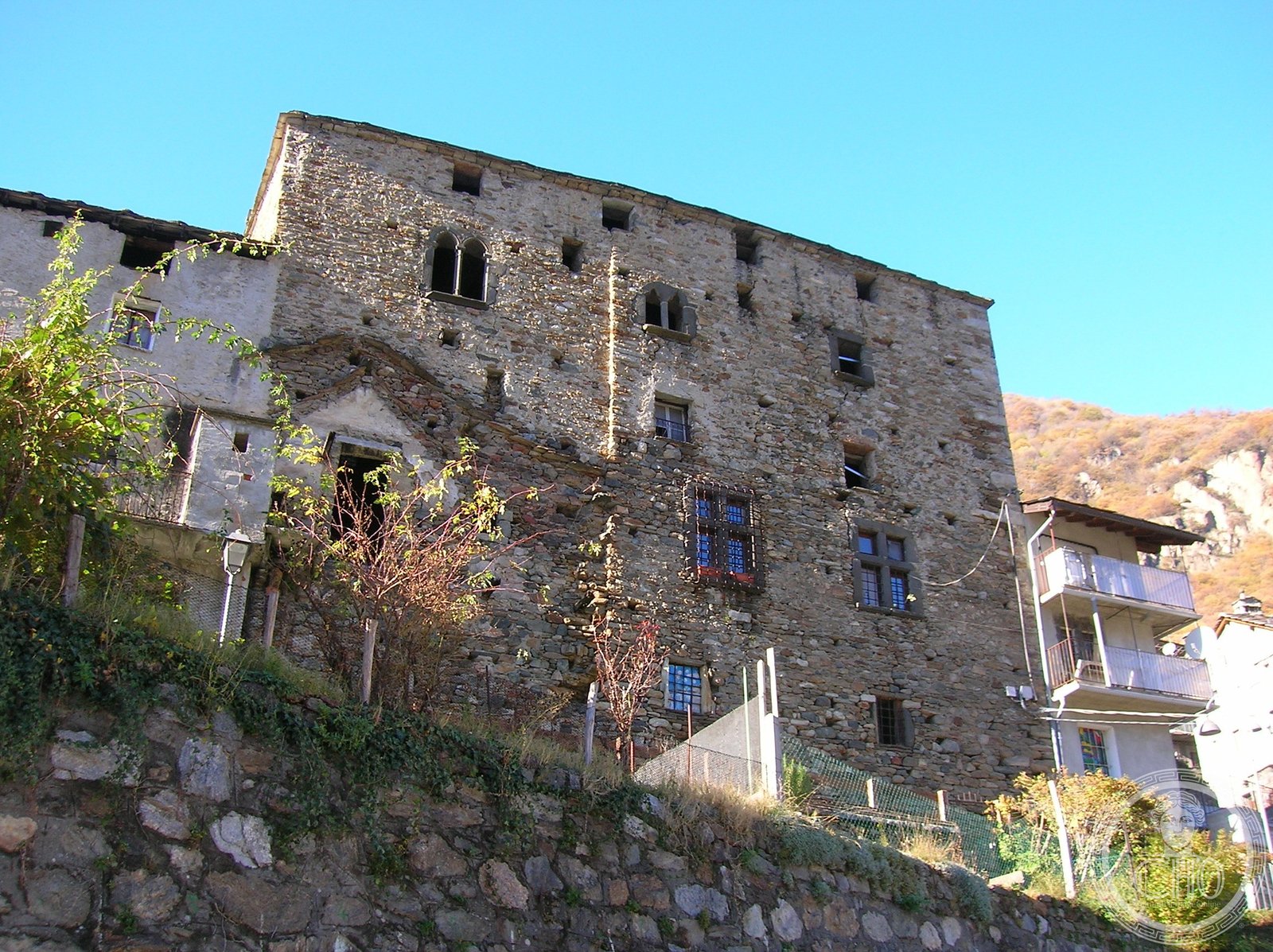
Lower Vallaise Castle, Arnad
The Lower Vallaise Castle (Castello Vallaise Inferiore) stands in the commune of Arnad in the Aosta Valley, one of the most castle-dense Alpine regions in Europe. Built during the medieval period by the noble Vallaise family, who held feudal authority over the lower Dora Baltea valley, the fortified complex was progressively expanded from the eleventh through the fifteenth centuries and today survives as one of the best-preserved examples of Valle d’Aosta feudal architecture outside the regional capital.
At a glance
- Type
- Feudal castle / fortified noble residence
- Period
- Medieval, 11th–15th century; later modifications
- Style
- Alpine Romanesque-to-Gothic military architecture
- Location
- Arnad, Aosta Valley, Italy (45.6407° N, 7.7283° E)
Overview
Arnad is a small commune in the lower Aosta Valley, positioned where the Dora Baltea river valley narrows before opening toward Piedmont — a strategically vital passage controlled since antiquity. The Vallaise lords, who gave their name to both the castle and the surrounding territory, were among the most powerful feudal families of the Valle d’Aosta during the high medieval period, exercising jurisdiction over local villages, river crossings, and alpine passes. The Lower Vallaise Castle was their principal seat of power and administrative centre, complemented by an upper castle on the heights above.
History
The Vallaise family rose to prominence in the eleventh century as vassals of the House of Savoy, receiving the fief of Arnad and surrounding territories in exchange for military and administrative loyalty along the strategically critical Alpine corridor. Construction of the lower castle likely began in the late eleventh or early twelfth century, with major expansions carried out during the thirteenth and fourteenth centuries as the family consolidated its power. By the fifteenth century the castle had reached its current form, incorporating a residential tower, a courtyard, and defensive curtain walls suited to the transitional period between pure military fortification and noble residence. Decline followed the gradual erosion of feudal authority in the early modern period, and the complex passed through multiple owners before entering public heritage protection.
What you see
The castle complex features a main residential tower that dominates the valley floor, built in local stone with the characteristic thick walls and narrow openings typical of Alpine medieval fortifications. A partially enclosed courtyard retains traces of original frescoed decorative programmes, as well as architectural details — carved corbels, archways, and window surrounds — that attest to the ambitions of the Vallaise lords as cultivated as well as military figures. The surrounding landscape of vineyards, chestnut groves, and the broad valley of the Dora Baltea provides context for understanding how the castle commanded its territory.
Cultural significance
The Lower Vallaise Castle is part of the extraordinary concentration of medieval fortified buildings that makes the Aosta Valley a living open-air museum of Alpine feudal culture, with more than 70 castles and towers recorded across the region. As the principal lowland seat of one of the valley’s most documented noble families, it offers direct material evidence of how medieval power, territory, and identity were constructed and expressed in the western Alps.
Practical information
- Address
- Arnad, Valle d’Aosta, Italy
- Access
- Exterior visible from public road; interior visits may be available seasonally. Check the Région Autonome Vallée d’Aoste heritage website for current opening times.
- Hours
- Check official website for current schedule
Getting there
Arnad lies on the SS26 state road along the Dora Baltea valley, approximately 30 km east of Aosta and 15 km west of Pont-Saint-Martin. The nearest railway station is Verrès (about 5 km away) on the Turin–Aosta line; from there a local bus or taxi covers the remaining distance. By car, exit the A5 motorway at Pont-Saint-Martin or Verrès and follow the SS26 westward.
Sources & resources
Find it on the map
See this place and what’s around it →📷 Diventa un fotografo di Cultural Heritage Online
Condividi le tue foto dei luoghi: restano pubblicate con la tua firma come autore. Più vengono viste, più ti fai conoscere — e presto un concorso premierà le foto più apprezzate.
Accedi o registrati gratis per aggiungere una foto