
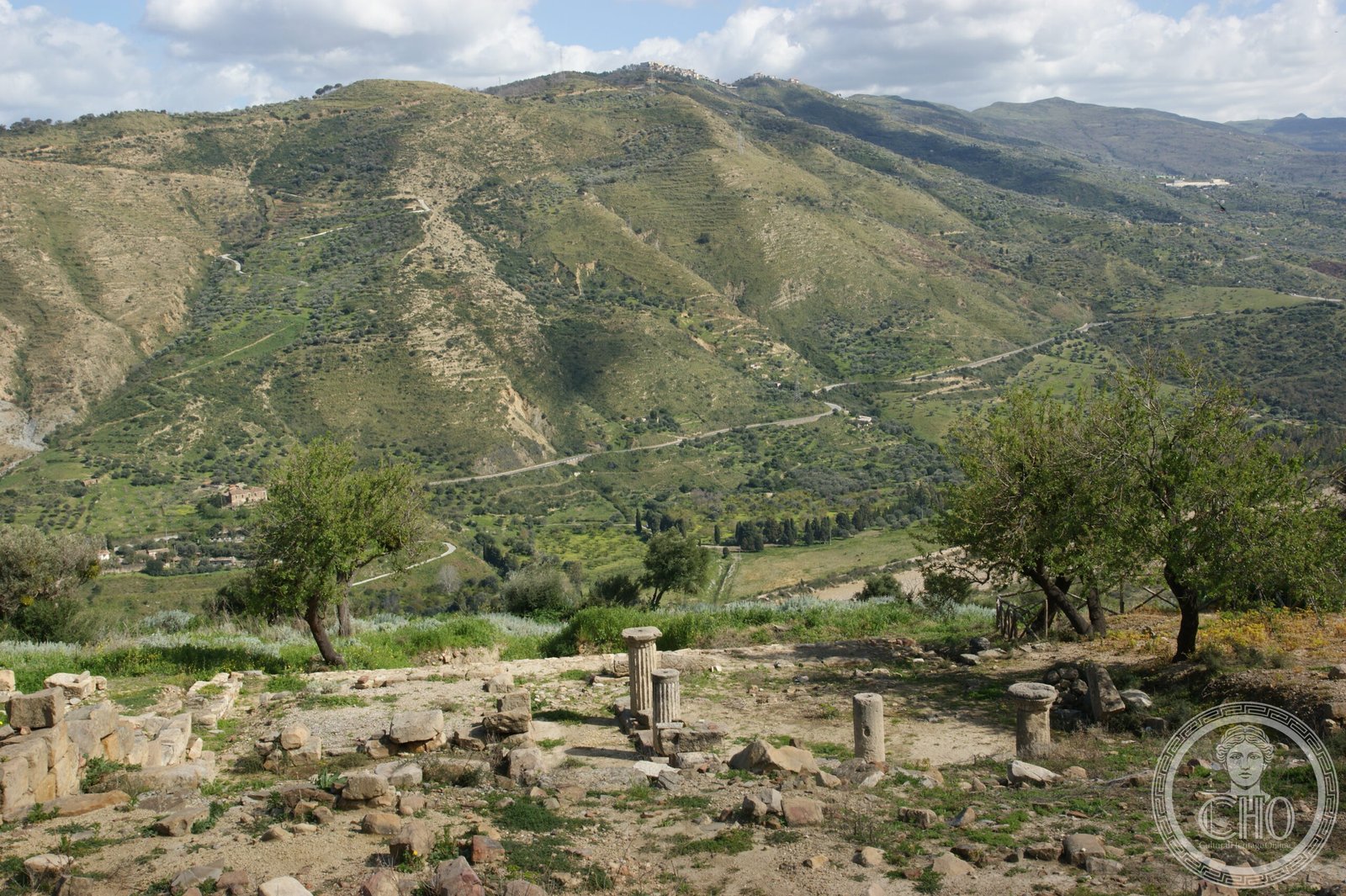
Archaeological Zone Halaesa Arconidea
Halaesa, also known as Halaesa Archonidea, was an ancient city of Magna Graecia on the northern coast of Sicily, situated between Cephaloedium (modern Cefalù) and Calacte. Founded in the early fourth century BC, it became a prosperous urban centre and one of the first Sicilian cities to align with Rome during the First Punic War. Its archaeological zone, near the modern town of Tusa in the Province of Messina, preserves forum remains, mosaic floors, and city walls that testify to centuries of Hellenistic and Roman occupation.
At a glance
- Type
- Ancient Greek and Roman city — archaeological zone
- Period
- Founded c. 403 BC; occupied through late Roman period
- Style
- Hellenistic urban planning; Roman forum layout
- Location
- Near Tusa, Province of Messina, Sicily, Italy
- Coordinates
- 37.9976° N, 14.2625° E
Overview
Halaesa Arconidea occupies a hill overlooking the Tyrrhenian Sea on Sicily’s north coast, a position that gave it strategic and commercial importance throughout antiquity. Ancient sources, including Cicero’s Verrine Orations, praise the city’s civic virtue and describe its senate and public institutions in detail — rare documentation for a Sicilian provincial town. The site is managed as part of Sicily’s network of regional archaeological parks.
History
According to ancient tradition, Halaesa was founded around 403 BC by the Sicilian ruler Archonides of Herbita, from whom the epithet “Arconidea” derives. The city distinguished itself by siding with Rome early in the First Punic War (264–241 BC), a loyalty rewarded with a favourable administrative status under Roman rule. During the Roman period Halaesa prospered as a municipium, issuing its own coinage and maintaining an active civic life documented through inscriptions. The site was eventually abandoned in late antiquity as population consolidated in the coastal lowlands.
What you see
Excavations, conducted systematically since the 1950s, have uncovered the forum area with its stoa and tabernae, sections of the Hellenistic and Roman city walls, a sanctuary precinct, and several residential insulae with well-preserved mosaic pavements. The Antiquarium di Tusa, housed in the former Benedictine monastery of Santa Maria delle Palate in Tusa, displays finds from the site including terracottas, ceramics, and epigraphic material. The hilltop setting offers panoramic views over the Tyrrhenian coastline.
Cultural significance
Halaesa is of particular scholarly value because Cicero’s detailed account in the Verres prosecution provides a rare literary window into the governance of a Roman Sicilian municipality. The site’s bilingual Greco-Roman inscriptions and its well-documented coinage make it a reference point for studies of cultural contact in the western Mediterranean.
Practical information
- Address
- Contrada Santa Maria delle Palate, Tusa, 98079 Messina ME
- Hours
- Check official website or contact Parco Archeologico di Halaesa
- Admission
- Check official website for current ticket prices
Getting there
Tusa is located on the A20 Palermo–Messina motorway; exit at Castel di Tusa and follow signs for the archaeological zone. The nearest railway station is Sant’Agata di Militello, roughly 15 km east, with connections to Palermo and Messina. The nearest major airport is Palermo Falcone-Borsellino (PMO), approximately 120 km west.
Sources & resources
Find it on the map
See this place and what’s around it →📷 Diventa un fotografo di Cultural Heritage Online
Condividi le tue foto dei luoghi: restano pubblicate con la tua firma come autore. Più vengono viste, più ti fai conoscere — e presto un concorso premierà le foto più apprezzate.
Accedi o registrati gratis per aggiungere una foto