
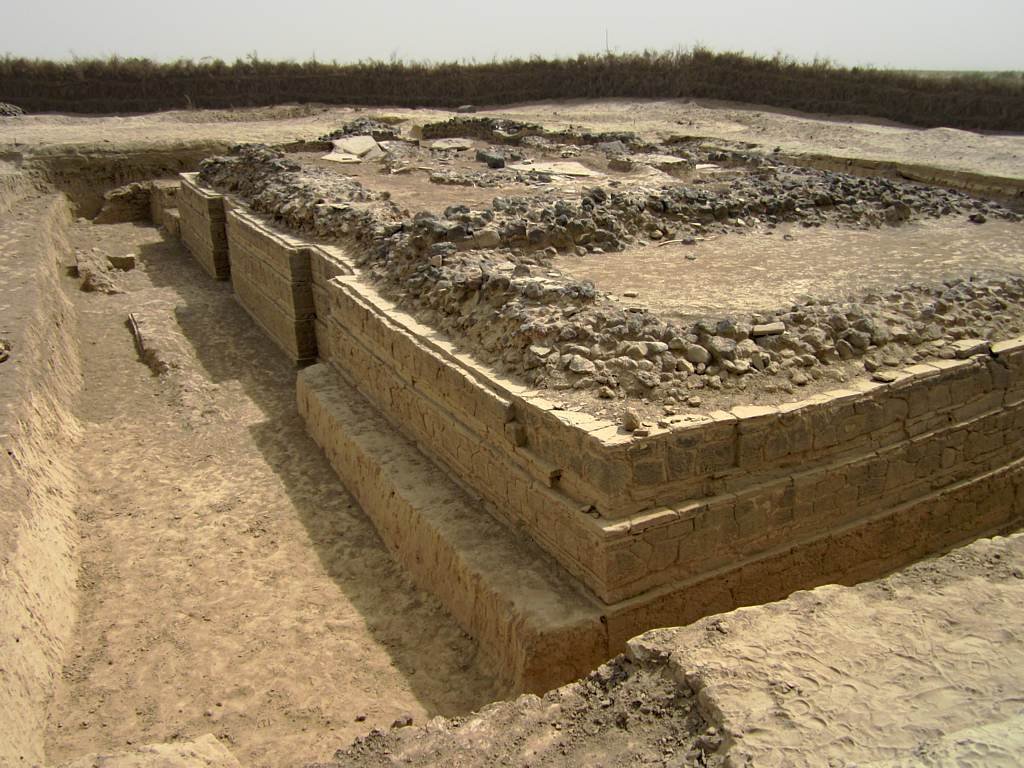
The principal Red Sea port of the Aksumite Empire — one of the four great powers of the ancient world alongside Rome, Persia, and China — Adulis was the gateway through which Ethiopian gold, ivory, and rhinoceros horn reached the Mediterranean, and through which Christianity entered Africa in the 4th century AD.
At a glance
Forty kilometres south of Massawa on the Red Sea coast of present-day Eritrea, the ruins of Adulis preserve approximately 1.5 km² of the main port city of the Aksumite Empire: one of the most powerful and commercially sophisticated states in the ancient world, and the first sub-Saharan African kingdom to mint its own gold coinage. The site was occupied from at least 500 BC to roughly 640 AD, and at its peak in the 4th century was handling the bulk of the long-distance trade between the Mediterranean, Arabia, India, and the African interior.
Key facts
- Location: ~40 km south of Massawa, Northern Red Sea Region, Eritrea
- Period: c. 500 BC–640 AD (pre-Aksumite and Aksumite Empire)
- Empire: Aksumite (c. 100–700 AD), the most powerful state in northeastern Africa
- Trade exports: gold, ivory, rhinoceros horn, hippopotamus hide, tortoiseshell, enslaved people
- Coinage: Aksumite gold coins — the only sub-Saharan African coinage of the ancient world
- Christianity: Frumentius converted King Ezana c. 340 AD; Adulis was the point of entry
- Excavations: partial Italian archaeological work early 20th century; largely unstudied since
History
Adulis appears in the Periplus Maris Erythraei (a Greek merchant manual of c. 50 AD) as the principal emporium of the African Red Sea coast, where merchants could buy elephants, elephant teeth (ivory), tortoiseshell, and rhinoceros horn. By the 4th century it had become the maritime gateway of the Aksumite Empire — a Christian kingdom whose territorial reach at its height extended across the Red Sea into the Arabian Peninsula (modern Yemen) and whose gold coinage circulated alongside Roman denarii and Sassanid drachms in markets from Alexandria to India. Contemporary Roman and Persian sources ranked Axum alongside their own empires as one of the four great powers of the world.
The most consequential event in the history of Adulis was a shipwreck. Around 316 AD, a Syrian Christian scholar named Meropius set sail from a Red Sea port and was wrecked, with his entire party killed except for two young students, Frumentius and Aedesius, who were enslaved and brought to the Aksumite court. Frumentius became the secretary and later treasurer of the king, eventually winning his freedom; he converted the royal court to Christianity, and around 340 AD King Ezana I formally proclaimed Christianity the state religion of Axum — one of the earliest state adoptions of Christianity anywhere in the world. Frumentius was consecrated the first Bishop of Axum by Patriarch Athanasius of Alexandria; he is venerated by the Ethiopian Orthodox Church as “Abba Salama,” Bringer of Peace, and by the Coptic tradition as the Apostle of Ethiopia.
Adulis declined sharply after the rise of Islam disrupted Red Sea trade routes in the 7th century. The port was abandoned around 640 AD after Arab raids; the Aksumite state gradually contracted inland and the empire dissolved over the following centuries. Italian archaeologists conducted excavations in 1906 and again in the 1950s–1960s, but large areas of the site remain unexcavated, and political instability in the region has largely prevented systematic modern work.
What you see today
The ruins of Adulis extend over approximately 1.5 km² in a flat coastal plain near the village of Zula, roughly 40 km south of Massawa. Visible above ground are the remains of a large basilica (Byzantine in form, suggesting Christian use from the 4th century), various storage buildings of worked stone, and what are interpreted as harbour facilities and warehouse structures. Surface pottery and coin finds have been recorded across the site. Low-tide surveys reveal the outline of harbour infrastructure now partially submerged — evidence of sea-level change and coastal subsidence over the past 1,500 years.
The site is in a remote and largely unprotected state. There are no visitor facilities, no fencing, and no on-site interpretation. Access requires a special permit from the Eritrean government and is rarely granted to foreign researchers or tourists; the handful of excavation reports, Italian-language and dating largely from the 1960s, remain the primary published documentation. Adulis is arguably the most significant unstudied ancient port in the world.
Practical information
- Access: requires Eritrean government travel permit and archaeological site permit
- Location: near the village of Zula, ~40 km south of Massawa on the coastal road
- Visiting status: effectively closed to independent tourism; group/research visits only with permits
- Best season: November–March (cooler coastal temperatures; avoid June–September heat)
- Nearest city: Massawa, with basic accommodation; Asmara (80 km, international airport)
Getting there
Asmara’s Asmara International Airport is served by several regional carriers; Massawa is reached by road from Asmara (approximately 115 km on the winding Asmara–Massawa highway, 2.5 hours). From Massawa, the site at Zula is approximately 40 km south on the coastal road. All visits require advance coordination with the Eritrean Ministry of Tourism and the Commission for Cultural Heritage; independent visits are not currently possible.
Nearby
- Massawa — ancient port city, one of the finest examples of Ottoman-Arab coral-stone architecture in the world; partially destroyed in 1990 independence war but partly restored
- Asmara — Eritrean capital; the world’s most intact collection of 1930s Italian Modernist and Rationalist architecture, UNESCO WHS since 2017
- Dahlak Archipelago — Red Sea island group off Massawa coast; important early Islamic necropolis; marine diving
Sources
- Periplus Maris Erythraei, c. 50 AD (Greek merchant guide, earliest description of Adulis)
- Munro-Hay, S., Aksum: An African Civilisation of Late Antiquity, Edinburgh University Press, 1991
- Phillipson, D.W., Ancient Ethiopia, British Museum Press, 1998
- Anfray, F., archaeological reports on Adulis excavations, Annales d’Éthiopie, 1961–1970
- Wikipedia: Adulis
Find it on the map
See this place and what’s around it →📷 Become a Cultural Heritage Online photographer
Share your photos of places: they stay published under your name as the author. The more they're seen, the more you get noticed — and soon a contest will reward the most appreciated photos.
Log in or sign up free to add a photo