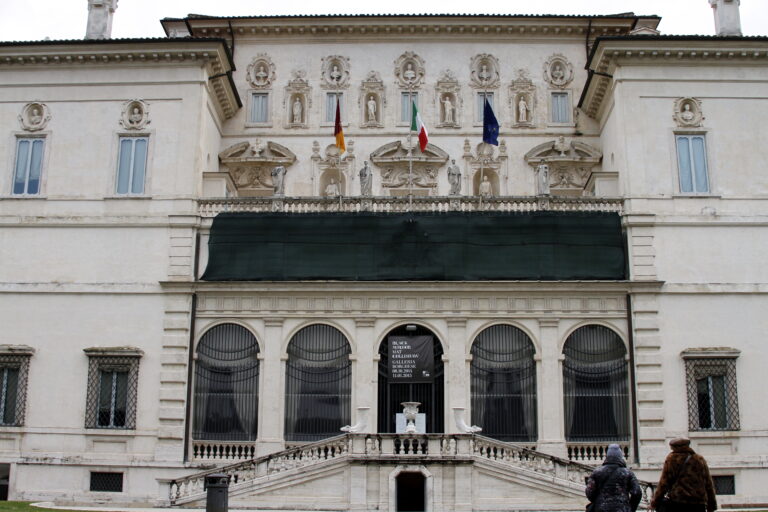
Six Secession palaces in the centre of Oradea, within a kilometre of each other: Füchsl, Darvas–La Roche, Apollo, Ullmann, Stern and Moskovits Adolf and Sons.

A city that rebuilt itself in ten years
Between 1900 and 1910 Oradea, then part of the Kingdom of Hungary, built itself a new centre. Banks, insurance companies and merchant families put up palaces in the Secession style along the streets on both sides of the Crișul Repede, and they hired the architects who were working in Budapest and Vienna: the Vágó brothers, Komor and Jakab, Kálmán Rimanóczy Jr. The result is a compact group of buildings, almost all of them still in use, and a walk that fits into an afternoon: 3.1 kilometres, six stops, and no leg longer than ten minutes.
The first one, and the museum
Start at the Füchsl Palace of 1903, by Bálint and Jámbor, the first Secession building in the city. The façade is wound with carved vines and grapes, a reference to the family’s trade, and it is a good introduction to the local version of the style: floral, dense, and applied to a building that is really a block of flats with a shop underneath.
A few streets away, the Darvas–La Roche House of 1912, by the Vágó brothers, is now Romania’s first Art Nouveau museum. Go in if it is open: the interiors are the reason the house survived, and the museum explains the architects better than any façade can.
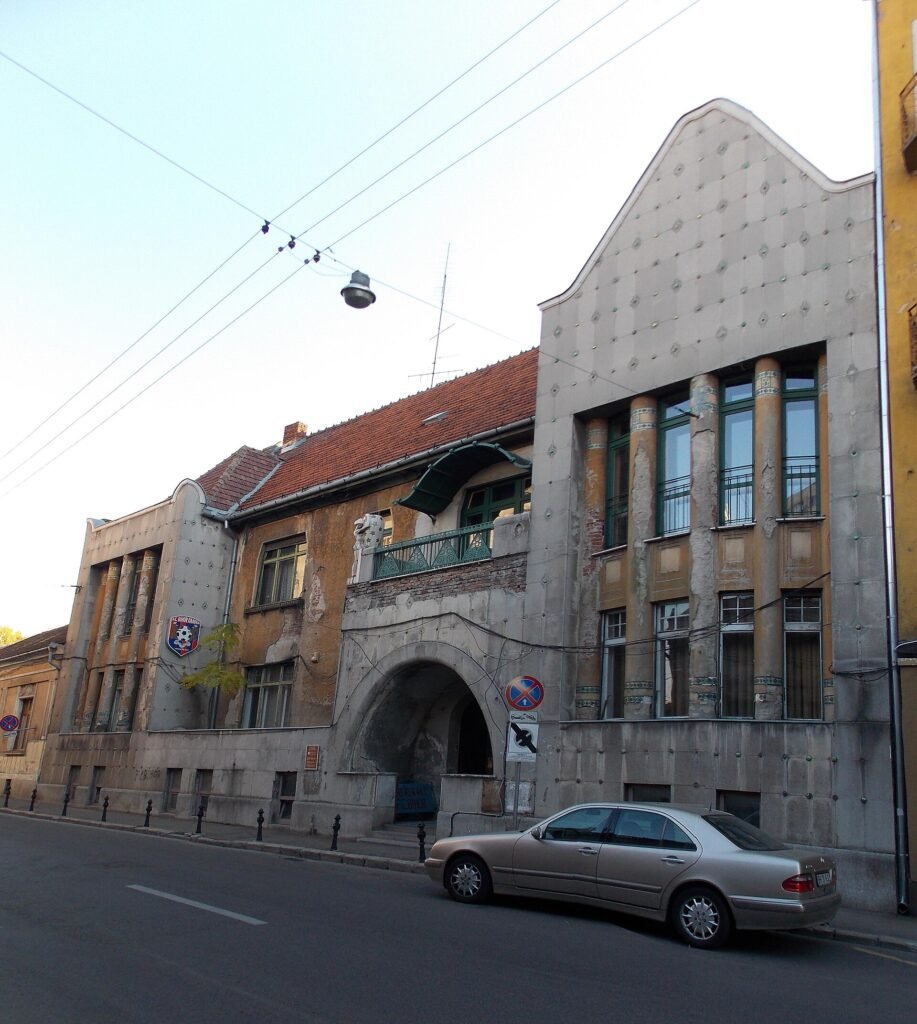
The palaces of the centre
The Apollo Palace (1912–1914) comes from Kálmán Rimanóczy Jr., the local architect whose family shaped much of the city; the Ullmann Palace (1911–1913) by Ferenc Löbl is the cooler and more elegant of the two, Viennese in temper rather than floral. Both were built as mixed buildings, shops below and flats above, which is why the ground floors have been altered and the upper floors have not.
The Stern Palace of 1909 by Komor and Jakab stands on Strada Republicii, the promenade that cuts through the centre; the Moskovits Adolf and Sons Palace (1910–1911) by the Vágó brothers is the geometric counterpoint to the floral palaces around it, and the one most people walk past without stopping.

How to walk it
The six stops are within a kilometre of each other and the whole route is 3.1 kilometres, about three hours with time to look at the façades. Oradea is flat, the centre is small, and the walk can be done in the morning before the shops open, which is also when the light on the carved fronts is best. Spring and early autumn are the seasons; in winter the pavements can be icy.
The full route, with the order of the stops and the distances, is on the Art Nouveau in Oradea walking tour page.

Sources
- Füchsl Palace · https://culturalheritageonline.com/places/fuchsl-palace-oradea/
- Darvas–La Roche House · https://culturalheritageonline.com/places/casa-darvas-la-roche-oradea/
- Apollo Palace · https://culturalheritageonline.com/places/apollo-palace-oradea/
- Ullmann Palace · https://culturalheritageonline.com/places/ullmann-palace-oradea/
- Stern Palace · https://culturalheritageonline.com/places/stern-palace-oradea/
- Moskovits Adolf and Sons Palace · https://culturalheritageonline.com/places/adolf-moskovits-sons-palace-oradea/
- Art Nouveau in Oradea walking tour · https://culturalheritageonline.com/itineraries/art-nouveau-oradea-walking-tour/
Spotted an error? Write to [email protected] and we correct it the same day.