Georgia holds four UNESCO World Heritage Sites, three of them reachable as day trips from Tbilisi: the ancient royal capital of Mtskheta just 20 km north, the cathedral city of Kutaisi three hours west, and the medieval tower villages of Upper Svaneti deep in the Caucasus highlands. Each inscribed site rewards the journey with layers of history that predate most of Europe’s great monuments. From Cultural Heritage Online.
Historical Monuments of Mtskheta 20 km · 30 min from Tbilisi
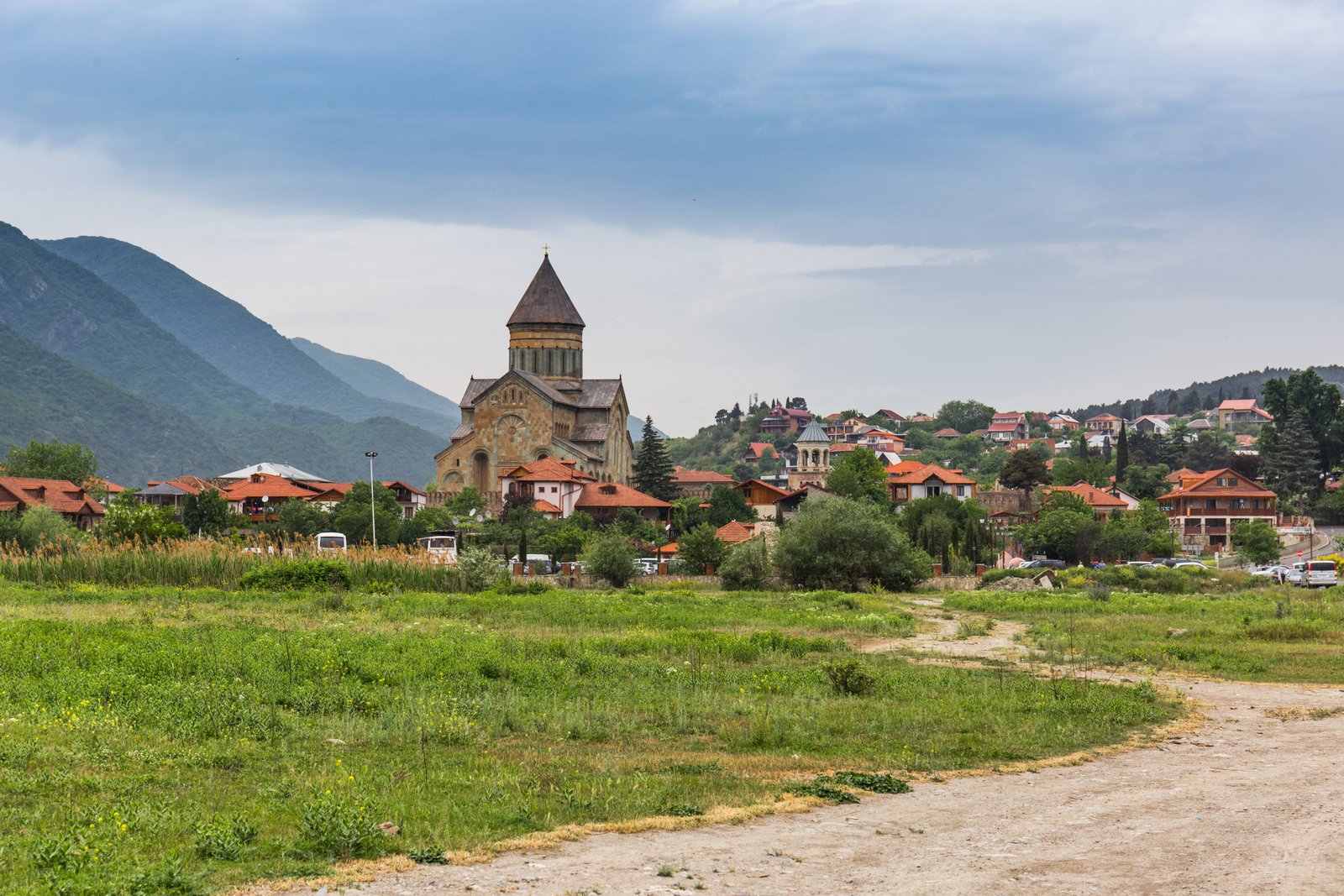
Mtskheta served as the capital of the ancient Kingdom of Kartli (Iberia) for roughly a thousand years before Tbilisi took that role in the 5th century AD. UNESCO inscribed its principal monuments in 1994 as outstanding examples of medieval Georgian religious architecture — buildings that shaped Christian culture across the Caucasus. The ensemble centres on three structures: Svetitskhoveli Cathedral, Jvari Monastery, and the Samtavro convent complex.
Svetitskhoveli Cathedral, completed around 1029 under architect Arsukisdze, dominates the town below. Step inside and the scale lands immediately — the nave climbs to vaulted ceilings worn golden by centuries of candle smoke, and the floor beneath your feet is paved with the tombs of Georgian kings. The cathedral has served as the Patriarchal seat of the Georgian Orthodox Church and remains an active place of worship. Outside the walls, the Samtavro convent hides a 4th-century chapel said to mark the burial spot of St. Nino, who converted Georgia to Christianity around 337 AD.
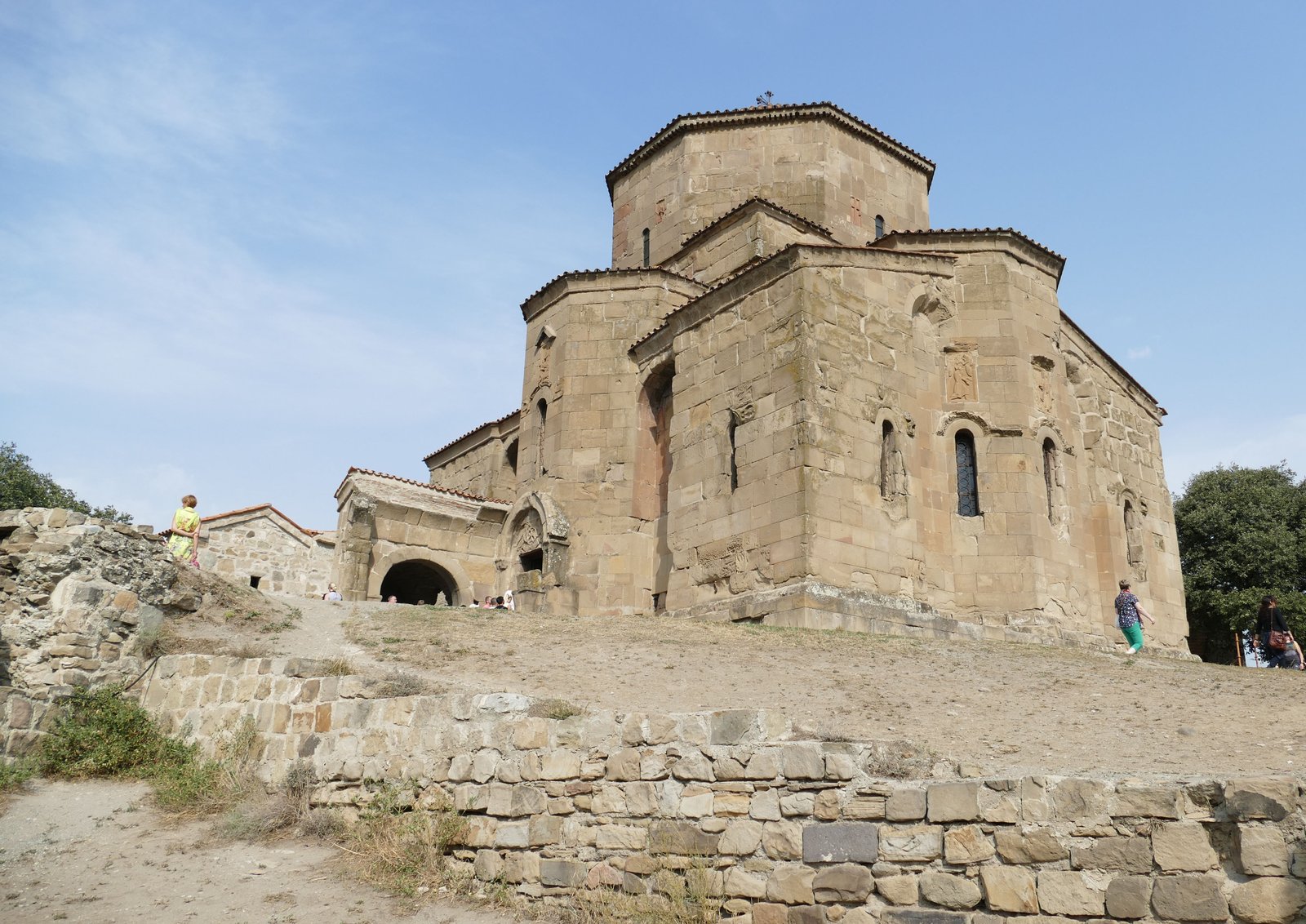
Above the town, reached by a winding road, Jvari Monastery occupies a bare promontory where the Aragvi and Mtkvari rivers join in a wide grey-green confluence visible for miles. The monastery was built between 586 and 604 AD. The stonework is rough and unadorned — early medieval Georgian ecclesiastical architecture at its most elemental. Stand at the edge at dusk and the rivers catch the last light while swallows cut low over the water far below.
Getting there: Marshrutkas from Didube station in Tbilisi run regularly to Mtskheta (30 min, approximately 1 GEL). Taxis from central Tbilisi cost around 20–30 GEL. Jvari requires a separate taxi or a 3 km uphill walk from town. Allow: Half a day for all three monuments. Best for: Visitors interested in early Christian architecture, Georgian history, and panoramic river landscapes.
Bagrati Cathedral and Gelati Monastery 240 km · 3 hr from Tbilisi
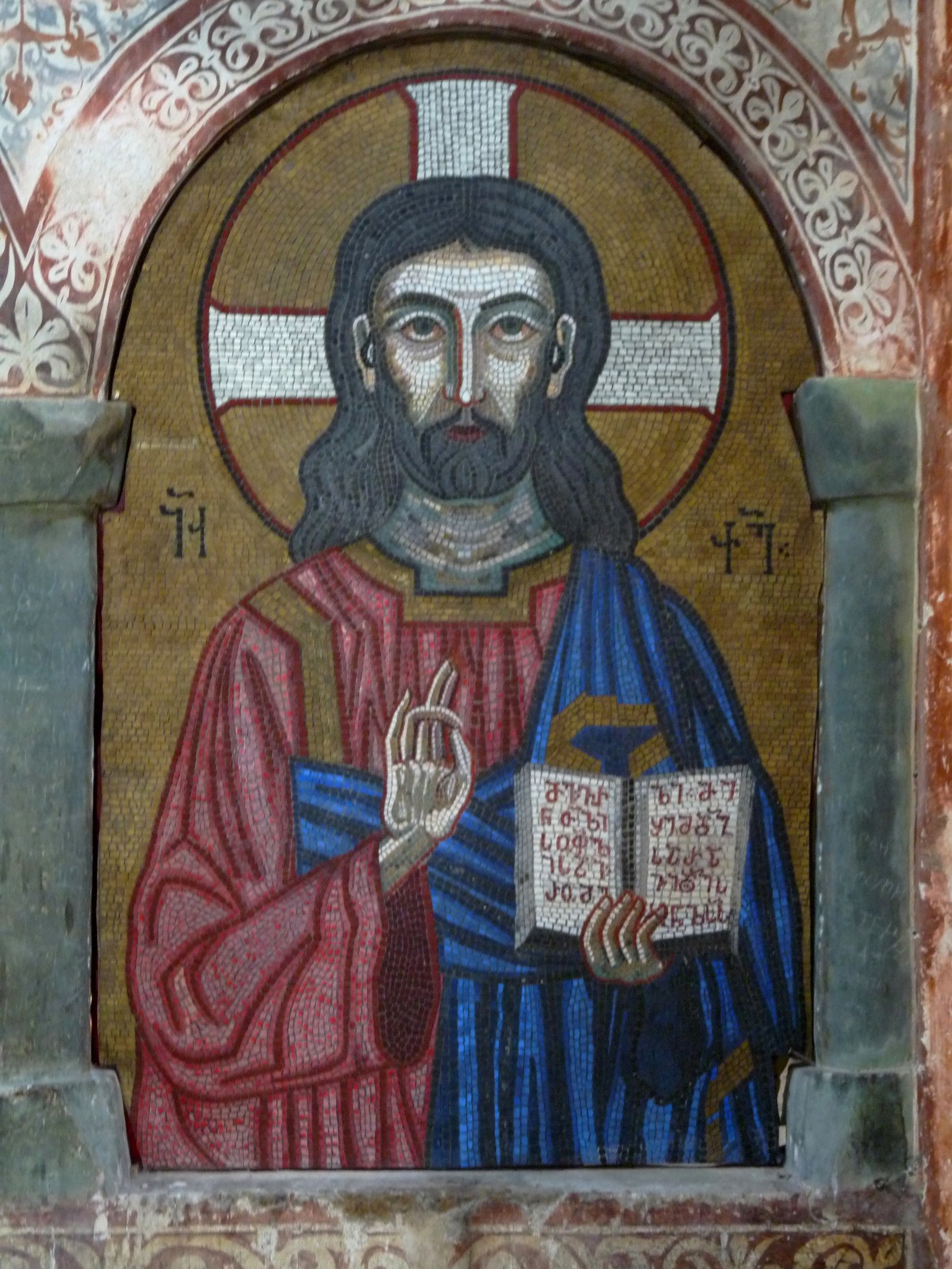
Kutaisi, Georgia’s second city, anchors a UNESCO site inscribed in 1994 and substantially revised in 2017. The ensemble pairs Bagrati Cathedral — an 11th-century structure whose ambitious scale rivalled Constantinople’s greatest churches before it was partially destroyed by Ottoman forces in 1691 — with Gelati Monastery, one of the most complete medieval monastic complexes in the South Caucasus.
Gelati is the site that demands attention. King David IV, known as David the Builder, founded the monastery in 1106 and established an academy there that drew scholars from across the Christian East. He was buried beneath the monastery gate, so that everyone who entered would walk over his tomb — a gesture of deliberate humility from a ruler who unified Georgia into a regional power. The main church interior holds 12th-century Byzantine mosaics of exceptional quality: gold tessera ground with a monumental Virgin and Child in the apse, the colours still saturated after nine centuries. The acoustic inside the church — stone walls absorbing and returning the smallest sound — adds another dimension to the experience.
Bagrati Cathedral in the city itself underwent controversial reconstruction completed in 2012, which led UNESCO to place the site on its List of World Heritage in Danger before revising the inscription. The original medieval fabric and the panoramic position above the city remain striking, though the reconstruction work is a live question among heritage scholars.
Getting there: Marshrutkas from Tbilisi’s Didube station to Kutaisi run throughout the day (3 hr, approximately 15 GEL). Gelati is 11 km from central Kutaisi; a taxi from the city costs around 15–20 GEL return. Allow: Full day including travel. Best for: Those with an interest in Byzantine art, medieval scholarship, and Georgian royal history.
Upper Svaneti 450 km · 10–12 hr by road or 45 min by flight to Mestia
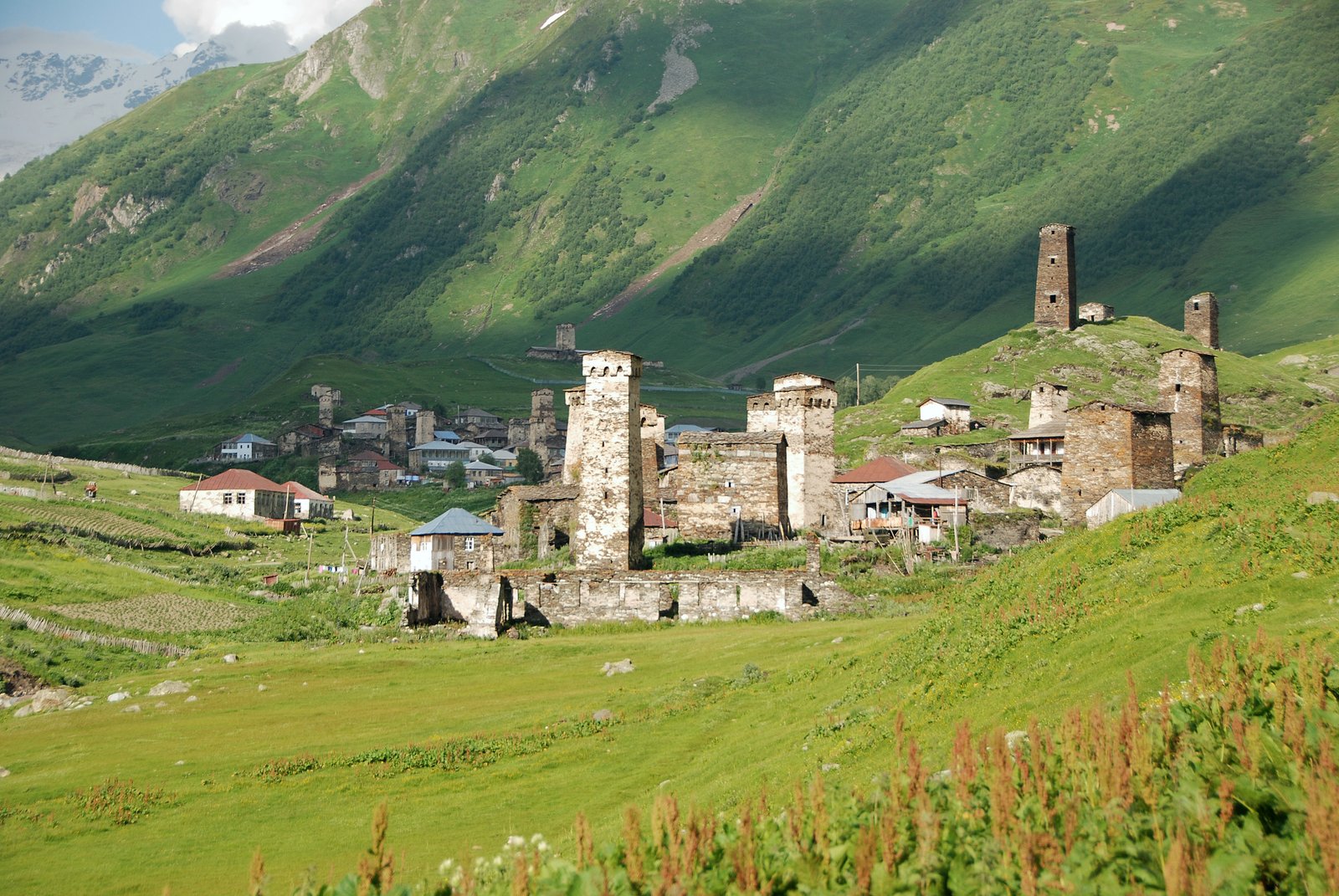
Upper Svaneti is the most remote of Georgia’s UNESCO sites and the most visually singular. UNESCO inscribed it in 1996 as a Cultural Landscape — a living environment where medieval built heritage and traditional land use survive together in a high Caucasus valley. The inscription covers the highland communities of the Enguri gorge, centred on the regional town of Mestia and culminating at Ushguli, a cluster of four villages at 2,200 metres elevation.
The defining feature is the koshki: tall defensive towers of rough-cut stone, built between the 9th and 13th centuries and used by Svan families as refuges during inter-clan conflicts and external invasions. Ushguli alone has more than twenty intact towers, rising without mortar joints above low-slung houses and hayfields. In winter, the settlement sits under two to three metres of snow for months at a time. The towers survive partly because of that isolation — Svaneti remained beyond effective central control for most of its history, preserving a culture, a script variant, and a polyphonic song tradition that differs from lowland Georgia.
Mestia serves as the practical base. The town has an airport (Vanilla Sky Airlines operates seasonal domestic flights from Tbilisi, roughly 45 minutes), a small museum holding medieval icons and gold liturgical objects evacuated from local churches, and guesthouses ranging from basic to comfortable. Ushguli is a further 45 km of unpaved mountain road from Mestia — a jeep or sturdy 4WD is required after spring thaw softens the track.
Getting there: Domestic flight Tbilisi–Mestia (45 min, seasonal, book ahead); or overnight marshrutka/shared taxi from Tbilisi (10–12 hr). From Mestia to Ushguli: 4WD taxi or organised tour (2–3 hr each way). Allow: Minimum 2 nights; 3–4 nights to reach Ushguli and walk. Best for: Travellers willing to commit time for mountain landscapes, vernacular architecture, and a genuinely different cultural context.
Frequently Asked Questions
How many UNESCO World Heritage Sites are near Tbilisi?
Georgia has four UNESCO World Heritage Sites in total. Three are reachable as day trips or short overnight journeys from Tbilisi: the Historical Monuments of Mtskheta (inscribed 1994), the Bagrati Cathedral and Gelati Monastery in Kutaisi (inscribed 1994, revised 2017), and Upper Svaneti (inscribed 1996). The fourth, the Colchic Rainforests and Wetlands, was inscribed in 2023 and lies in western Georgia, farther from the capital.
What is the best way to visit Mtskheta from Tbilisi?
The most practical option is a marshrutka (shared minibus) from Tbilisi’s Didube bus station, which takes about 30 minutes and costs roughly 1 GEL. From Mtskheta town you can walk to Svetitskhoveli Cathedral and the Samtavro convent within the old centre; for Jvari Monastery on the hilltop, take a local taxi (around 10–15 GEL return). A half-day allows comfortable visits to all three monuments. Most visitors go in the morning to catch the best light on Jvari and avoid the midday heat in summer.
Can you combine Mtskheta and Kutaisi in a single trip from Tbilisi?
Mtskheta and Kutaisi are best visited on separate days. Mtskheta is a half-day excursion and works well as a standalone trip or combined with a Tbilisi afternoon. Kutaisi requires a 3-hour journey each way and a full day on the ground to see both Bagrati Cathedral and Gelati Monastery properly. Upper Svaneti requires a minimum of two nights and is most efficiently reached by the domestic flight to Mestia. The ideal sequence for a Georgia itinerary is Mtskheta first (day 2 from Tbilisi), then Kutaisi as a day trip or overnight stop, then Svaneti as a dedicated 3–4 day segment.
What makes Gelati Monastery significant beyond its architecture?
Gelati was not only a church but an intellectual centre. King David the Builder founded the Gelati Academy in the early 12th century, bringing together theologians, philosophers, and scientists to translate texts from Greek, Arabic, and Syriac into Georgian. It functioned as the most important seat of learning in the medieval Caucasus for over two centuries. The monastery also served as the royal necropolis of the Georgian Bagrationi dynasty, and David IV himself chose burial beneath the entrance gate — an act that made his tomb a threshold every monk and visitor crossed daily.
Sources
- S1 — Suny, Ronald Grigor. The Making of the Georgian Nation. Indiana University Press, 1994. ISBN 978-0-253-20915-3.
- S2 — Rayfield, Donald. Edge of Empires: A History of Georgia. Reaktion Books, 2012. ISBN 978-1-78023-030-6.
Spotted an error? Write to editorial@culturalheritageonline.com and we correct it the same day.