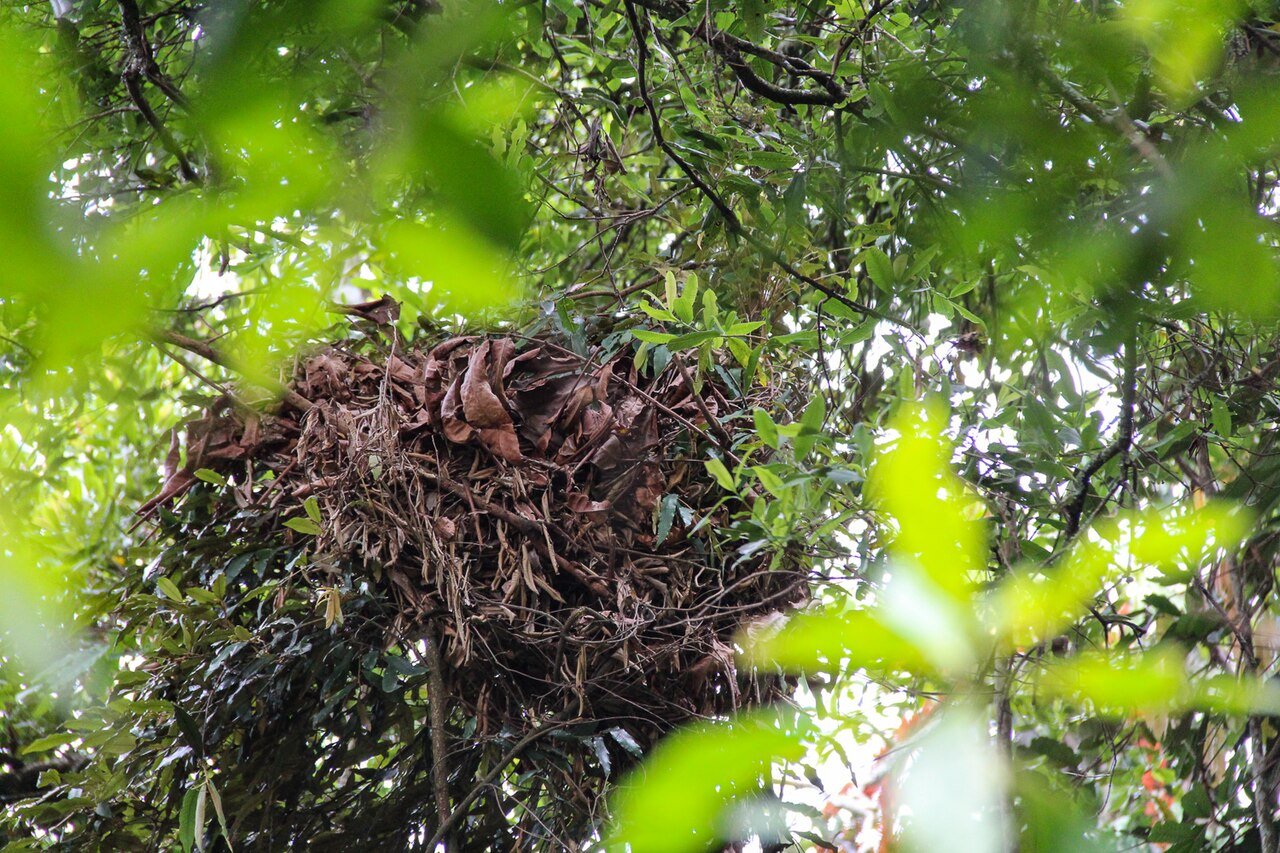
Burundi has no UNESCO World Heritage Sites. The nearest inscribed sites are in neighbouring countries: the Kahuzi-Biega National Park in eastern Democratic Republic of Congo (approximately 200 km northwest), home to the last wild population of eastern lowland gorillas, and the Nyungwe Forest National Park in Rwanda (approximately 200 km northeast), a montane rainforest with chimpanzees and a rich primate assemblage. From Cultural Heritage Online.
Kahuzi-Biega National Park, DRC 200 km northwest — road via Uvira; or flight Bujumbura–Kavumu (Bukavu)
Kahuzi-Biega National Park, inscribed as a UNESCO World Heritage Site in 1980, covers approximately 6,000 square kilometres in the eastern Democratic Republic of Congo, between Lake Kivu and the Congo Basin proper. The park is named after two dormant volcanoes — Mount Kahuzi (3,308 m) and Mount Biega (2,790 m) — and protects one of the most critically threatened great ape populations in the world: the eastern lowland gorilla (Gorilla beringei graueri), also known as Grauer’s gorilla, whose total wild population is estimated at approximately 3,800 individuals. The park was placed on the UNESCO Danger List in 1997 due to the effects of the First and Second Congo Wars (1996–2003) on both wildlife populations and management capacity; it remains on the Danger List as of 2026 due to ongoing security challenges and illegal mining and poaching.
Despite its Danger List status, Kahuzi-Biega offers one of the most significant primate wildlife encounters in Africa — habituated gorilla groups in the highland sector of the park (accessible from Bukavu) can be visited on guided treks. The lowland sector, which holds most of the gorilla population, has been largely inaccessible to visitors due to security conditions since the 1990s. Travel to the region requires careful security assessment; the situation evolves. Bujumbura is connected to Bukavu (the nearest city to Kahuzi-Biega) by road via Uvira (a demanding route) or by domestic/regional flight.
Nyungwe Forest National Park, Rwanda 200 km northeast — road via Butare/Huye
Nyungwe National Park covers approximately 1,000 square kilometres of montane rainforest on the Congo-Nile Divide in southwestern Rwanda, bordering Burundi to the south. It is one of the largest remaining montane rainforest blocks in East and Central Africa and supports an extraordinary primate assemblage: chimpanzees (Pan troglodytes schweinfurthii), Ruwenzori black-and-white colobus monkeys in troops of up to 400 individuals, L’Hoest’s monkeys, grey-cheeked mangabeys, and 12 other primate species — 13 primate species in total, the highest diversity of any forest in East Africa. Rwanda submitted Nyungwe for UNESCO inscription as part of the Congo Basin Forest Ecosystem serial nomination, with a decision expected in the mid-2020s.
Getting there from Bujumbura: Road to Kahuzi-Biega via Uvira (approximately 200 km, 4–5 hours to Bukavu depending on road conditions and security checkpoints). Nyungwe accessible from Bujumbura via road northeast through Burundi to the Rwanda border near Cyangugu/Rusizi, then north to Nyungwe (approximately 3–4 hours). Allow: 2+ days for gorilla trekking at Kahuzi-Biega; 2 days minimum for Nyungwe. Best for: Great ape and primate wildlife; Central African montane forest ecology.
Frequently Asked Questions
Does Burundi have any UNESCO World Heritage Sites?
No. Burundi has no inscribed UNESCO World Heritage Sites and has not submitted a Tentative List. The nearest inscribed sites are in Rwanda and the Democratic Republic of Congo — both neighbouring countries with significant natural heritage assets.
What is the eastern lowland gorilla and how endangered is it?
The eastern lowland gorilla, or Grauer’s gorilla (Gorilla beringei graueri), is the largest of the four gorilla subspecies. The total wild population is estimated at approximately 3,800 individuals — a decline of approximately 77% since the mid-1990s, driven by habitat loss, illegal hunting for bushmeat, and the breakdown of conservation management during and after the Congo Wars. The subspecies is classified as Critically Endangered by the IUCN. Kahuzi-Biega National Park holds one of the most important remaining populations, primarily in the lowland sector, which has been largely inaccessible to researchers and visitors since the 1990s due to security conditions.
How many primate species are in Nyungwe Forest?
Nyungwe National Park in Rwanda supports 13 primate species — the highest diversity of any forest in East Africa. These include chimpanzees, Ruwenzori black-and-white colobus monkeys (in troops sometimes exceeding 300–400 individuals, among the largest colobus troops recorded anywhere), L’Hoest’s monkeys, grey-cheeked mangabeys, Hamlyn’s monkeys, and golden monkeys in the high-altitude areas near the Volcanoes National Park border.
Is it safe to travel to Kahuzi-Biega National Park?
Kahuzi-Biega National Park remains on the UNESCO Danger List and the eastern DRC remains subject to ongoing security challenges from multiple armed groups operating in North and South Kivu provinces. The highland sector of the park near Bukavu has periods of relative stability when gorilla trekking is possible, but the situation can change rapidly. Travellers should check current security advisories from their government’s foreign affairs department before planning any visit and should travel with a reputable local operator that maintains current security information.