
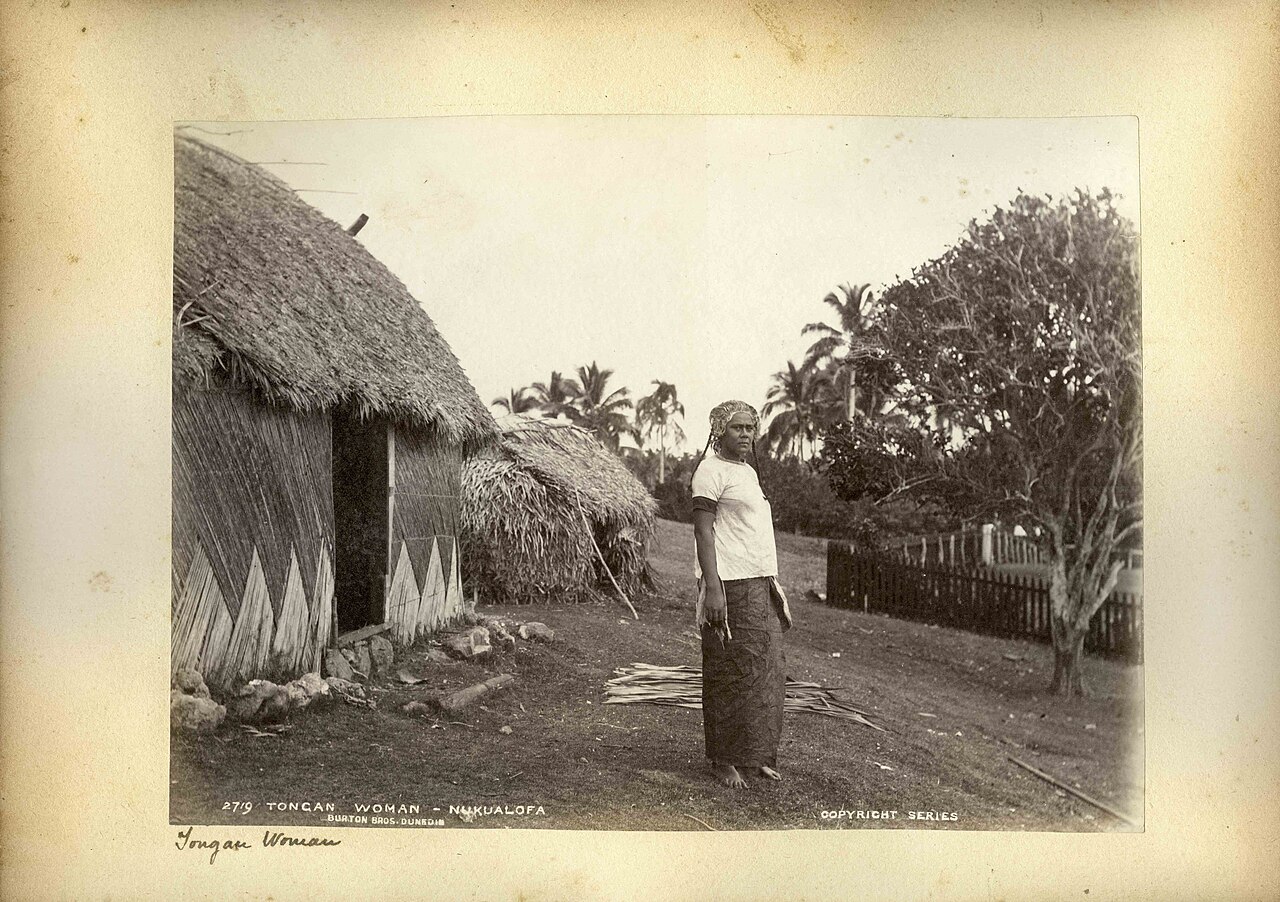
Tonga has no inscribed UNESCO World Heritage Sites, but the royal capital Nuku’alofa is the gateway to the Ha’amonga ‘a Maui — a thirteenth-century stone trilithon that stands as one of the most enigmatic megalithic monuments in the Pacific — and the ancient royal burial mounds of Lapaha, 10 km east. From Cultural Heritage Online.
Ha’amonga ‘a Maui Trilithon, Mu’a 35 km east of Nuku’alofa — 45 min by road
The Ha’amonga ‘a Maui stands on the northern shore of Tongatapu, Tonga’s main island, about 35 km east of Nuku’alofa. Three massive coral limestone blocks — two uprights, each approximately 4 metres tall and 5 metres wide, and a horizontal lintel weighing approximately 9 tonnes resting on notches carved into the tops of the uprights — form an arch that resembles, in its basic form, the sarsen trilithons of Stonehenge. The structure is believed to have been built around 1200 AD, during the reign of Tui’itatui, the 11th Tu’i Tonga (paramount chief), who according to oral tradition ordered its construction as a gateway to his royal compound.
A legend preserved in Tongan oral history attributes the trilithon’s name — which translates as “the burden of Maui” or “Maui’s carrying stick” — to the demigod Maui, who is said to have brought the stones from another island. The lintel has a groove carved along its central line, and markings on the uprights suggest the structure may have functioned as a solar calendar: King Taufa’ahau Tupou IV proposed in the 1960s that the alignment marked the rising sun at the summer and winter solstices, and subsequent investigation has provided some support for this interpretation. The Ha’amonga appears on the Tongan Tentative List for UNESCO inscription.
The royal burial mounds (langi) at Lapaha, approximately 10 km east of Nuku’alofa in the village of Mu’a, represent the ancient Tongan capital and the burial ground of the Tu’i Tonga dynasty from around the thirteenth to the eighteenth century. The largest mound, Paepae ‘o Tele’a, is built of massive dressed limestone slabs and reaches several metres in height. The site is the most significant archaeological complex in Tonga and is also on the UNESCO Tentative List.
Getting there: The Ha’amonga ‘a Maui is approximately 35 km east of Nuku’alofa on the road to ‘Eua, accessible by rental car or organised tour (45 min). Lapaha is 10 km east of Nuku’alofa on the same road. Allow: Half day for both sites combined. Best for: Pacific archaeology and cultural heritage visitors; travellers interested in Polynesian maritime prehistory.
Frequently Asked Questions
Does Tonga have any UNESCO World Heritage Sites?
No. As of 2026, Tonga has no inscribed UNESCO World Heritage Sites. The Ha’amonga ‘a Maui trilithon and the royal burial mounds of Lapaha (Mu’a) both appear on Tonga’s Tentative List for future nomination, but neither has reached the inscription stage.
What is the Ha’amonga ‘a Maui and how old is it?
The Ha’amonga ‘a Maui is a coral limestone trilithon — two upright stones supporting a horizontal lintel — located on the northern shore of Tongatapu, about 35 km east of Nuku’alofa. It is believed to have been built around 1200 AD during the reign of Tu’itatui, the 11th Tu’i Tonga (paramount chief). The structure is interpreted as a gateway to the royal compound and possibly as a solar calendar; the lintel has markings associated with the summer and winter solstice sunrise alignments.
What are the langi at Lapaha?
The langi are the royal burial mounds of the Tu’i Tonga (paramount chief) dynasty at Lapaha in the ancient Tongan capital of Mu’a, approximately 10 km east of Nuku’alofa. They are stepped rectangular mounds built of large dressed limestone slabs, the largest reaching several metres in height. The mounds were used for royal burials from approximately the thirteenth to the eighteenth century and represent the most significant concentration of pre-colonial monumental architecture in Tonga.
What is the best time of year to visit Tonga?
The dry season from May to October offers the most comfortable conditions — lower humidity, less rainfall, and cooler temperatures. The humpback whale migration through Tongan waters occurs from July to October, making this period particularly attractive for whale-watching tours operated from Vava’u and Ha’apai. The wet season (November–April) brings cyclone risk and heavier rainfall.
Sources
- S1 — Campbell, I. C. Island Kingdom: Tonga Ancient and Modern. Canterbury University Press, 2001. ISBN 978-0-908812-96-7.
- S2 — Kirch, Patrick Vinton. On the Road of the Winds: An Archaeological History of the Pacific Islands. University of California Press, 2000. ISBN 978-0-520-22347-9.
Spotted an error? Write to editorial@culturalheritageonline.com and we correct it the same day.

.jpg)