
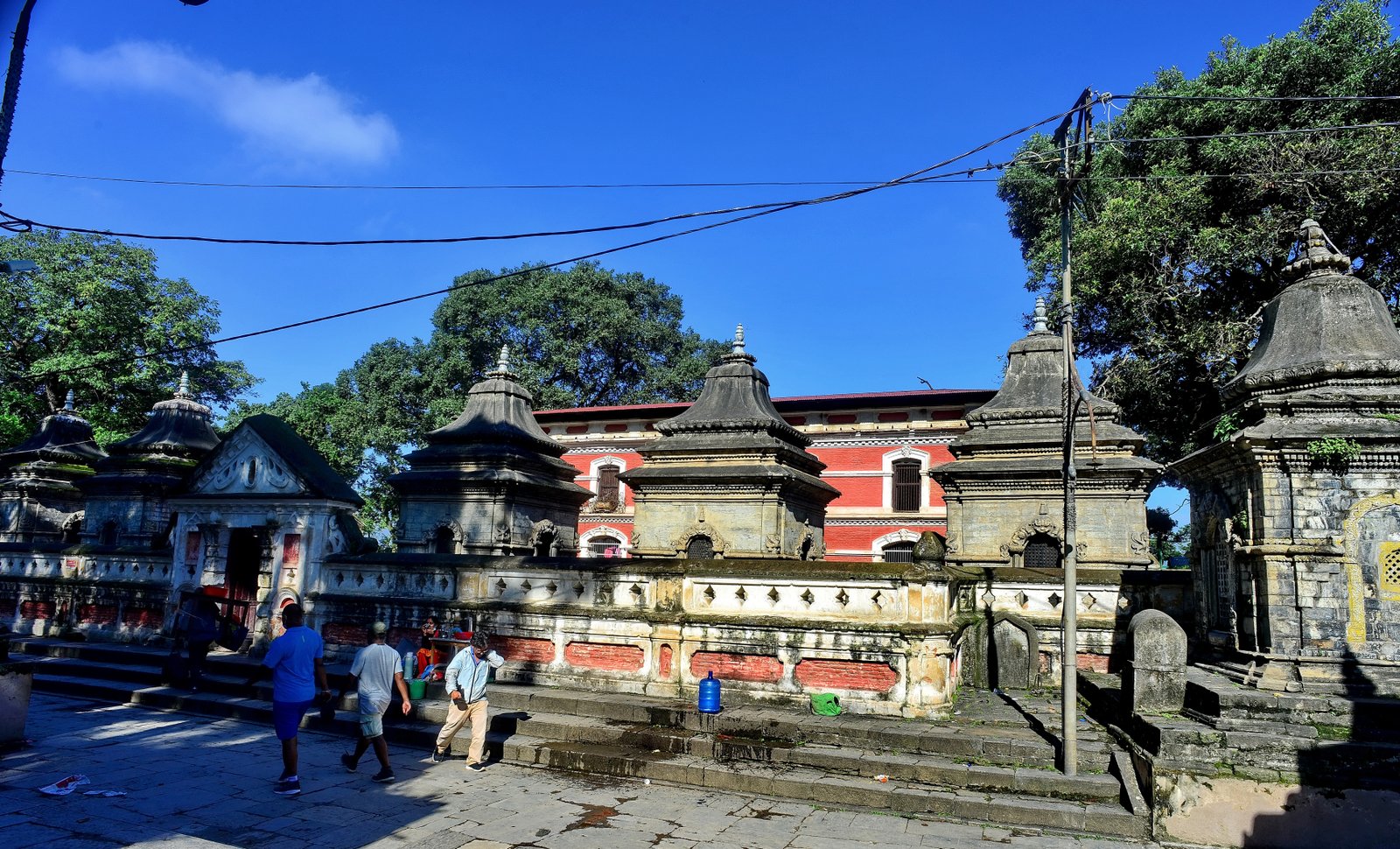
Nepal packs four UNESCO World Heritage Sites within reach of Kathmandu — from the medieval temple squares and gilded stupas of the valley floor to Mount Everest’s glaciated massif and the birthplace of the Buddha at Lumbini. Each site operates on a different timescale and travel logic, ranging from a morning taxi ride to a two-week mountain trek. From Cultural Heritage Online.
Kathmandu Valley 0–20 km · 30–60 min by taxi or local bus
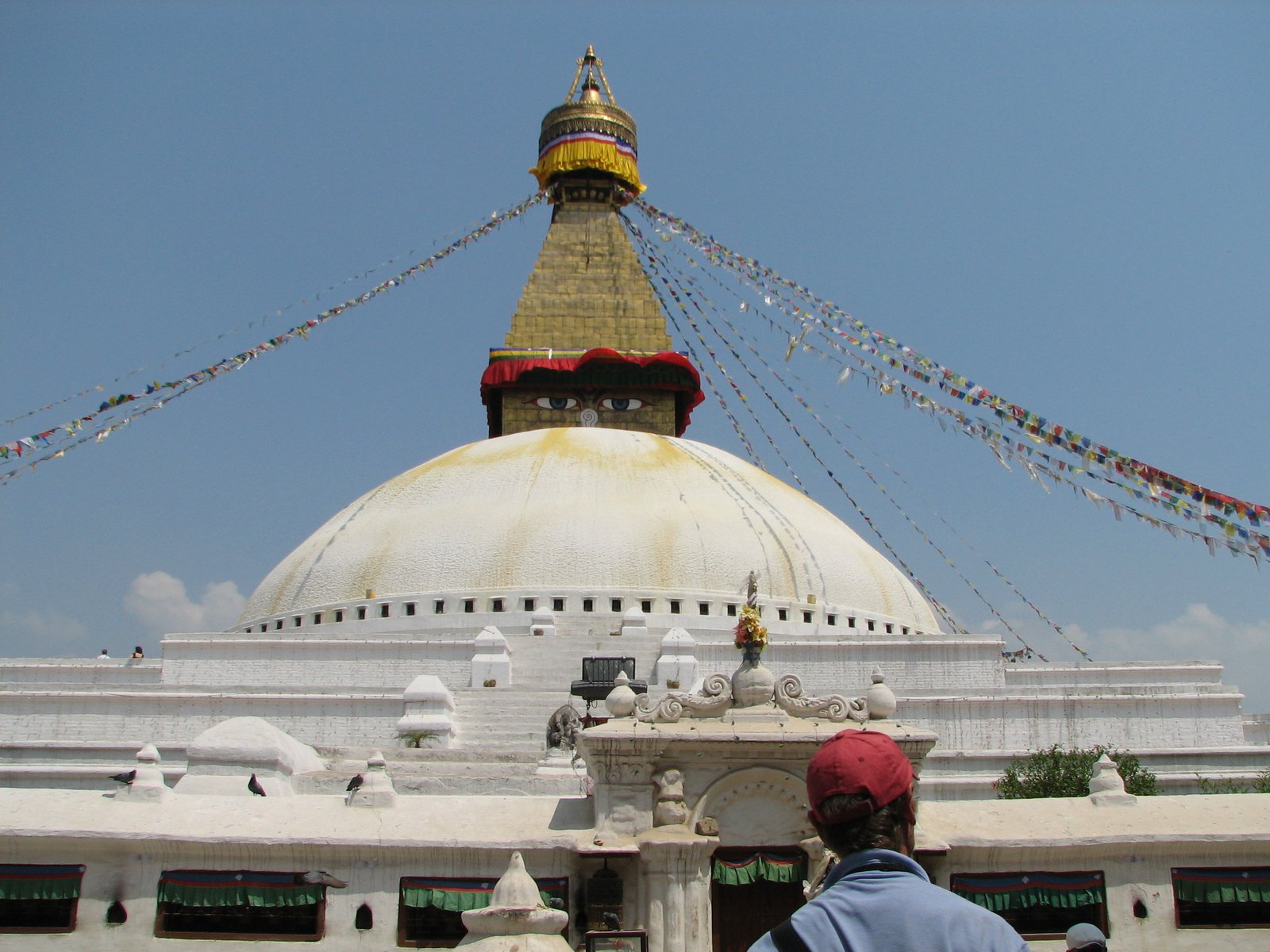
Inscribed in 1979, the Kathmandu Valley site covers seven monument zones spread across the valley — three Durbar Squares (Hanuman Dhoka in Kathmandu, Patan, and Bhaktapur), two Buddhist stupas (Swayambhunath and Boudhanath), the Hindu temple complex of Pashupatinath, and the hilltop Changu Narayan temple. Together they represent more than 1,300 years of Licchavi and Malla-period craftsmanship in stone, wood, and gilded copper.
At Boudhanath — one of the largest stupas in the world — the scale registers before detail does. The white dome rises 36 metres; prayer flags snap overhead in parallel lines extending from the golden tower. Pilgrims circumambulate clockwise in a slow, continuous stream, spinning copper prayer wheels set into the base’s wall at hand height. The metallic ringing carries across the square. Construction of the stupa dates to the 5th century CE, though its current form reflects later Licchavi patronage and extensive post-earthquake restoration after 2015.
Pashupatinath, on the banks of the Bagmati River, is among the most sacred Shaivite sites in South Asia. Cremations take place openly on the stone ghats; the smell of incense and woodsmoke thickens the air around the river terrace. Non-Hindus may not enter the main temple precinct, but the surrounding complex of subsidiary shrines — including the Mrigasthali deer park and its cluster of stone shiva temples — is open and unhurried. The carved tympanums over temple doorways at Bhaktapur Durbar Square show Newar woodcarving at its most intricate: erotic carvings on the struts were placed there deliberately, since lightning — believed to be the goddess of the sky — would not strike where such imagery was visible.
Getting there: Taxis from Thamel to any valley site cost 300–800 NPR; tourist buses serve Bhaktapur and Boudhanath regularly. Allow: Half a day per major zone; a full week to see all seven in depth. Best for: Travellers interested in living religious traditions, medieval urban architecture, and Newar art.
Sagarmatha National Park 280 km east · 35-min flight to Lukla + 14–16 days trekking
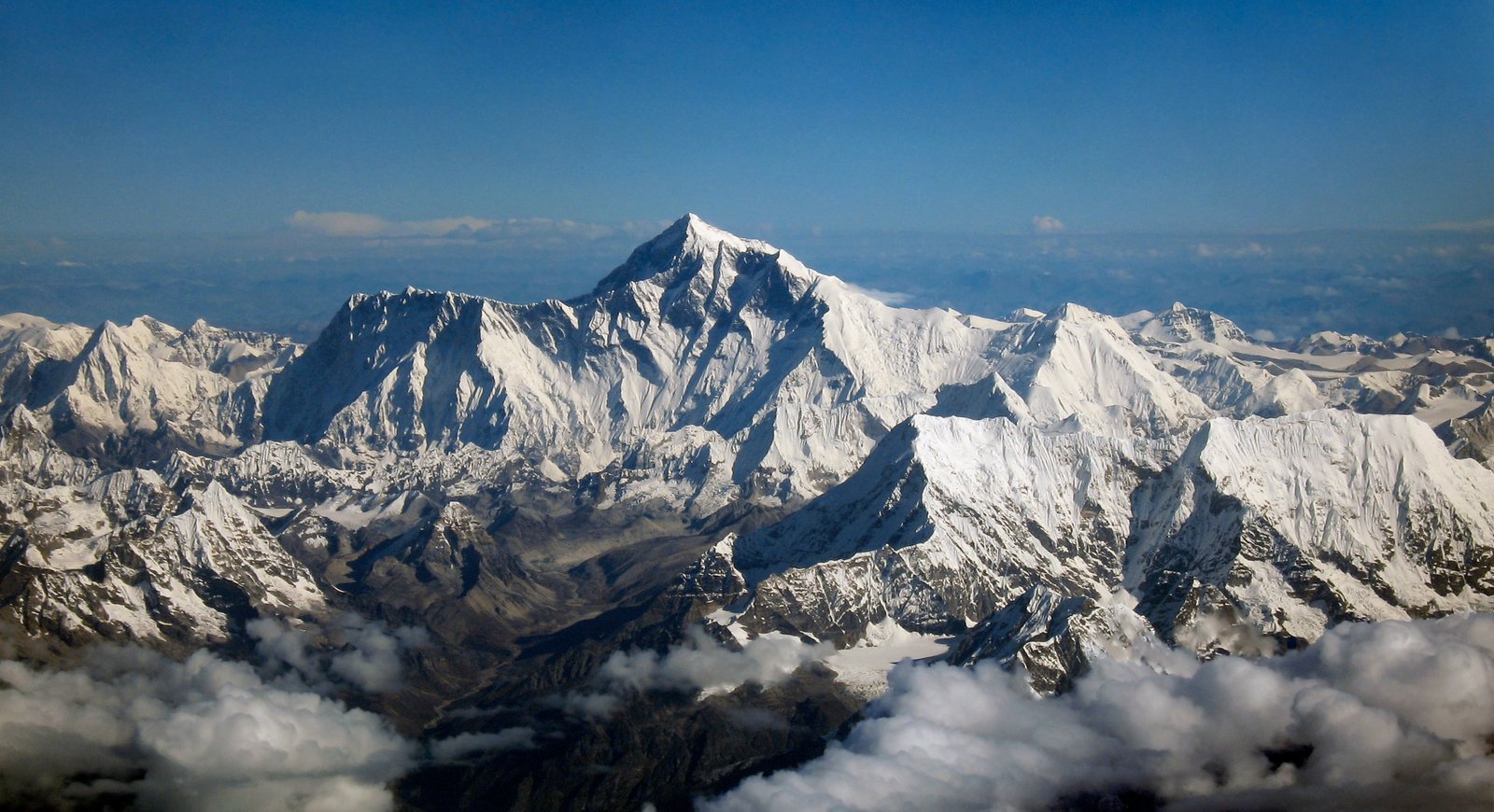
Sagarmatha National Park was inscribed in 1979 on the basis of its exceptional natural landscape: a vertical span of nearly 6,000 metres from subtropical river valleys to the 8,849-metre summit of Everest (Sagarmatha in Nepali, Chomolungma in Tibetan). The park covers 1,148 square kilometres of the Khumbu region and shelters glaciers, alpine meadows, and high-altitude wetlands alongside populations of snow leopard, red panda, and Himalayan tahr.
The standard route to Everest Base Camp begins at Lukla’s Tenzing-Hillary Airport — a 527-metre runway cut into a hillside at 2,860 metres, considered one of the most demanding approaches in commercial aviation. From Lukla the trail climbs through Namche Bazaar (3,440 m), the commercial hub of the Khumbu, before crossing suspension bridges and lateral moraines to reach base camp at 5,364 metres. The sound at altitude is distinctive: the crack of ice shifting on the Khumbu Icefall, the wind across the Lhotse face, and an unusual quiet between the two. Altitude acclimatisation requires rest days at Namche and Dingboche; rushing this is the primary cause of early evacuation.
Sherpa communities have lived in the Khumbu for roughly five centuries, having migrated from Tibet. The Tengboche Monastery (3,867 m), though outside the strictest UNESCO inscription boundary, sits within the park and serves as the spiritual centre of the region. Its reconstruction after a 1989 fire incorporated traditional Tibetan architectural forms. For those who cannot commit to a full Base Camp trek, shorter routes to Namche Bazaar or the Gokyo Lakes offer comparable high-altitude scenery in eight to ten days.
Getting there: Daily flights Kathmandu–Lukla (35 min) on Sita Air, Summit Air, or similar. Book weeks in advance in peak season. Allow: Minimum 14–16 days for Everest Base Camp; 8–10 days for Namche or Gokyo. Best for: Trekkers and mountaineers; natural history and high-altitude ecology; Sherpa cultural heritage.
Chitwan National Park 170 km south · 5–6 hr by bus or 25-min flight to Bharatpur
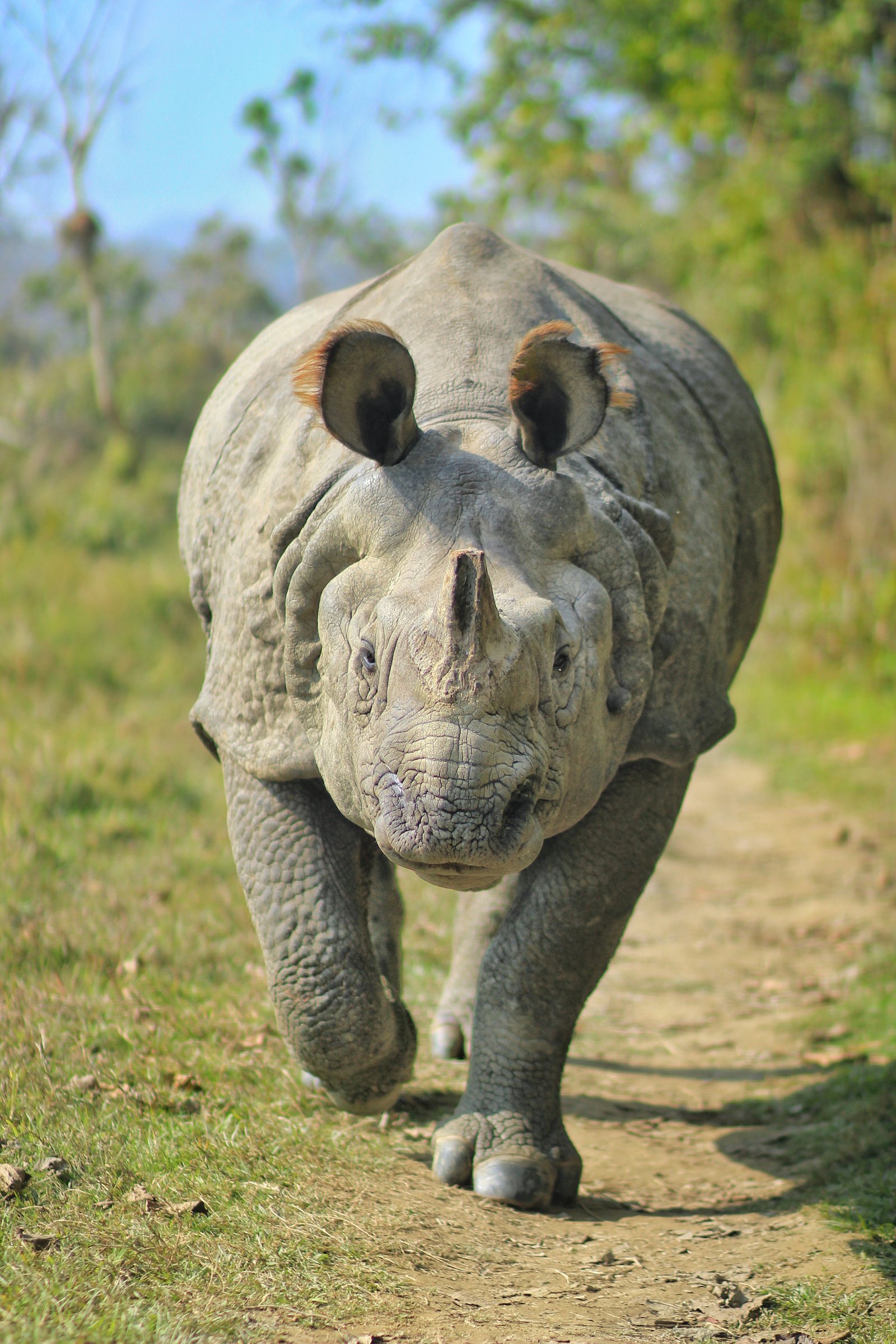
Nepal’s first national park and a UNESCO site since 1984, Chitwan protects 952 square kilometres of the Terai lowlands at the base of the Siwalik Hills. The Rapti and Narayani rivers define its northern boundary; the dense sal forest and elephant grass of the interior hold one of the last viable populations of the Indian one-horned rhinoceros (Rhinoceros unicornis), along with Bengal tigers, sloth bears, and gharial crocodiles in the river systems. At dawn, the grass — which can reach six metres — turns gold before the light finds the forest floor.
Conservation here reversed a collapse: rhinoceros numbers fell to fewer than 100 in the early 1960s before the park’s establishment in 1973 and subsequent anti-poaching campaigns restored the population to over 700 today. The park also hosts the world’s largest concentration of gharial, a critically endangered fish-eating crocodile whose narrow snout distinguishes it from the mugger crocodile found in the same rivers. Jeep safaris and guided elephant-back excursions operate from the main gateway town of Sauraha; canoeing the Rapti at dusk to spot crocodiles and birds is particularly effective.
Getting there: Tourist buses Kathmandu–Sauraha depart early morning, arriving around noon (5–6 hr). Flights to Bharatpur (25 min) then taxi to Sauraha (1 hr). Allow: Minimum 2 nights; 3 recommended for meaningful wildlife encounters. Best for: Wildlife and conservation photography; families; nature travellers combining with Kathmandu Valley.
Lumbini 280 km southwest · 7 hr by bus or 1-hr flight to Bhairahawa
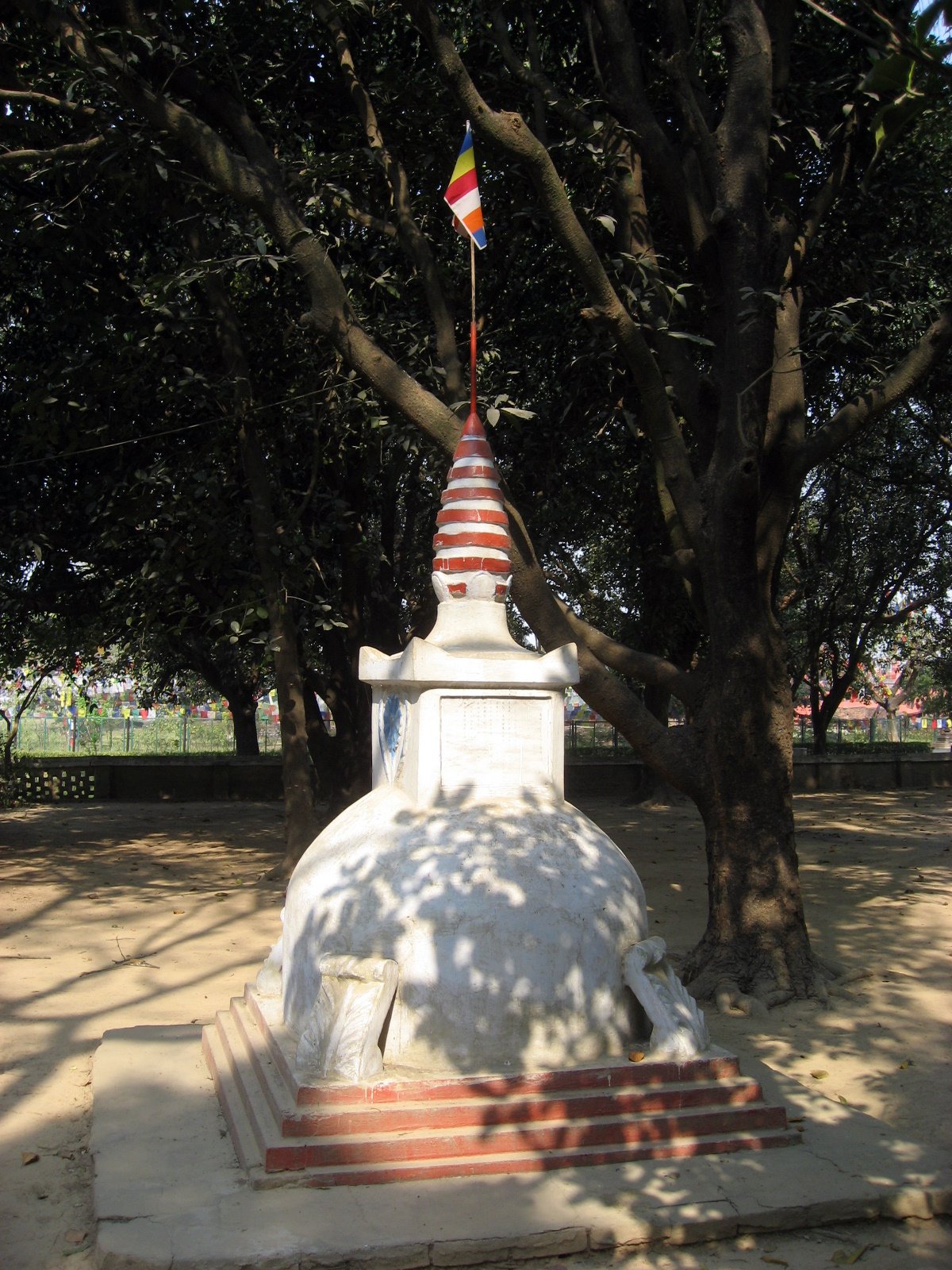
Inscribed in 1997, Lumbini is the birthplace of Siddhartha Gautama, the historical Buddha, born here around 623 BCE according to Theravada tradition. The site’s authenticity rests on a sandstone pillar erected in 249 BCE by the Mauryan emperor Ashoka, whose Brahmi inscription explicitly records the emperor’s pilgrimage and the birthplace’s location. It is among the oldest legible inscriptions from the Indian subcontinent to survive in situ.
The Maya Devi Temple marks the precise spot of the birth: excavations completed in 1996 exposed a marker stone below the current structure that corresponds with the Ashokan inscription. The surrounding sacred garden holds the Puskarni pond — where Mayadevi is said to have bathed before giving birth — and the roots of a surviving pipal tree. The temple interior is quiet, lit softly through high windows; the original marker stone sits behind glass at floor level, worn smooth by centuries of contact.
Radiating from the sacred garden is a planned zone of international monasteries and meditation centres — more than 30 nations have built here, creating a landscape that ranges from Thai gilded towers to Korean minimalist concrete and Sri Lankan white stupas. The Master Plan, designed by Japanese architect Kenzo Tange in 1978, structured the zone on an axial canal. Lumbini receives a fraction of the visitors that Bodh Gaya draws, which means the atmosphere around the Maya Devi Temple and the Ashoka Pillar remains contemplative even on busy days.
Getting there: Daily flights Kathmandu–Bhairahawa (Buddha Air, Yeti Airlines, ~1 hr) then taxi 20 min to Lumbini. Tourist buses depart Kathmandu around 07:00, arriving ~14:00 (7 hr). Allow: Full day minimum; overnight in Lumbini recommended to visit at dawn. Best for: Buddhist pilgrimage; architectural comparison; travellers with interest in Mauryan-period history.
Frequently Asked Questions
How many UNESCO World Heritage Sites are near Kathmandu?
Nepal has four UNESCO World Heritage Sites accessible from Kathmandu: the Kathmandu Valley (inscribed 1979), Sagarmatha National Park including Mount Everest (1979), Chitwan National Park (1984), and Lumbini, birthplace of the Buddha (1997). The Kathmandu Valley sites are within the city itself; the others require domestic flights or multi-hour road journeys.
What can you see inside the Kathmandu Valley UNESCO site?
The inscription covers seven monument zones: the Durbar Squares of Hanuman Dhoka (central Kathmandu), Patan, and Bhaktapur; the Buddhist stupas of Swayambhunath and Boudhanath; the Hindu complex of Pashupatinath; and Changu Narayan temple on a forested hill east of the valley. Each zone is a self-contained visit. Bhaktapur Durbar Square charges a separate entry fee (around USD 15 for foreigners) and rewards several hours of exploration on foot. Pashupatinath and Boudhanath are both free to enter the outer precincts.
Is it possible to combine multiple UNESCO sites in one Nepal trip?
Yes, and most travellers do. A practical itinerary pairs 2–3 days in the Kathmandu Valley with 2–3 nights in Chitwan, then either Lumbini (1 day, fly or bus southwest) or the Sagarmatha trek (14+ days, only for those committed to the full mountain experience). October–November and March–April offer the clearest mountain visibility and manageable temperatures across all four sites. Monsoon season (June–September) closes some Sagarmatha trails and makes Chitwan’s grass impenetrable, though the valley temples remain fully accessible year-round.
What makes the Ashoka Pillar at Lumbini historically significant?
The pillar is one of the few surviving inscriptions placed by Mauryan emperor Ashoka during his own lifetime, around 249 BCE. Its Brahmi text explicitly names Lumbini as the Buddha’s birthplace — “Here the Blessed One was born” — and records that Ashoka reduced the village’s tax burden in recognition. This makes it one of the earliest dated references to the historical Buddha in any inscription, and one of the primary archaeological anchors for Siddhartha Gautama’s biography.
Sources
- S1 — Slusser, Mary Shepherd. Nepal Mandala: A Cultural Study of the Kathmandu Valley. Princeton University Press, 1982. ISBN 978-0-691-03128-6.
- S2 — Whelpton, John. A History of Nepal. Cambridge University Press, 2005. ISBN 978-0-521-80470-7.
Spotted an error? Write to editorial@culturalheritageonline.com and we correct it the same day.


.jpg)
.jpg)


.jpg)