Mauritania has one UNESCO World Heritage Site covering four ancient Saharan cities: the Ancient Ksour (fortified towns) of Ouadane, Chinguetti, Tichitt, and Oualata — four desert caravan cities that served as major centres of Islamic scholarship, trade, and culture between the twelfth and seventeenth centuries, now partially buried by advancing sand dunes. From Cultural Heritage Online.
Chinguetti 700 km east of Nouakchott — 1 hr by domestic flight or 2-day 4WD overland
Chinguetti is the most celebrated of the four ancient cities. Founded approximately in the twelfth century CE, it served as a staging post and spiritual centre on the Trans-Saharan caravan route connecting sub-Saharan West Africa with the Maghreb and as a gathering point for pilgrims from West Africa making the Hajj to Mecca. At its height in the fourteenth to sixteenth centuries, Chinguetti was considered the seventh holiest city in Islam by some scholarly traditions — a status that reflects its role as the spiritual capital of western Mauritania and a major centre of Maliki Islamic jurisprudence and scholarship. The city once held between 25 and 30 libraries containing thousands of manuscripts on theology, law, astronomy, mathematics, and medicine.
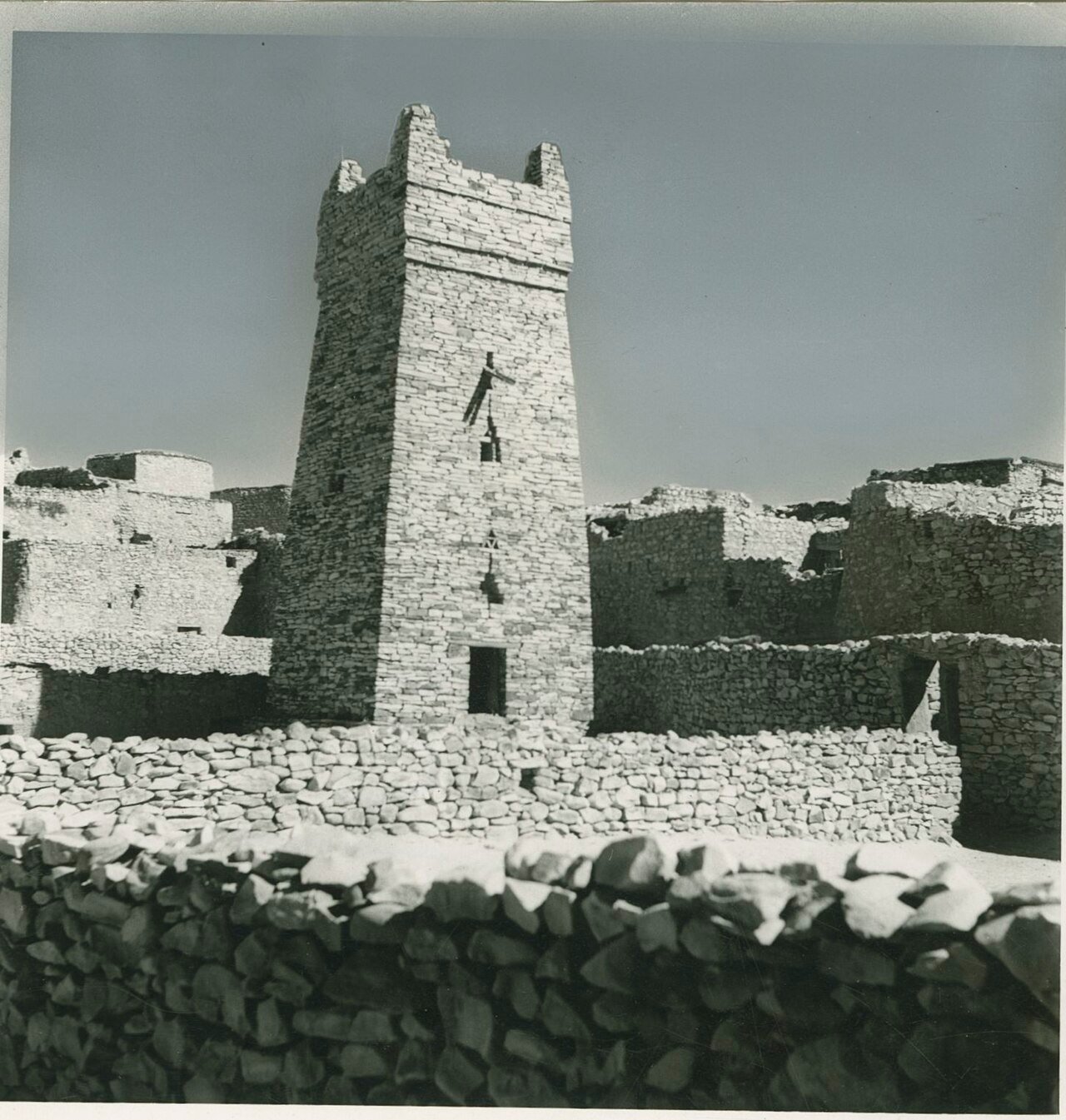
Chinguetti today is partially buried by sand and has a much-reduced population. The old mosque — with its distinctive minaret topped by a cluster of ostrich eggs — remains standing, along with portions of the old city fabric. Approximately 1,200 manuscripts are still held in private family libraries in the city; these manuscripts have been the subject of international digitisation and preservation efforts. The Adrar plateau surrounding Chinguetti is one of the most visually dramatic desert landscapes in West Africa, with red dunes rising around the remaining earthen buildings.
Ouadane, Tichitt and Oualata
Ouadane (circa 1144 CE), approximately 950 km northeast of Nouakchott, was the oldest of the four cities, founded as a commercial centre for the trans-Saharan gold trade. Tichitt (eleventh century, approximately 850 km east) was a centre of the Soninke trading network. Oualata (circa 1224 CE, approximately 1,100 km east), the easternmost of the four cities, was particularly known for its decorated architecture — the facades of Oualata’s buildings were traditionally painted with intricate red and white geometric patterns by the women of the city, a practice that continues today. UNESCO inscribed the four ksour in 1996 (Chinguetti, Ouadane, Tichitt) and 2001 (Oualata was added).
Getting there from Nouakchott: Domestic flights serve Atar (the gateway to Chinguetti, approximately 1 hour from Nouakchott); from Atar, Chinguetti is approximately 90 km by 4WD (2 hours). Access to the more remote cities (Tichitt, Oualata) requires multi-day 4WD expeditions with experienced local guides. Allow: 2–3 days for Chinguetti and Ouadane; 1 week+ for a complete four-city circuit. Best for: Islamic manuscripts and scholarship heritage; Saharan architecture; desert expeditions.
Frequently Asked Questions
How many UNESCO World Heritage Sites does Mauritania have?
Two: the Ancient Ksour of Ouadane, Chinguetti, Tichitt and Oualata (inscribed 1996) and the Banc d’Arguin National Park (inscribed 1989) — a coastal wetland and shallow-water ecosystem on the Atlantic coast of Mauritania, approximately 250 km north of Nouakchott, which supports one of the world’s most important wintering and staging sites for Palearctic migratory birds, including millions of waders and waterfowl that use the Banc d’Arguin as the southernmost point of their Atlantic flyway.
Why are the Chinguetti manuscripts significant?
The surviving manuscripts in Chinguetti and the other Mauritanian ksour represent a substantial portion of the intellectual heritage of medieval West African Islamic scholarship — the equivalent, for the Saharan-Sahelian scholarly tradition, of the European monastery libraries for medieval Christian learning. The manuscripts cover theology, Maliki jurisprudence, Sufi thought, astronomy, mathematics, history, and Arabic poetry, and were produced between the twelfth and nineteenth centuries by scholars based in the ksour and by visiting scholars from across the Islamic world. International preservation programmes (UNESCO, Qatar, Germany, the USA) have been working to digitise and conserve the most fragile manuscripts.
What is advancing the dunes over the ancient cities?
The Sahara Desert has been advancing southward at a rate that has accelerated significantly since the colonial period and the twentieth century, driven by a combination of climate change, deforestation, overgrazing, and the disruption of traditional land management systems. The four ksour of Mauritania are caught in the direct path of this advance: dunes have buried houses, streets, and entire neighbourhoods in Chinguetti and Ouadane that were inhabited a generation ago. The encroachment threatens the remaining inhabited and built fabric of all four cities. Attempts at dune fixation using windbreaks and reforestation have had limited success against the scale of the process.
What is the Banc d’Arguin and why is it significant for birds?
The Banc d’Arguin is a 12,000 km² shallow coastal area on the Atlantic coast of Mauritania between Nouakchott and Nouadhibou, where the Sahara Desert meets the cold Canary Current. The shallow water, mudflats, seagrass beds, and islands support the largest concentration of nesting seabirds in West Africa (approximately 45,000 pairs of 15 species) and one of the largest concentrations of wintering Palearctic shorebirds in the world — approximately 2.3 million birds overwinter on the Banc d’Arguin, having migrated from breeding grounds in Siberia, Scandinavia, and northwestern Europe. The site is considered the southern anchor of the East Atlantic Flyway, the world’s largest migratory bird corridor.