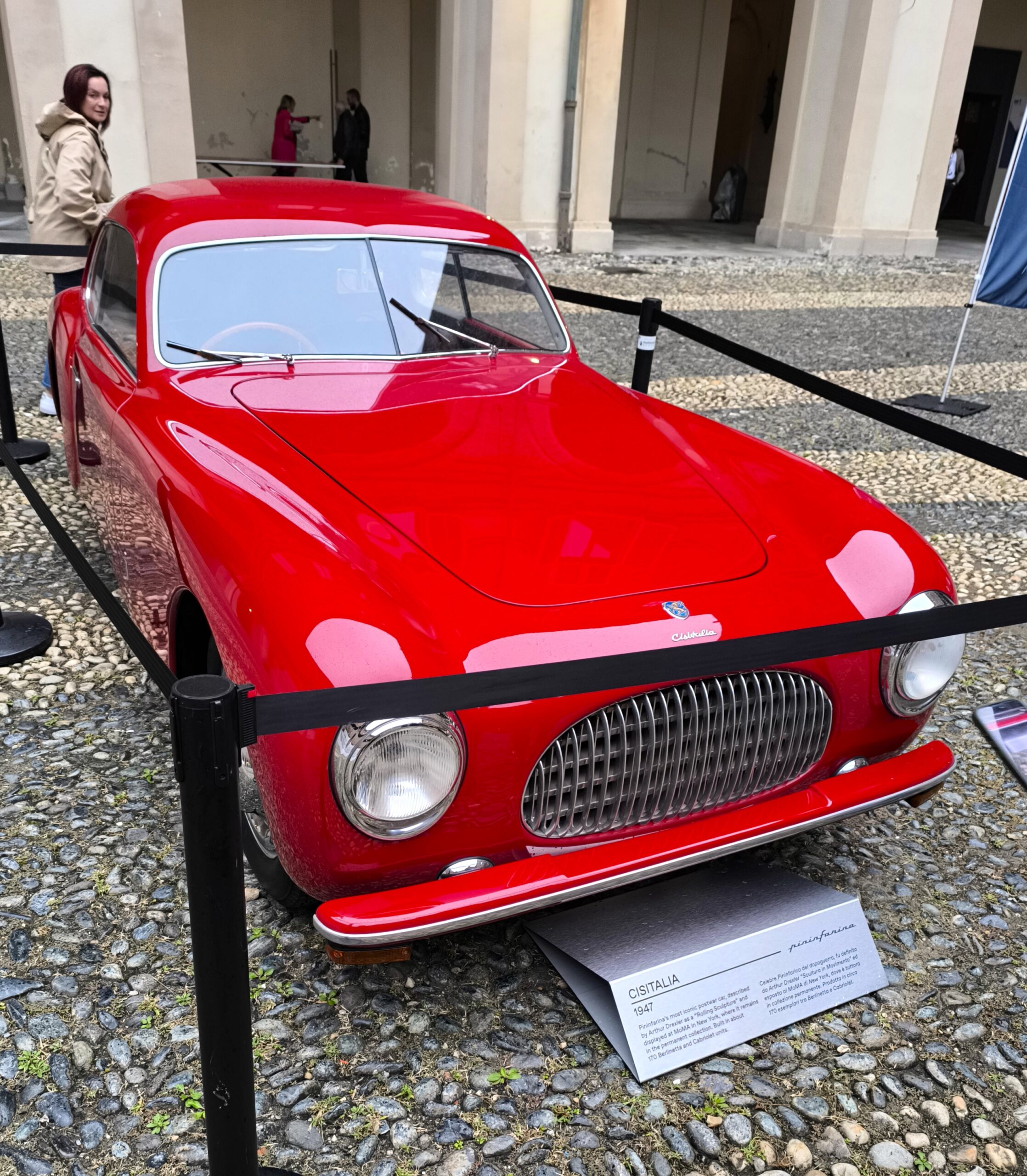
On 22 May 1930, Battista ‘Pinin’ Farina opened his coachbuilding workshop on Turin’s Corso Trapani, pioneering aerodynamic envelope bodies and creating the 1947 Cisitalia 202—hailed by the MoMA as rolling sculpture.
Turin in the spring of 1930 was an industrial powerhouse dominated by the monumental Lingotto plant of Fiat, where automobiles sped along the famed rooftop banked racetrack. Yet parallel to this American-inspired Fordist mass manufacture ran another, intensely individual culture: the Turin coachbuilding workshops (*carrozzieri*), where master craftsmen shaped bespoke aluminium bodies with hand dollies, lead solder, and intuitive artistic genius.
On 22 May 1930, thirty-six-year-old Battista Farina (1893–1966)—universally nicknamed Pinin (“the little one” in Piedmontese dialect, being the tenth of eleven children)—registered his new business: Società Anonima Carrozzeria Pinin Farina. Leaving his brother Giovanni’s workshop (Stabilimenti Farina), Battista erected a modern rationalist factory at Corso Trapani 107 in Turin, backed by financial investments from Vincenzo Lancia. His vision was audacious: to take coachbuilding out of the realm of aristocratic one-offs and develop small series of exquisitely proportioned aerodynamic bodies built to precision engineering tolerances.
The aerodynamic epiphany and the Lancia Dilambda
Farina possessed an intuitive eye for aerodynamic harmony. In the early 1930s, automotive styling was still vertical and boxy: separate headlamps stuck out on stalks, sweeping mudguards caught the wind, and spare wheels hung awkwardly from running boards. Farina began drawing horizontal, unified lines. On chassis from Lancia (the Dilambda and Astura) and Alfa Romeo (the 6C), he integrated radiator grilles smoothly into the front apron, concealed door hinges, and swept windshields backward.
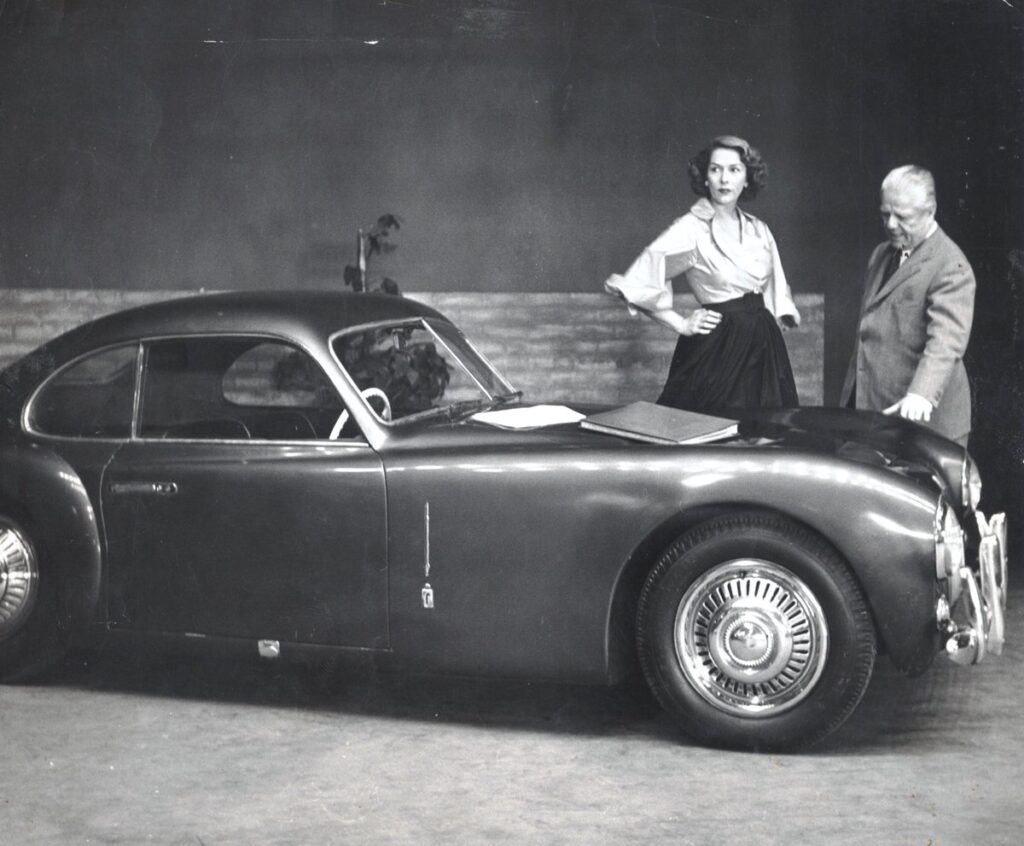
His aesthetic triumph arrived in 1947 with the Cisitalia 202 Gran Sport. Commissioned by industrialist and racing driver Piero Dusio, the Cisitalia was an artistic revolution: hood, cabin, and fenders were merged into a single continuous, fluid envelope of hand-beaten aluminium. When Arthur Drexler curated the landmark Eight Automobiles exhibition at New York’s Museum of Modern Art (MoMA) in 1951, the Cisitalia was hailed not merely as a car, but as “rolling sculpture”—the very definition of modern industrial art.
The sacred alliance with Ferrari
In 1951, Battista Farina met Enzo Ferrari at a neutral restaurant in Tortona (neither proud man was willing to visit the other’s headquarters). That meeting forged the most celebrated creative partnership in automotive history. For half a century, Pininfarina styled the definitive supercars of Maranello: from the 250 GT and Daytona to the Testarossa and F40.
In 1961, by official decree of the President of the Italian Republic Giovanni Gronchi, Battista Farina and his descendants were authorized to officially change their family surname to Pininfarina, enshrining the artisan nickname into Italian nobility.
What remains today
Under Battista’s son Sergio Pininfarina and grandson Paolo Pininfarina, the firm evolved into a world-leading design house spanning architecture, superyachts, and high-speed rail. The original 1930 factory on Corso Trapani in Turin remains an architectural landmark of Turin’s interwar industrial spine. In Cambiano, the Collezione Pininfarina conserves fifty historic prototypes spanning nine decades of design, while the Cisitalia 202 remains permanently in the MoMA collection in New York, proving that the wind-sculpted contours born on Corso Trapani forever altered how the world envisions speed.
Historic Views & Archives
From the Archives: Historical Newsreels
Salone dell’Automobile di Torino: la rassegna dei grandi carrozzieri e del design
Historical newsreel celebrating the golden era of Turin automotive coachbuilding: sweeping aerodynamic lines, custom prototypes, and the international prestige of Italian styling houses.
Visiting the Site: Street View & Modern Geography
Corso Trapani in western Turin was the birthplace of Carrozzeria Pinin Farina in 1930. The brick rationalist plant housed the design offices, metal shaping benches, and paint booths where Battista Farina designed bespoke one-offs for Lancia, Alfa Romeo, and Ferrari before expanding to Grugliasco and Cambiano.
Historic Address: Corso Trapani 107, 10141 Torino, Italy
Sources
- S1 — Farina, Battista Pinin. Nato con l'automobile. Edizioni di Comunità, 2014. ISBN 978-88-98220-12-0.
- S2 — Automobilia. Pininfarina: Cinquant'anni di carrozzeria e stile. Automobilia, 1980. ISBN 978-88-85052-12-3.
Spotted an error? Write to editorial@culturalheritageonline.com and we correct it the same day.