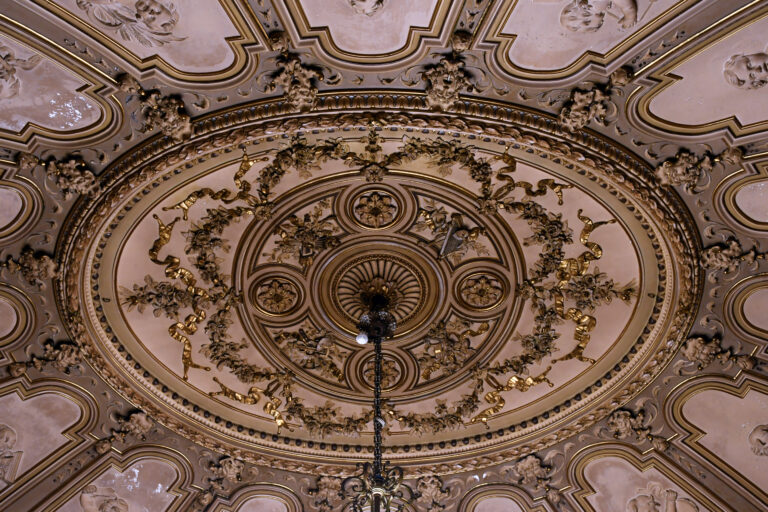
Syria has six UNESCO World Heritage Sites — all on the UNESCO Danger List since 2013 due to the ongoing Syrian civil war. The three most significant, reachable from the capital Damascus, are the Ancient City of Damascus (one of the oldest continuously inhabited cities in the world), the Ancient City of Bosra (the best-preserved Roman theatre in the ancient world), and Crac des Chevaliers (the most complete Crusader castle surviving). From Cultural Heritage Online.
Ancient City of Damascus In the centre of Damascus — 15 min from the modern city
Damascus is commonly cited as one of the oldest continuously inhabited cities in the world, with documented settlement dating to at least the third millennium BCE. The city served as the capital of the Aramaean kingdom, a major Assyrian provincial centre, a Hellenistic city under the Seleucids, and a significant Roman provincial capital before becoming one of the most important cities of the early Islamic world as the seat of the Umayyad Caliphate (661–750 CE). The old city of Damascus retains its ancient street plan, including the “Street Called Straight” (Via Recta) described in the New Testament, superimposed over a Roman colonnaded street.
The Umayyad Mosque (completed 715 CE) stands on the site of a Roman temple precinct converted to a Christian basilica dedicated to John the Baptist, which was in turn converted to a mosque and rebuilt on a grand scale by the Umayyad caliph Al-Walid I. The mosque’s mosaics, architecture, and dimensions were models for subsequent mosque construction across the Islamic world. The Azm Palace (1749), the Hamidiyeh Souq, the Mausoleum of Saladin adjacent to the mosque, and the dense fabric of khans, madrassas, bathhouses, and merchants’ quarters in the old city give Damascus one of the richest urban heritage concentrations in the Middle East. UNESCO inscribed the old city in 1979; the entire Syrian heritage portfolio was placed on the Danger List in 2013.
Ancient City of Bosra 130 km south of Damascus — 2 hr by road
Bosra, 130 km south of Damascus in the Hauran plain, contains the best-preserved Roman theatre in the ancient world — a second-century CE structure whose cavea (seating tiers) and scaenae frons (stage backdrop) survive at near-full height, with seating capacity for approximately 15,000 spectators. The theatre is remarkable also for a secondary reason: in the seventh century CE, the city’s Arab-Byzantine population converted the theatre into a citadel, adding towers and walls that accidentally preserved the Roman fabric by encasing it in a fortress shell. The citadel structure that surrounds and conceals the theatre was excavated and restored in the twentieth century. Bosra also contains significant remains of a Roman colonnaded street, temples, a nymphaeum, and early Christian churches. Inscribed 1980; Danger List 2013.
Crac des Chevaliers 350 km northwest — 4 hr by road
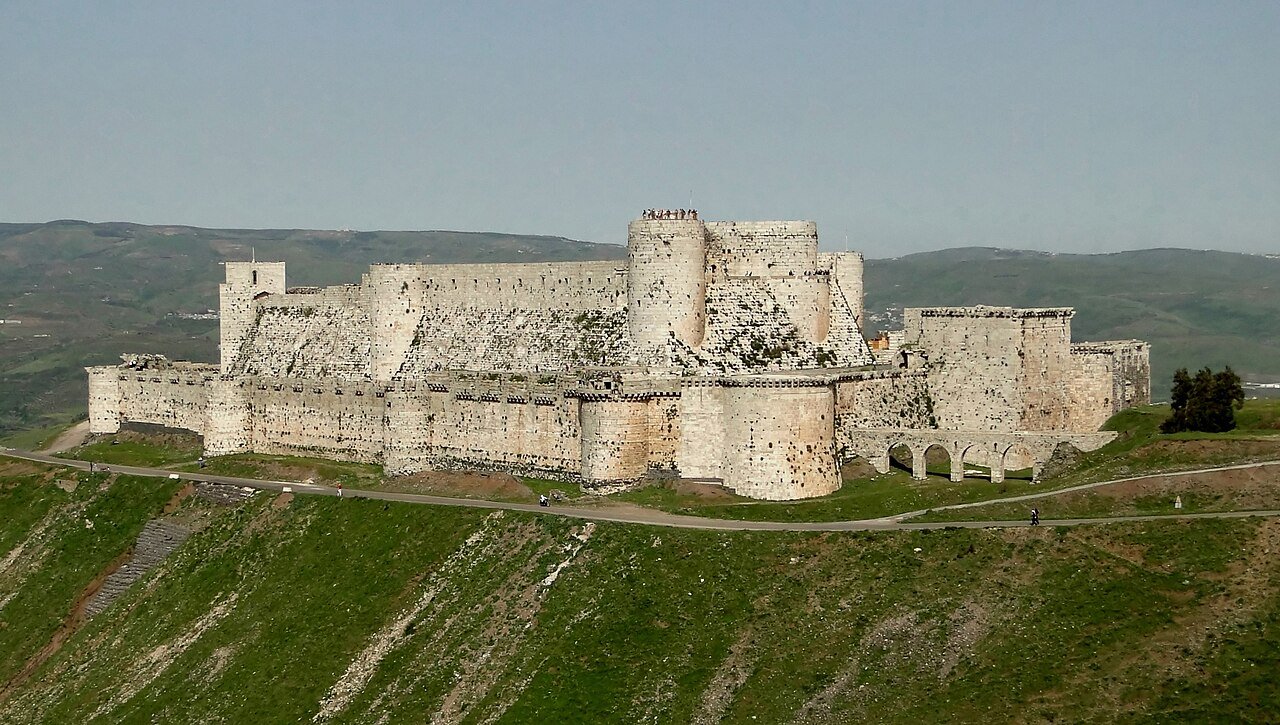
Crac des Chevaliers is the most complete and best-preserved medieval Crusader castle in the world. Located on a 650-metre hilltop in the Homs Gap (the main pass between the Syrian coast and the interior plateau) in northwestern Syria, the castle was held by the Knights Hospitaller from 1142 to 1271 — 129 years in the heart of contested Crusader territory, never taken by assault. The concentric walls, round towers, moat, great hall, chapel, stables, water cisterns, and internal courtyards survive in exceptional condition. UNESCO inscribed the castle jointly with Qal’at Salah El-Din (also in Syria) in 2006; Danger List 2013. The castle suffered significant damage to the outer enceinte during the Syrian civil war.
Access: All Syrian UNESCO sites are on the Danger List due to the civil war. Access conditions vary significantly by location and date; check current government travel advisories before any consideration of visit. Best for: Medieval crusader and Byzantine military architecture; Roman-era urban heritage researchers.
Frequently Asked Questions
How many UNESCO World Heritage Sites does Syria have?
Six: the Ancient City of Damascus (1979), the Ancient City of Bosra (1980), the Site of Palmyra (1980), the Ancient City of Aleppo (1986), Crac des Chevaliers and Qal’at Salah El-Din (2006), and the Ancient Villages of Northern Syria (2011). All six were placed on the UNESCO Danger List in 2013 due to the Syrian civil war, which has caused varying degrees of destruction to all of them — most severely to Palmyra and Aleppo.
What happened to Palmyra during the Syrian civil war?
Palmyra (also known as Tadmur), approximately 240 km northeast of Damascus, was captured by the Islamic State (ISIS) in May 2015 and was held until March 2016 (recaptured by Syrian forces), then briefly retaken by ISIS in December 2016, and finally liberated in March 2017. During the ISIS occupation, the group deliberately destroyed major structures: the Temple of Bel (one of the best-preserved Roman temples in the Middle East), the Temple of Baal Shamin, the Arch of Triumph, and a row of funerary towers were demolished with explosives. The elderly director of the Palmyra museum, Khaled al-Asaad, was beheaded by ISIS after refusing to reveal the location of hidden antiquities. The destruction attracted international attention as one of the most high-profile cases of cultural heritage destruction in the Syrian conflict.
Is Damascus considered the oldest continuously inhabited city in the world?
Damascus is among the candidates for the title of oldest continuously inhabited city, along with Jericho, Byblos, Aleppo, and several others. Archaeological evidence of settlement in the Damascus oasis dates to at least the third millennium BCE, and the city is mentioned in Egyptian records of the second millennium BCE. The exact ranking among “oldest cities” depends on definitions of “city,” “continuously inhabited,” and how partial or sporadic occupation is treated; most scholars acknowledge that Damascus, Aleppo, Byblos, and Jericho are all plausible claimants, with documented habitation records spanning 4,000–6,000 years.
What is the Umayyad Mosque and why is it significant in Islamic architecture?
The Umayyad Mosque in Damascus, completed in 715 CE by Caliph Al-Walid I, was the first great congregational mosque of the Islamic world and the model for subsequent mosque architecture for centuries. It was built on the site of a Roman temple (dedicated to Jupiter) that had been converted to a Byzantine cathedral (St John the Baptist) before the Arab conquest of Damascus in 636 CE. The building introduced several features that became canonical in Islamic religious architecture: the rectangular courtyard with arcades (sahn), the covered prayer hall with multiple aisles, the four minarets (then a novelty), and the use of Byzantine mosaic decoration on the walls and dome of the treasury building. The mosque contains the shrine of John the Baptist (the mausoleum is venerated by both Muslims and Christians).
Sources
- S1 — Burns, Ross. Damascus: A History. Routledge, 2005. ISBN 978-0-415-27105-9.
- S2 — Kennedy, Hugh. Crusader Castles. Cambridge University Press, 1994. ISBN 978-0-521-42068-6.
Spotted an error? Write to editorial@culturalheritageonline.com and we correct it the same day.